Explanation
Fungos micorrízicos arbusculares: troca de recursos com as raízes
Uma análise delimitada de como os fungos micorrízicos arbusculares trocam carbono e nutrientes com as plantas, e do que os métodos de rastreio permitem afirmar sobre esse processo.
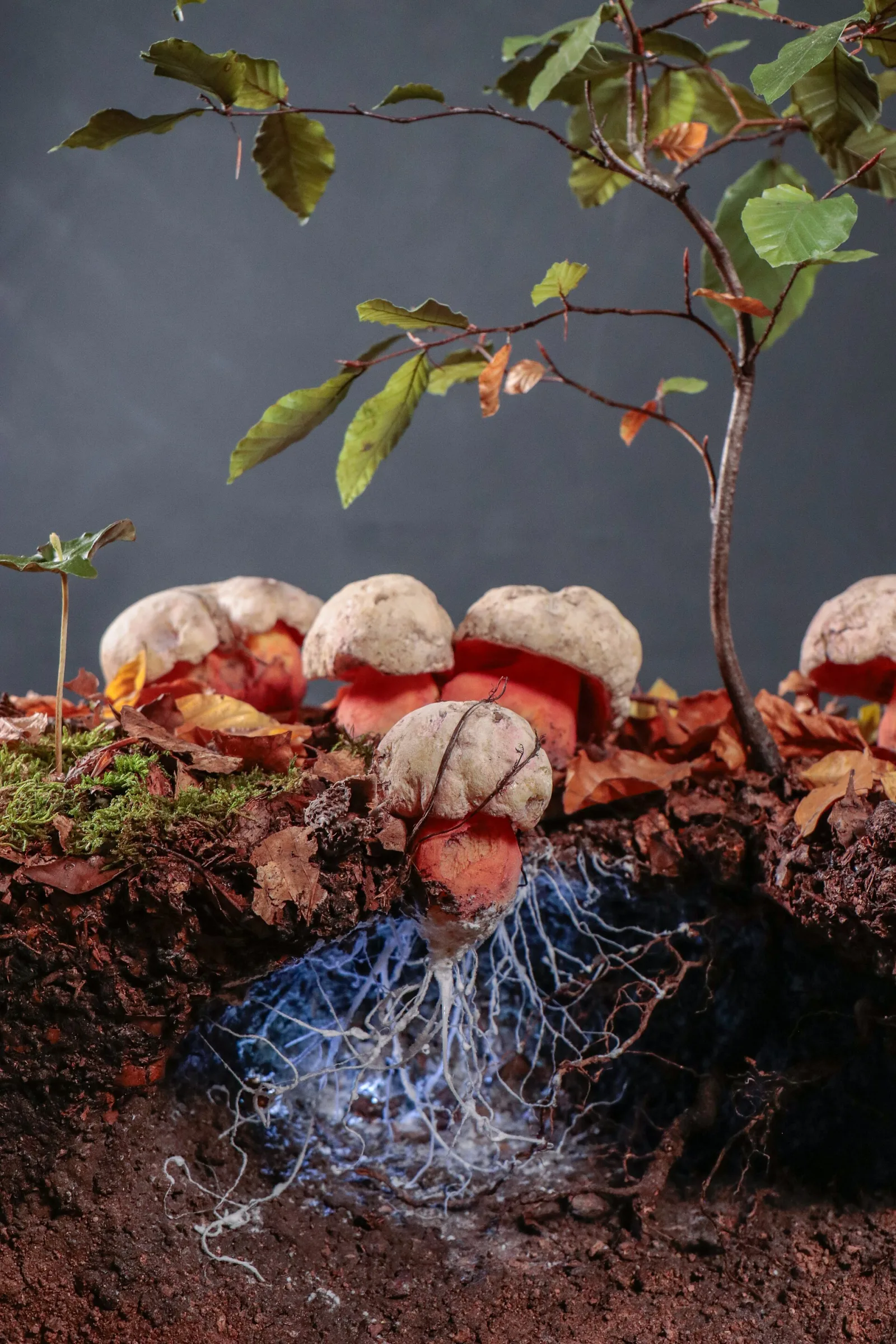
A associação: recursos em duas direções
Os fungos micorrízicos arbusculares colonizam as raízes e estabelecem uma via de troca: a planta fornece carbono proveniente da fotossíntese e o fungo pode transportar nutrientes do solo, incluindo fósforo, azoto e zinco. Esta é uma descrição da associação, não uma garantia de que todas as plantas recebam a mesma quantidade de cada recurso [310].
Como ajudam as hifas
As hifas fúngicas prolongam-se das raízes para o solo e aumentam o contacto do sistema raiz-solo. Essa extensão oferece uma explicação de como o fungo pode contribuir para a absorção de água e nutrientes; a síntese do Serviço Florestal dos Estados Unidos destaca especialmente o azoto e o fósforo, mas não estabelece uma magnitude universal do efeito [320, 323].
O que os métodos de rastreio observam
Uma forma de testar o transporte consiste em separar um compartimento de solo com uma malha que permite a passagem das hifas, mas não das raízes, e marcar aí um nutriente com um isótopo. Se a marca surgir depois na planta, isso permite detetar o transporte pela via micorrízica. Estes desenhos experimentais têm servido para demonstrar o transporte em ambas as direções, embora os resultados correspondam às condições e aos organismos estudados [310].
Não confundir vias de entrada de carbono
Parte do carbono recém-fixado pela planta pode chegar ao solo através dos fungos associados à raiz; outra via é a libertação direta de compostos pelas raízes. Um estudo que comparou ambas as vias trata-as como processos distintos relacionados com a disponibilidade de nutrientes. Por isso, nem todo o carbono detetado no solo pode ser atribuído, sem mais, às micorrizas [310, 311].
Variação e limites do que se pode concluir
A troca não corresponde a um valor fixo aplicável a qualquer associação. A revisão de estudos com traçadores regista diferenças entre cultivares: no trigo, a contribuição da via micorrízica para o fósforo dependeu da variedade; na cevada, também foram descritas diferenças entre cultivares no transporte de azoto. Estes exemplos impedem que se transforme o mecanismo numa promessa uniforme para todas as plantas e solos [310].
Interpretação e hipótese, não uma conclusão geral
A interpretação aqui sustentada é delimitada: nas associações estudadas, o fungo pode facilitar o transporte de recursos para a planta e recebe carbono em troca. A possibilidade de esta capacidade contribuir sempre para a sustentabilidade de sistemas naturais ou agrícolas tem de ser avaliada em contextos concretos; a revisão assinala que são necessários estudos bem concebidos para avaliar esse potencial [310].
Fontes e método
Esta história sintetiza as referências indicadas e distingue observações possíveis de conclusões que exigiriam mais dados. Não apresenta trabalho de campo original da FaunaGuide nem substitui uma identificação especializada.
- Diversity of arbuscular mycorrhizal fungi in University of Port Harcourt, Port Harcourt in Southern Nigeria. — Diversity of arbuscular mycorrhizal fungi in University of Port Harcourt, Port Harcourt in Southern Nigeria. | The Bioscientist Journal Artigo Sidebar PDF Publicado: May 12, 2026 DOI: https://doi.org/10.54117/the_bioscientist.v14i2.212 Keywords: Mycorrhi
- Arbuscular mycorrhizal fungi contribute to wheat yield in an agroforestry system with different tree ages — Frontiers | Arbuscular mycorrhizal fungi contribute to wheat yield in an agroforestry system with different tree ages Intercropping achieved through agroflorestary is increasingly being recognized as a sustainable form of land use. In agroflorestary, the root
- Long-term N addition reduced the diversity of arbuscular mycorrhizal fungi and understory herbs of a Korean pine plantation in northern China — Frontiers | Long-term N addition reduced the diversity of arbuscular mycorrhizal fungi and understory herbs of a Korean pine plantation in northern China With the development of agriculture and industry, the increase in nitrogen (N) deposition has caused
- Track and trace: how soil labelling techniques have revealed the secrets of resource transport in the arbuscular mycorrhizal symbiosis. — Track and trace: how soil labelling techniques have revealed the secrets of resource transport in the arbuscular mycorrhizal symbiosis - PMC Arbuscular mycorrhizal (AM) fungos colonise plant roots, and by doing so forge the ‘mycorrhizal uptake pathway(s)’
- Exploring the transfer of recent plant photosynthates to soil microbes: mycorrhizal pathway vs direct root exudation. — Exploring the transfer of recent plant photosynthates to soil microbes: mycorrhizal pathway vs direct root exudation - PMC Plantas rapidly release photoassimilated carbon (C) to the soil via direct root exudation and associated mycorrhizal fungos, com both
- Mycorrhizae and grapevines: the known unknowns of their interaction for wine growers' challenges. — Mycorrhizae and grapevines: the known unknowns of their interaction for wine growers’ challenges - PMC Arbuscular mycorrhizal fungos (AMF) play an important role in grapevine production systems. However, little is known about how this relationship is achie
- Mycorrhiza — A mycorrhiza (from Ancient Greek μύκης (múkēs) 'fungus' and ῥίζα (rhíza) 'root'; pl. mycorrhizae, mycorrhiza, or mycorrhizas) is a symbiotic association between a fungus and a plant, in which fungal hyphae and plant roots become interconnected and form an
- Mycorrhizal fungi and soil carbon storage — Soil carbon storage is an important function of terrestrial ecosystems. Soil contains more carbon than plants and the atmosphere combined. Understanding what maintains the soil carbon pool is important to understand the current distribution of carbon on E
- What are mycorrhizal fungi? | Kew — What are mycorrhizal fungi? | Kew Hidden beneath your feet, meet the fungos living comin plant roots, and how Kew is studying these incredible species. 27 August 2025 7 min watch What are mycorrhizal fungos? Hidden beneath your feet, meet the fungos living
- Getting to the Root of the Solution - AgResearch Magazine — USDA ARS Online Revista Vol. 54, No. 1 United States Department of Agriculture AgResearch Revista ARS Início l About ARS l Contact ARS Pesquisar AgResearch Mag Jan 2006 - Conteúdos PDF Previous Story Next Story Getting to the Root of the Solution Technician J
- Publication : USDA ARS — Publication : USDA ARS ARS Início » Northeast Area » Beltsville, Maryland (BARC) » Beltsville Agricultural Research Center » Sustainable Agricultural Systems Laboratory » Research » Publications at this Location » Publication #307387 ARS-wide ARS National P
- Mycorrhizae | US Forest Service Research and Development — Mycorrhizae | US Forest Service Research and Development T T T Artigos Data and Tools Publications Árvoresearch Understory National Forest Service Library Multimedia Árvoresearch Mycorrhizae Informally Refereed Authors: Martin Jurgensen, Dana Richter, Carl C
- Mycorrhizae in forest tree nurseries | US Forest Service Research and Development — Mycorrhizae in forest tree nurseries | US Forest Service Research and Development T T T Artigos Data and Tools Publications Árvoresearch Understory National Forest Service Library Multimedia Árvoresearch Mycorrhizae in floresta tree nurseries Informally Refere
- Soil Fungi Critical to Organic Success - AgResearch Magazine — USDA ARS Online Revista Vol. 49, No. 5 United States Department of Agriculture AgResearch Revista ARS Início l About ARS l Contact ARS Pesquisar AgResearch Mag May 2001 - Conteúdos PDF Previous Story Next Story Soil Fungos Critical to Organic Success Micrograp
- USDA ARS Online Magazine Vol. 58, No. 10 — USDA ARS Online Magazine Vol. 58, No. 10 United States Department of Agriculture AgResearch Revista ARS Início l About ARS l Contact ARS Pesquisar AgResearch Mag Nov 2010 - Conteúdos PDF Previous Story Next Story Infrared Sheds Luz on Beneficial Microbes Inf
- How hidden fungi help us grow veg | Kew — How hidden fungi help us grow veg | Kew There's an underground world hidden in the soil which is essential for growing strong, healthy vegetables. 16 January 2020 3 min de leitura How hidden fungos help us grow veg There's an underground world hidden in the soil
- Agricultura ecológica — La agricultura ecológica, orgánica o biológica es un sistema de cultivo de una explotación agrícola basada en la utilización óptima de los recursos naturales, sin emplear productos químicos sintéticos u organismos genéticamente modificados (OGMs) en ning
- Adventice — Une adventice (du latin adventicius, « qui vient de l'extérieur ») désigne pour les agriculteurs et les jardiniers, une plante qui pousse dans un milieu aménagé (champ, massif, etc.) sans y avoir été intentionnellement introduite. La terminologie populair
- Ecossistema — Um ecossistema, ou sistema ecológico, reúne os seres vivos de um lugar, o ambiente físico e as relações entre eles. Pode caber numa poça, num tronco em decomposição ou numa floresta, e também pode abranger parte de um oceano. Seus limites dependem da perg
Ver e ouvir
Imagems, sons e cenas
Recursos que complementam a informação, com a sua origem e condições de reutilização.
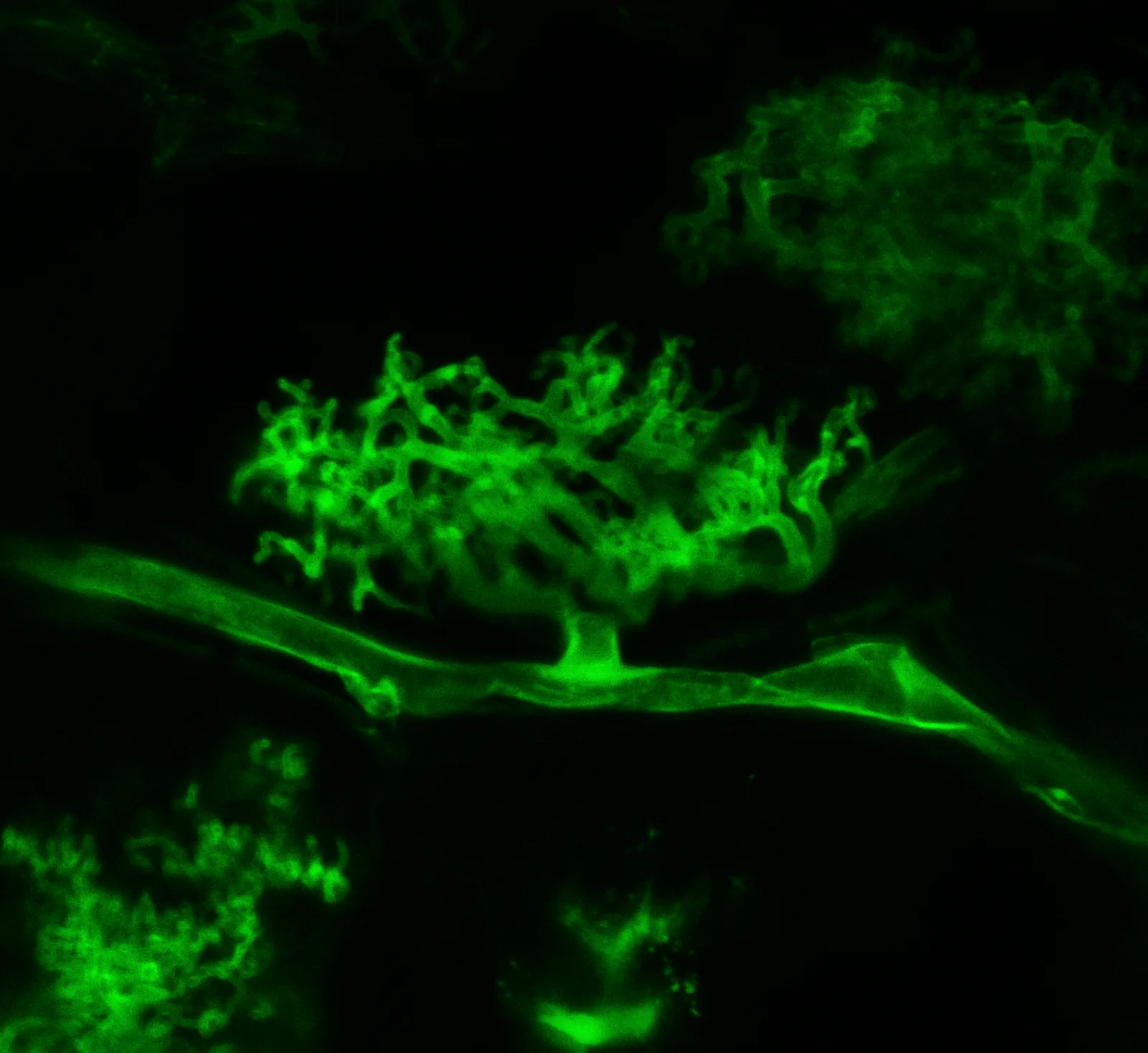
Fotografia documental: Fungos micorrízicos arbusculares: troca de recursos com as raízes