Report
How Plants Respond to Changes in Light
Light can guide growth, influence development, and act as a seasonal cue. These responses are not all the same process, and the available sources do not support presenting them as a single rule for all plants.
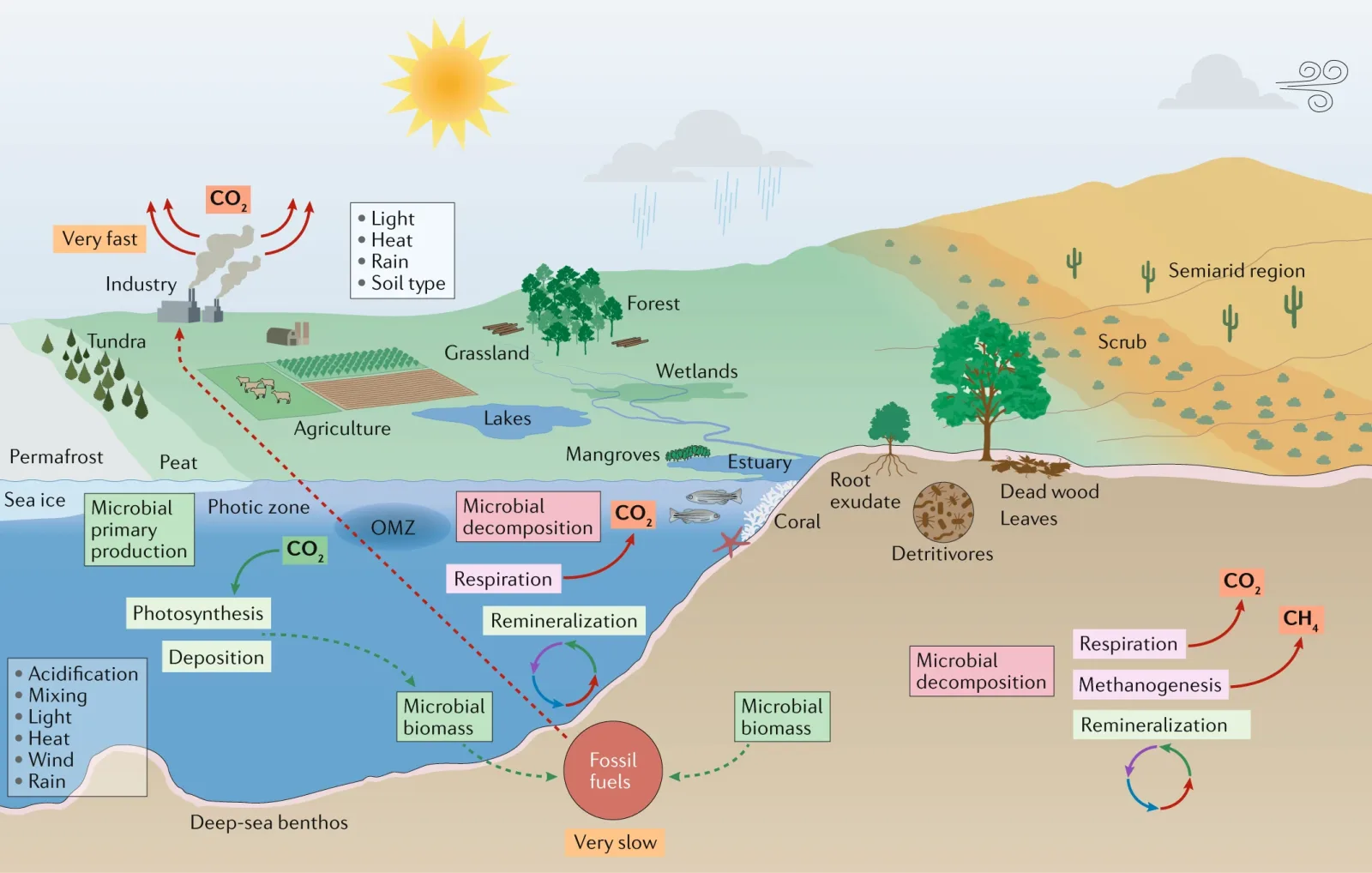
One Signal, Several Responses
Light does not trigger just one plant response. The sources distinguish growth oriented toward a light source, developmental changes mediated by the spectrum, and responses to the relative duration of day and night. These processes are all related to light, but they are not interchangeable; making this distinction avoids reducing different phenomena to a single explanation. [1578] [1566] [1588]
Growing in a Direction
Phototropism is defined as directional growth in response to light; in plants, aerial shoots usually grow toward it. USDA terminology also distinguishes positive and negative responses according to whether growth is toward or away from the stimulus. This describes the orientation of growth; it does not claim that all parts of a plant respond in the same way. [1578] [1580]
Light Also Influences Development
Photomorphogenesis refers to development mediated by light and associated with responses to the spectrum. The encyclopedia source distinguishes it from photosynthesis, in which light is used as energy. It also lists phytochromes, cryptochromes, and phototropins as receptors linked to different bands of light. The available material provides this general description, not an experimental comparison among species. [1566]
Night Matters in the Plant Calendar
Photoperiodism is the response to the relative duration of light and darkness. For short-day plants, the USDA definition emphasizes the need for a long period of darkness. Day-neutral plants, by contrast, are defined by flowering that does not depend on the length of the light or dark period. These categories describe different responses, not a rule that applies to every species. [1588] [1586] [1583]
An Explanation Based on Receptors
As a physiological explanation, the sources link the perception of certain light signals to phytochromes. The USDA thesaurus describes two forms of phytochrome, Pr and Pfr, and links their absorption of red light to responses such as germination, growth, and flowering. The source on photoperiodism adds that signals related to day and night length are involved; the source package provides no original experiments that would allow each step in this chain to be assessed here. [1585] [1565]
When Illumination Fluctuates
A scientific review hosted by the United States Agricultural Research Service examines variable light within crop canopies. According to its summary, photosynthetic responses are not instantaneous, and rapid changes can reduce carbon gain and productivity in field crops. The review notes that canopy structure affects the sunflecks received by lower leaves; these findings concern that agricultural context, not all plants. [1587]
Described Mechanisms and Open Possibilities
The review attributes part of the slow response to the activation and deactivation of enzymes, the opening and closing of stomata, and the regulation of photoprotection. It also suggests that C4 photosynthesis could be more or less resilient than C3 depending on the frequency of fluctuations: the source itself presents this comparison as dependent on the light regime, not as a uniform conclusion. [1587]
What Can—and Cannot—Be Concluded
Comparing the sources helps distinguish terminology definitions from a scientific synthesis about crops: USDA entries define concepts, while the 2018 review brings together research and models on fluctuating light. But this comparison does not amount to independent corroboration of each finding. The material does not establish responses by region or species here, nor does it support extending the effects described in crops to vegetation in general. [1578] [1588] [1587]
Sources and method
This story synthesises the references below and separates possible observations from conclusions that would need more evidence. It does not present original FaunaGuide fieldwork or replace expert identification.
- Fisiología vegetal — La fisiología vegetal es la subdisciplina de la botánica dedicada al estudio de los procesos metabólicos de las plantas. El campo de trabajo de esta disciplina está estrechamente relacionado con la anatomía de las plantas, la ecología (interacciones con
- Fotoperiodo — Se denomina fotoperiodo al conjunto de procesos de las especies vegetales mediante los cuales regulan sus funciones biológicas (como por ejemplo su reproducción y crecimiento) usando como parámetros la alternancia de los días y las noches del año y su dur
- Fotomorfogénesis — En biología del desarrollo, la fotomorfogénesis es un desarrollo mediado por la luz, donde los patrones de crecimiento de las plantas responden al espectro de la luz. Este es un proceso completamente separado de la fotosíntesis donde la luz se usa como fu
- Etiolación — La etiolación es un proceso en plantas de flowers cultivadas en ausencia parcial o total de la luz. Se caracteriza por tallos largos y débiles; hojas más pequeñas debido a entrenudos más largos; y un color amarillo pálido (clorosis). El desarrollo de plán
- Presidency of Javier Milei — Javier Milei's tenure as the 59th president of Argentina began with his inauguration on 10 December 2023. Milei, a member of La Libertad Avanza, took office after defeating then-economy minister Sergio Massa in the 2023 general election. His administratio
- Impactos del cambio climático en la estabilidad y resiliencia de los humedales del páramo — Impactos del cambio climático en la estabilidad y resiliencia de los humedales del páramo | Siembra Barra lateral del artículo PDF PDF (English) HTML EPUB XML Published: feb 18, 2026 DOI: https://doi.org/10.29166/siembra.v13i3(Especial).9588 Palabras clav
- NALT Core: fototropismo - NAL Agricultural Thesaurus - USDA — NAL Agricultural Thesaurus: NALT Core: fototropismo Concept information ámbitos de estudio fisiología tropismos fototropismo Preferred term fototropismo Type Topic Definition Crecimiento direccional de los organismos en respuesta a la luz. En las plantas
- NAL Agricultural Thesaurus: NALT: fototropismo — NAL Agricultural Thesaurus: NALT: fototropismo Concept information ámbitos de estudio fisiología tropismos fototropismo Término preferido fototropismo Tipo Topic Definición Crecimiento direccional de los organismos en respuesta a la luz. En las plantas lo
- NAL Agricultural Thesaurus: NALT Core: tropismos — NAL Agricultural Thesaurus: NALT Core: tropismos Concept information ámbitos de estudio fisiología tropismos Término preferido tropismos Tipo Topic Definición Movimiento que es inducido y que ocurre en la dirección relacionada a la del estímulo, como el m
- NALT: tropismos - NAL Agricultural Thesaurus - USDA — NAL Agricultural Thesaurus: NALT: tropismos Concept information ámbitos de estudio fisiología tropismos Término preferido tropismos Tipo Topic Definición Movimiento que es inducido y que ocurre en la dirección relacionada a la del estímulo, como el movimi
- NAL Agricultural Thesaurus: NALT: plantas de día neutro — NAL Agricultural Thesaurus: NALT: plantas de día neutro Concept information investigación, tecnología, métodos organismos plantas (botánica) plantas de día neutro producción de plantas, horticultura plantas (botánica) plantas de día neutro ámbitos de estu
- NAL Agricultural Thesaurus: NALT: fisiología vegetal — NAL Agricultural Thesaurus: NALT: fisiología vegetal Concept information ámbitos de estudio fisiología fisiología vegetal ámbitos de estudio botánica biología vegetal fisiología vegetal producción de plantas, horticultura botánica biología vegetal fisiolo
- NAL Agricultural Thesaurus: NALT: fitocroma — NAL Agricultural Thesaurus: NALT: fitocroma Concept information ámbitos de estudio compuestos bioquímicos aminoácidos, péptidos y proteínas proteínas proteínas de las plantas fitocroma investigación, tecnología, métodos compuestos bioquímicos aminoácidos,
- NAL Agricultural Thesaurus: NALT: plantas de día corto — NAL Agricultural Thesaurus: NALT: plantas de día corto Concept information investigación, tecnología, métodos organismos plantas (botánica) plantas de día corto producción de plantas, horticultura plantas (botánica) plantas de día corto ámbitos de estudio
- The impacts of fluctuating light on crop performance — Publication : USDA ARS ARS Home » Midwest Area » Urbana, Illinois » Global Change and Photosynthesis Research » Research » Publications at this Location » Publication #346452 ARS-wide ARS National Programs Search for a scientific manuscript Search for a r
- NAL Agricultural Thesaurus: NALT: fotoperiodismo — NAL Agricultural Thesaurus: NALT: fotoperiodismo Concept information ámbitos de estudio física tiempo y espacio periodicidad fotoperiodismo investigación, tecnología, métodos investigaciones pecuarias propiedades y fenómenos biológicos ritmos biológicos p
See and listen
Images, sounds and scenes
Resources that complement the information, with their origins and reuse conditions.
Documentary photograph: How Plants Respond to Changes in Light