Gram-positive bacterium.
Bacillus subtilis
Bacillus subtilis
Rod-shaped cells; forms endospores.
Open profileAnother scale of the living world
Explore bacteria, archaea, protozoa, microscopic algae and fungi. Compare sizes, movements and structures through visual experiences and documented reading.
Another scale of the living world
Microorganisms is a grouping by scale, not a biological kingdom. It brings together organisms from different branches of the tree of life; each profile retains its taxonomic classification.
Bacillus subtilis
Rod-shaped cells; forms endospores.
Open profileChlamydomonas reinhardtii
It has two anterior cilia and a cup-shaped chloroplast with a pyrenoid.
Open profileChlorella vulgaris
Mature cells spherical, sometimes oval; the observed size varied between the two strains studied.
Open profileEuglena gracilis
It stores paramylon, a β-1,3 glucan, and can produce wax esters.
Open profileHalobacterium salinarum
Extremophilic halophile; obligate aerobe; possesses bacteriorhodopsin.
Open profileHaloferax volcanii
The cell envelope includes a glycoprotein surface layer.
Open profileLactobacillus acidophilus
Gram-positive and rod-shaped; produces lactic acid through fermentation.
Open profileParamecium caudatum
Cilia for locomotion and feeding; two contractile vacuoles; two nuclei (macro and micro).
Open profileRelated reading
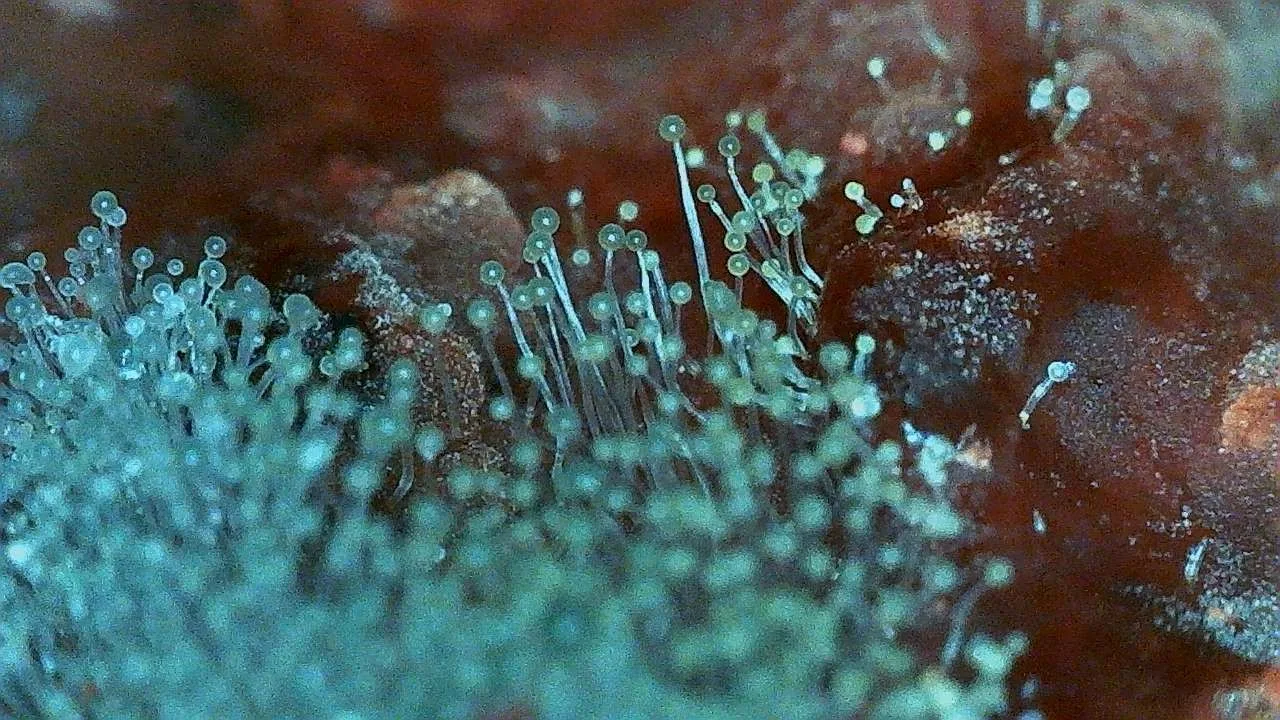 Documentary photograph
Photo by
Давид Андронов
Source: wikimedia_commons
CC BY 4.0
Documentary photograph
Photo by
Давид Андронов
Source: wikimedia_commons
CC BY 4.0
Explanation · 2 min
A Kew source contrasts two appearances of decomposed wood: pale, soft fibres in white rot and reddish, cube-shaped fragments in brown rot. The available sources describe these patterns, but are not sufficient to explain their mechanisms or identify the fungi as moulds.
Explanation · 2 min
The yeast Saccharomyces cerevisiae plays a role in wine fermentation, but it is rarely found on intact grapes. A study describes grape skin as an unsuitable environment for this species to establish a stable presence: a specific case, not a general map of where yeasts live.
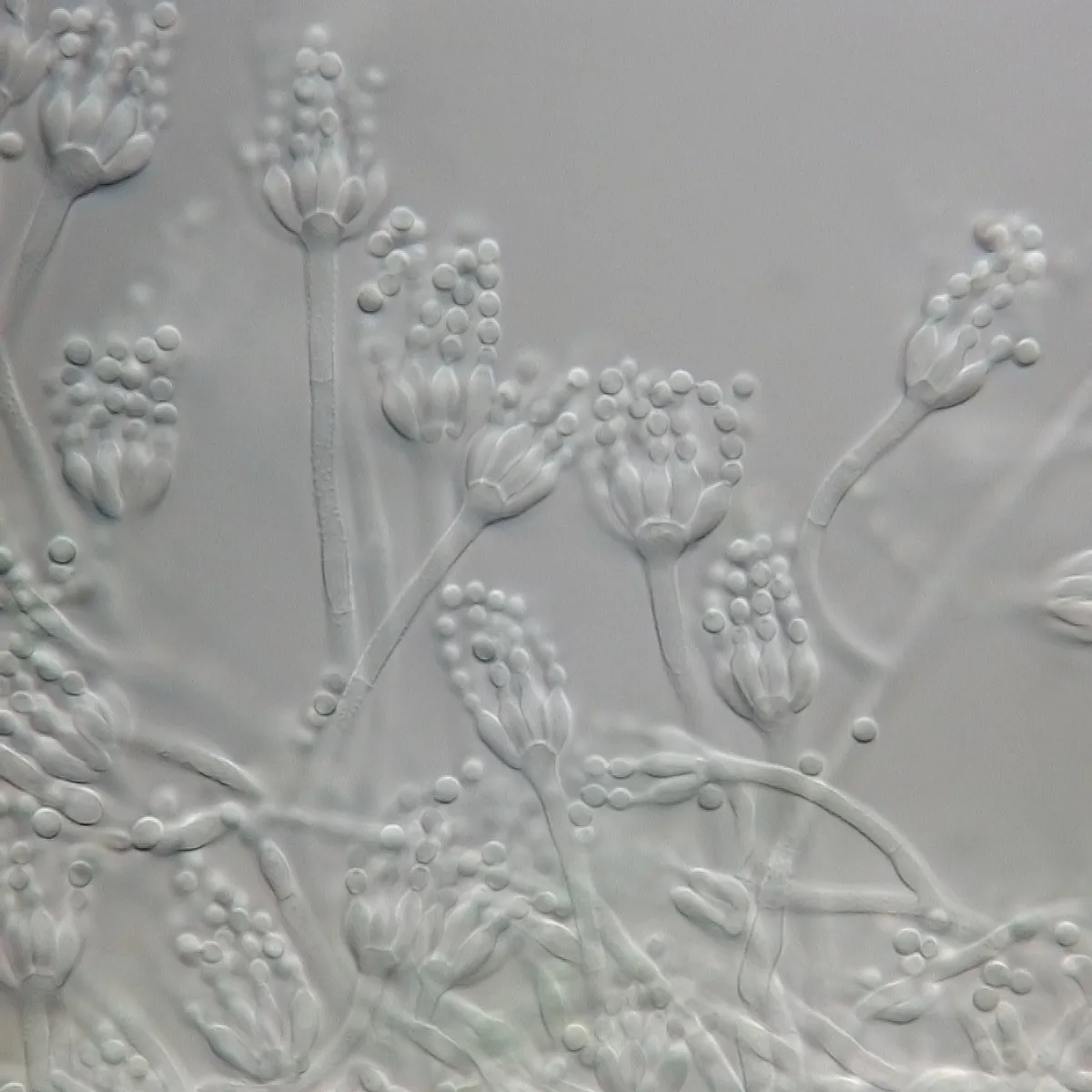 Documentary photograph
Photo by
Medmyco
Source: wikimedia_commons
CC BY-SA 4.0
Documentary photograph
Photo by
Medmyco
Source: wikimedia_commons
CC BY-SA 4.0
Explanation · 2 min
A study involving two molds describes how it prepared a spore suspension and applied it to mortar samples. This is a laboratory case, not an explanation of how molds disperse in the environment.
Explanation · 2 min
A study at four wineries in the San Francisco Bay Area shows that fruit flies carry a variety of yeasts. The tests also reveal that attracting flies does not guarantee the same effect on their larvae.
 Documentary photograph
Photo by
WEI, WAN-CHEN(魏琬臻)
Source: wikimedia_commons
CC BY-SA 4.0
resized and converted to WebP
Documentary photograph
Photo by
WEI, WAN-CHEN(魏琬臻)
Source: wikimedia_commons
CC BY-SA 4.0
resized and converted to WebP
Explanation · 2 min
A drop of freshwater does not have a universal roster of inhabitants. Sources describe groups that live in lakes and rivers—from photosynthetic microorganisms to zooplankton—but do not document what a particular drop contains. They also explain why a microscopic image, or a software program’s label, is not always enough to identify a species.
Explanation · 3 min
The cell wall, chloroplasts, and large central vacuole are useful clues when comparing plant and animal cells, but they are not an infallible checklist for identifying every sample. Cell type, organism, and what the microscope can resolve all matter.
Explanation · 1 min
Cilia and pseudopodia offer two distinct examples of locomotion described in microscopic organisms: in ciliates, cilia beat rhythmically; in amoebas, pseudopodia and cytoplasmic flow contribute to movement. The available evidence here does not reliably explain the mechanism of flagella or support a complete comparison of all three.
Explanation · 2 min
Bacteria are larger than viruses, but that difference alone does not explain which method is appropriate. The sources describe viral structures, observation with electron microscopes, and techniques that detect genetic material in samples: different ways of obtaining information, not a universal rule based on size.
Another scale of the living world
Microorganisms is a grouping by scale, not a biological kingdom. It brings together organisms from different branches of the tree of life; each profile retains its taxonomic classification.
Cellular organisms without a membrane-bound nucleus. They include cyanobacteria.
Organisms without a cellular nucleus, evolutionarily distinct from bacteria.
Single-celled eukaryotes, such as amoebae and ciliates.
Microscopic forms such as diatoms and some green algae; they do not form a single kingdom.
Yeasts and moulds, belonging to the kingdom Fungi.
These groups overlap: yeasts are also fungi. Not all algae or chromists are microscopic. Fungi
Experiences
These explorations are models and illustrations, not real samples or tools for identifying a species.