Basidiomycete fungus of the family Agaricaceae.
Agaricus campestris
Agaricus campestris
Saprophytic; fruits in meadows and grasslands, often in fairy rings.
Open profileThe network supporting the forest
Mushrooms, mycorrhizae, lichens, yeasts and decomposers: a kingdom explained beyond collecting.
Profiles to begin with
Essential information first; context, relationships and sources when you want to go deeper.
Agaricus campestris
Saprophytic; fruits in meadows and grasslands, often in fairy rings.
Open profileFomes fomentarius
Perennial, sessile, hard, and woody fruiting body, up to 25 cm in width.
Open profileTrametes versicolor
White rot fungus that degrades lignin.
Open profileRelated reading
 Documentary photograph
Photo by
Ralf Lotys (Sicherlich)
Source: Wikimedia Commons
CC BY 3.0
resized and converted to WebP
Documentary photograph
Photo by
Ralf Lotys (Sicherlich)
Source: Wikimedia Commons
CC BY 3.0
resized and converted to WebP
Inside the forest · 3 min
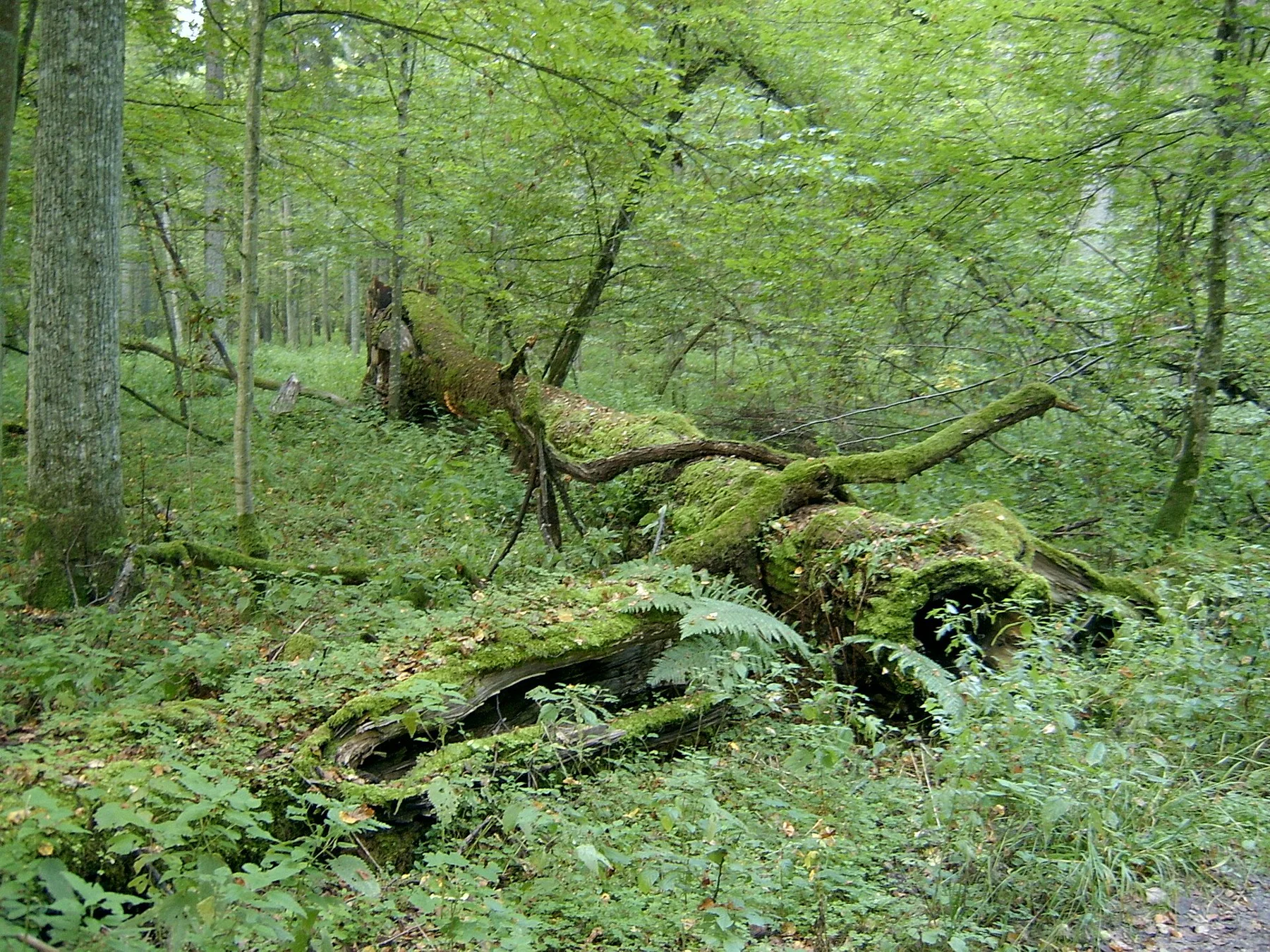
A fallen trunk is not the end of a story: it is shelter, food and the setting for a slow transformation.
 Documentary photograph
Photo by
Давид Андронов
Source: wikimedia_commons
CC BY 4.0
Documentary photograph
Photo by
Давид Андронов
Source: wikimedia_commons
CC BY 4.0
Explanation · 2 min
A Kew source contrasts two appearances of decomposed wood: pale, soft fibres in white rot and reddish, cube-shaped fragments in brown rot. The available sources describe these patterns, but are not sufficient to explain their mechanisms or identify the fungi as moulds.
 Documentary photograph
Photo by
Marc-André Selosse
Source: wikimedia_commons
CC0
Documentary photograph
Photo by
Marc-André Selosse
Source: wikimedia_commons
CC0
Explanation · 2 min
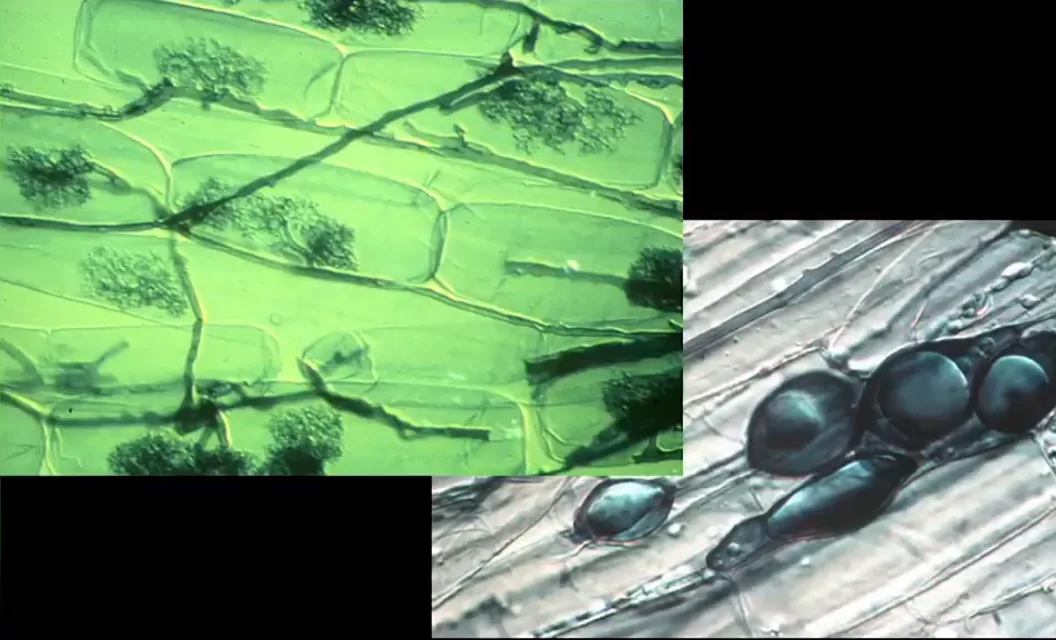
Mycorrhizal hyphae can extend the reach of roots in the soil; in return, the plant supplies glucose to the fungus. The available evidence describes this exchange in general terms, but does not allow its benefits to be measured or applied equally to all plants and environments.
Explanation · 2 min
The yeast Saccharomyces cerevisiae plays a role in wine fermentation, but it is rarely found on intact grapes. A study describes grape skin as an unsuitable environment for this species to establish a stable presence: a specific case, not a general map of where yeasts live.
 Documentary photograph
Photo by
Medmyco
Source: wikimedia_commons
CC BY-SA 4.0
Documentary photograph
Photo by
Medmyco
Source: wikimedia_commons
CC BY-SA 4.0
Explanation · 2 min
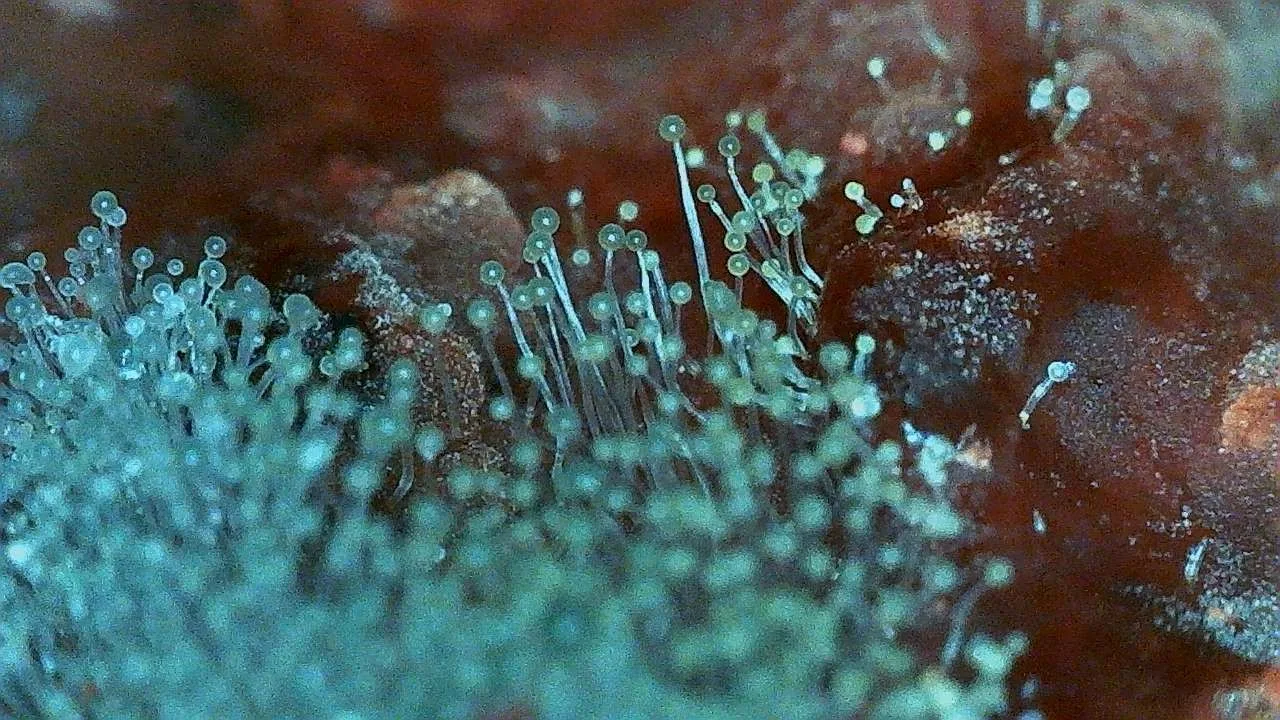
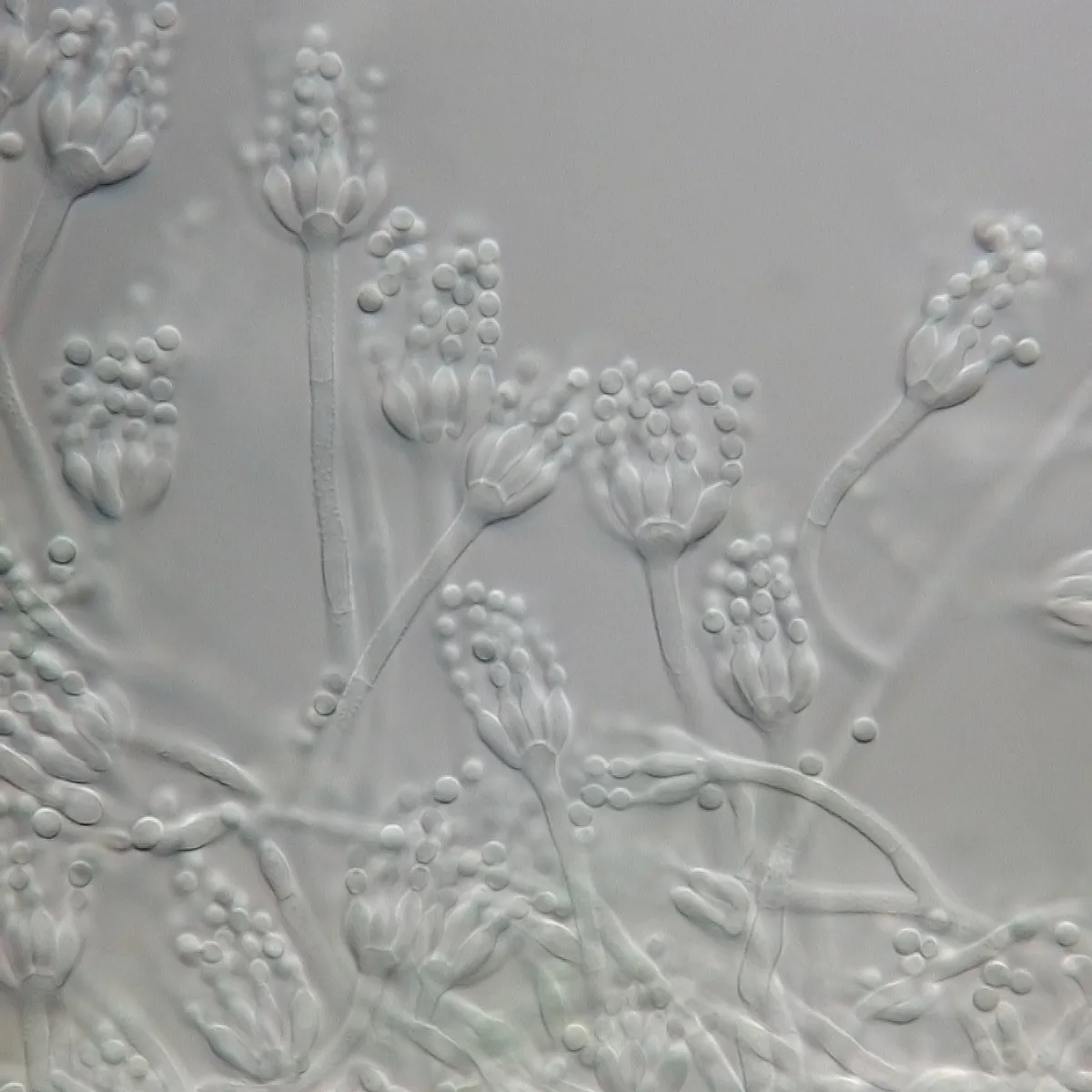
A study involving two molds describes how it prepared a spore suspension and applied it to mortar samples. This is a laboratory case, not an explanation of how molds disperse in the environment.
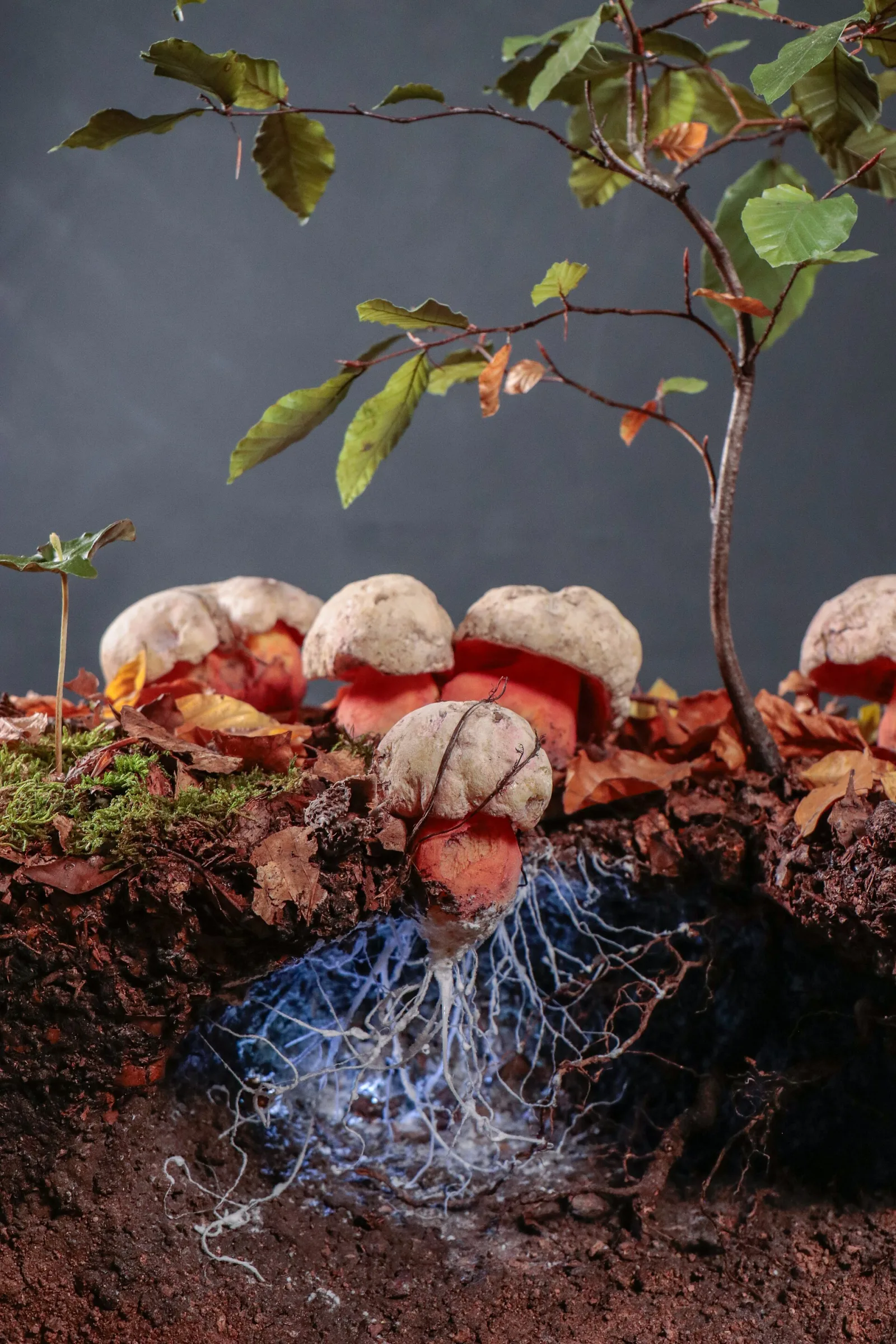 Documentary photograph
Photo by
TB0815
Source: wikimedia_commons
CC BY 4.0
resized and converted to WebP
Documentary photograph
Photo by
TB0815
Source: wikimedia_commons
CC BY 4.0
resized and converted to WebP
Explanation · 2 min
A focused look at how arbuscular mycorrhizal fungi exchange carbon and nutrients with plants, and what tracing methods allow us to conclude about this process.
Explanation · 2 min
A study at four wineries in the San Francisco Bay Area shows that fruit flies carry a variety of yeasts. The tests also reveal that attracting flies does not guarantee the same effect on their larvae.