Explanation
Mold Spores in a Mortar Experiment: What a Study Documents
A study involving two molds describes how it prepared a spore suspension and applied it to mortar samples. This is a laboratory case, not an explanation of how molds disperse in the environment.
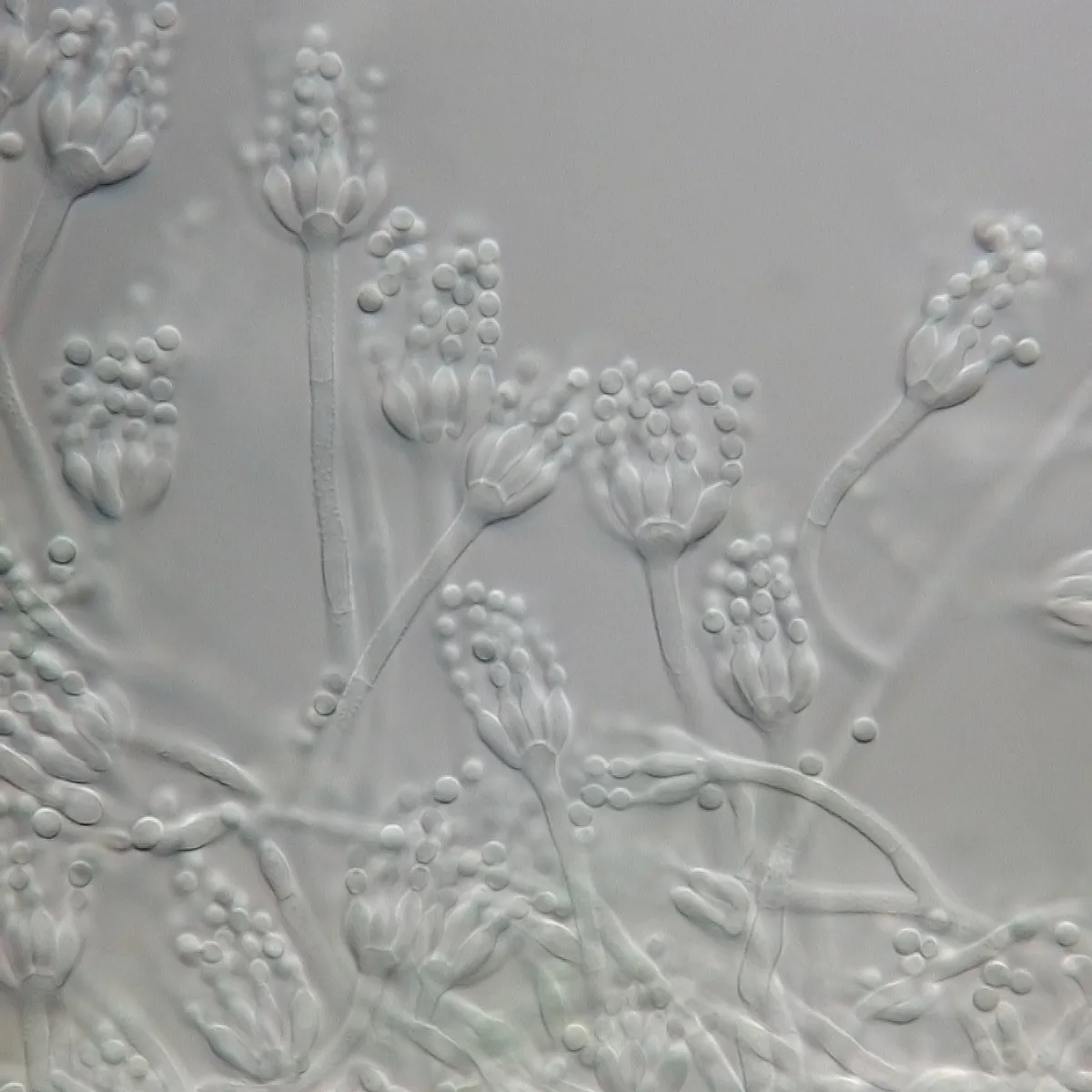
An Experimental Case, Not a Description of the Environment
The general question of how mold spores travel in nature requires evidence about their release and transport. The study considered here addresses a different subject: it prepared a spore suspension from two species and used it to inoculate mortar samples. Therefore, this text is limited to the procedure and results described in that experiment, without extrapolating them to environmental dispersal. [255]
How the Suspension Was Prepared
The study used pure cultures of Penicillium chrysogenum and Cladosporium herbarum. According to the method described, the cultures were transferred to distilled water; plates were then inoculated with a suspension of the culture and kept for five days at 25 °C and 95% relative humidity. Next, a suspension was prepared at a stated concentration of 1 × 10⁶ spores per milliliter. [255]
From the Suspension to the Samples
The resulting suspension was used to contaminate samples of a cement-and-polymer compound. The test specimens were then kept in a biological chamber at 25 °C and 95% relative humidity. The procedure shows controlled inoculation; it is not equivalent to observing how an air current, water, or another agent transports spores in a natural environment. [255]
What Was Observed and What Cannot Be Concluded
The study reports growth of both molds in the tested materials; the count of colony-forming units was somewhat higher in samples inoculated with Cladosporium herbarum. These results concern growth under the experimental conditions. They do not establish transport distances, common dispersal routes, or differences between species in the environment. [255]
Sources and method
This story synthesises the references below and separates possible observations from conclusions that would need more evidence. It does not present original FaunaGuide fieldwork or replace expert identification.
- Sealing and unsealing effect of filamentous fungi in CEM I cement mortars with polycarboxylic admixture. — Sealing and unsealing effect of filamentous fungi in CEM I cement mortars with polycarboxylic admixture - PMC Biodeterioration may take place due to the influence of microorganisms, leading to the deterioration or destruction of materials. This process in
- Soil fertility determines whether ectomycorrhizal fungi accelerate or decelerate decomposition in a temperate forest. — Soil fertility determines whether ectomycorrhizal fungi accelerate or decelerate decomposition in a temperate forest - PMC Ectomycorrhizal (ECM) fungi can both accelerate and decelerate decomposition of organic matter in forest soils, but a mechanistic un
- Three-Dimensional Printing of Living Mycelium-Based Composites: Material Compositions, Workflows, and Ways to Mitigate Contamination. — Three-Dimensional Printing of Living Mycelium-Based Composites: Material Compositions, Workflows, and Ways to Mitigate Contamination - PMC The construction industry makes a significant contribution to global CO2 emissions. Material extraction, processing,
- Humus form — Humus form is the features of the topsoil and plant litter in a biome, such as mull humus form in deciduous forest or mor humus form in coniferous forest. Dead organic matter, such as leaves, decomposes into humus. Sometimes soil animals mix underlying mi
- How fungi will save the world | Kew — How fungi will save the world | Kew There's thousands of diverse species, living in every habitat on the planet, and we've only just scratched the surface. But fungi might be the secret weapon in helping fight disease, plastic pollution and climate change
- Rotten to the core: fungi, decay, and the architecture of life | Grow Wild | Kew — Rotten to the core: fungi, decay, and the architecture of life 20 May 2026 Rotten to the core: fungi, decay, and the architecture of life The remarkable story of how fungi have evolved to decompose woodlands, shaping life as we know it. By Xuetong Yan Ima
- The afterlife effects of fungal morphology: Contrasting decomposition rates between diffuse and rhizomorphic necromass | US Forest Service Research and Development — The afterlife effects of fungal morphology: Contrasting decomposition rates between diffuse and rhizomorphic necromass | US Forest Service Research and Development T T T Articles Data and Tools Publications Treesearch Understory National Forest Service Li
- Linking wood-decay fungal communities to decay rates — Linking wood-decay fungal communities to decay rates: Using a long-term experimental manipulation of deadwood and canopy gaps | US Forest Service Research and Development T T T Articles Data and Tools Publications Treesearch Understory National Forest Ser
- Plastic-eating fungi thriving in manmade ‘plastisphere’ offer exciting possibilities for tackling global waste | Kew — Plastic-eating fungi thriving in manmade ‘plastisphere’ offer exciting possibilities for tackling global waste | Kew Plastic-eating fungi thriving in manmade ‘plastisphere’ offer exciting possibilities for tackling global waste Release date: 18 May 2023 1
- Life in soil | Natural History Museum — Life in soil | Natural History Museum Dark, dramatic and dead set on decomposition, soil is alive. Heaving with microbes, worms, fungi and insects, it’s a hive of activity right beneath our feet. Find out the dirt on soil’s drama. Soil is full of life. A
- Virus — En biología, un virus (del latín virus, en griego ἰός «toxina» o «veneno») es un agente infeccioso microscópico acelular que solo puede replicarse dentro de las células de los seres vivos. Los virus están constituidos por moléculas largas de ADN o ARN, r
- Spore — In biology, a spore is a unit of sexual (in fungi) or asexual reproduction that may be adapted for dispersal and for survival, often for extended periods of time, in unfavourable conditions. Spores form part of the life cycles of many plants, algae, fungi
- Pollution de l'air — La pollution de l'air (ou pollution atmosphérique) est une altération de la qualité de l'air pouvant être caractérisée par des mesures de polluants chimiques, biologiques ou physiques (appelés « aérocontaminants »). Elle peut avoir des conséquences préjud
- Fungi — I funghi (Fungi, L. 1753, dal latino) o miceti (dal greco antico μύκης?, mýkēs, inglese Fungus) sono un regno di organismi eucarioti e Opisthokonta, unicellulari e pluricellulari: comprende più di 700 000 specie conosciute, benché la diversità sia stata s
See and listen
Images, sounds and scenes
Resources that complement the information, with their origins and reuse conditions.
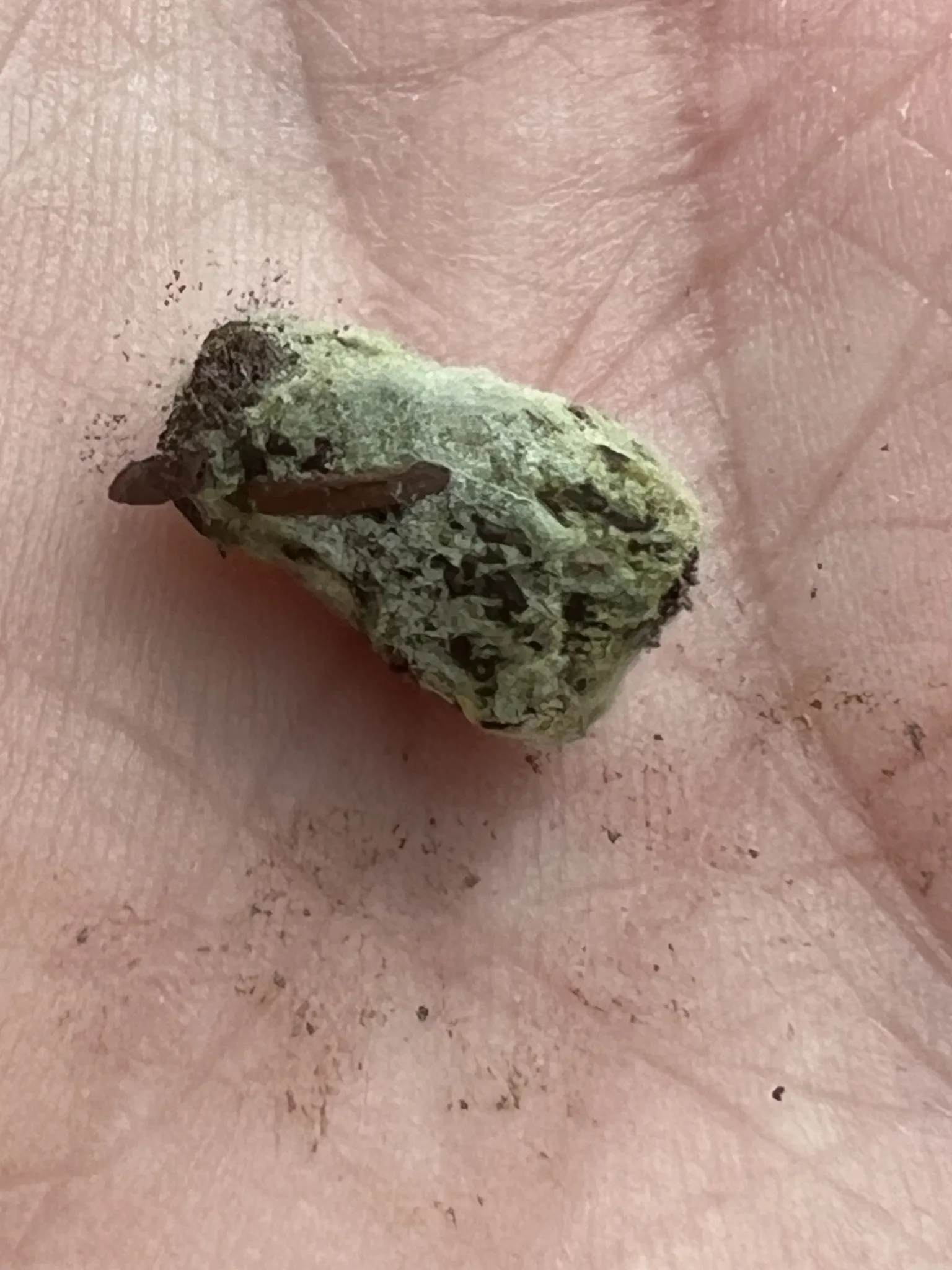
Documentary photograph: How Mold Spores Disperse in the Environment
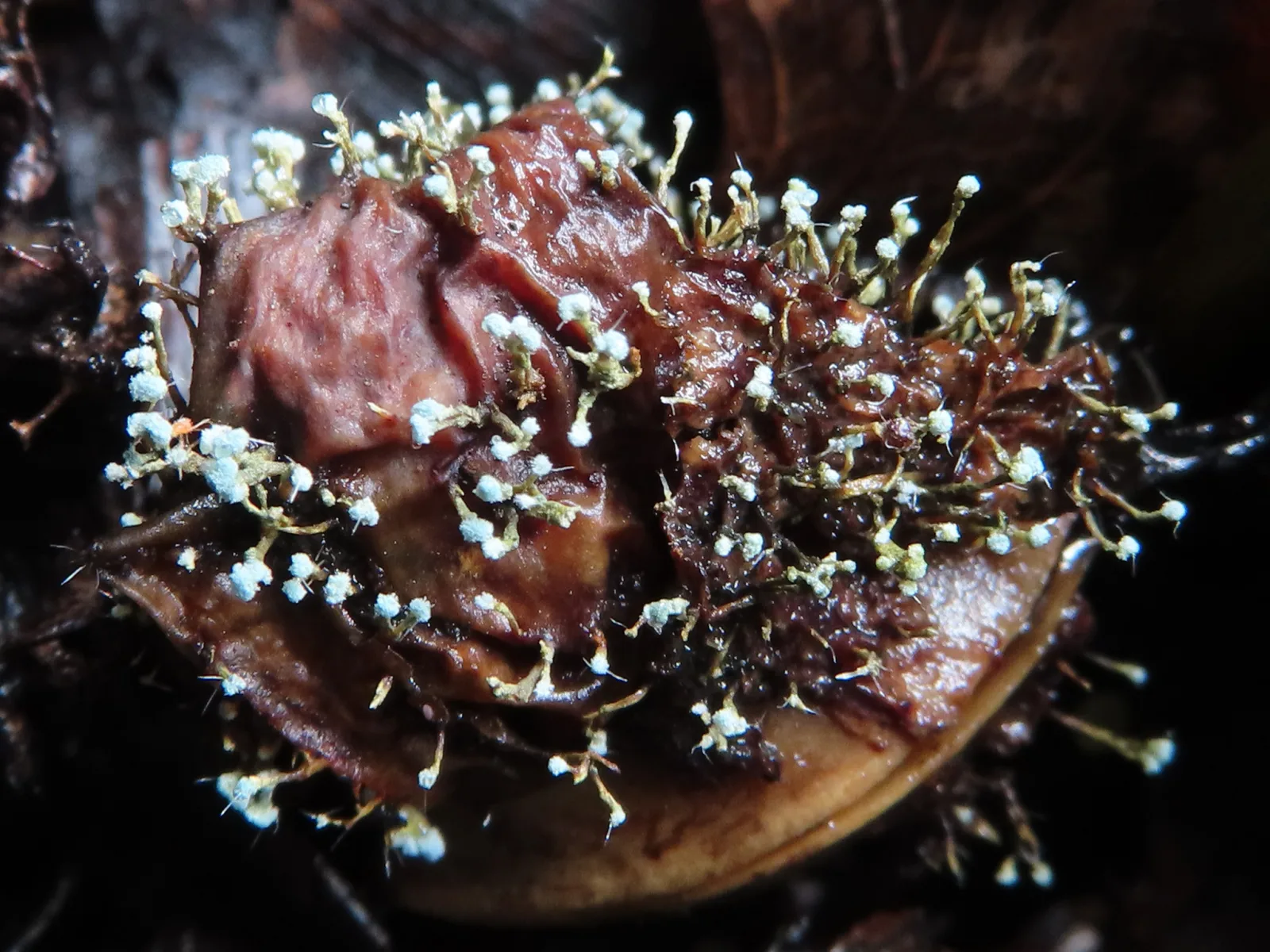
Documentary photograph: How Mold Spores Disperse in the Environment