Life near you
How to start a field notebook in your neighbourhood
A date, a place, some context and one simple question are enough to begin seeing differently.
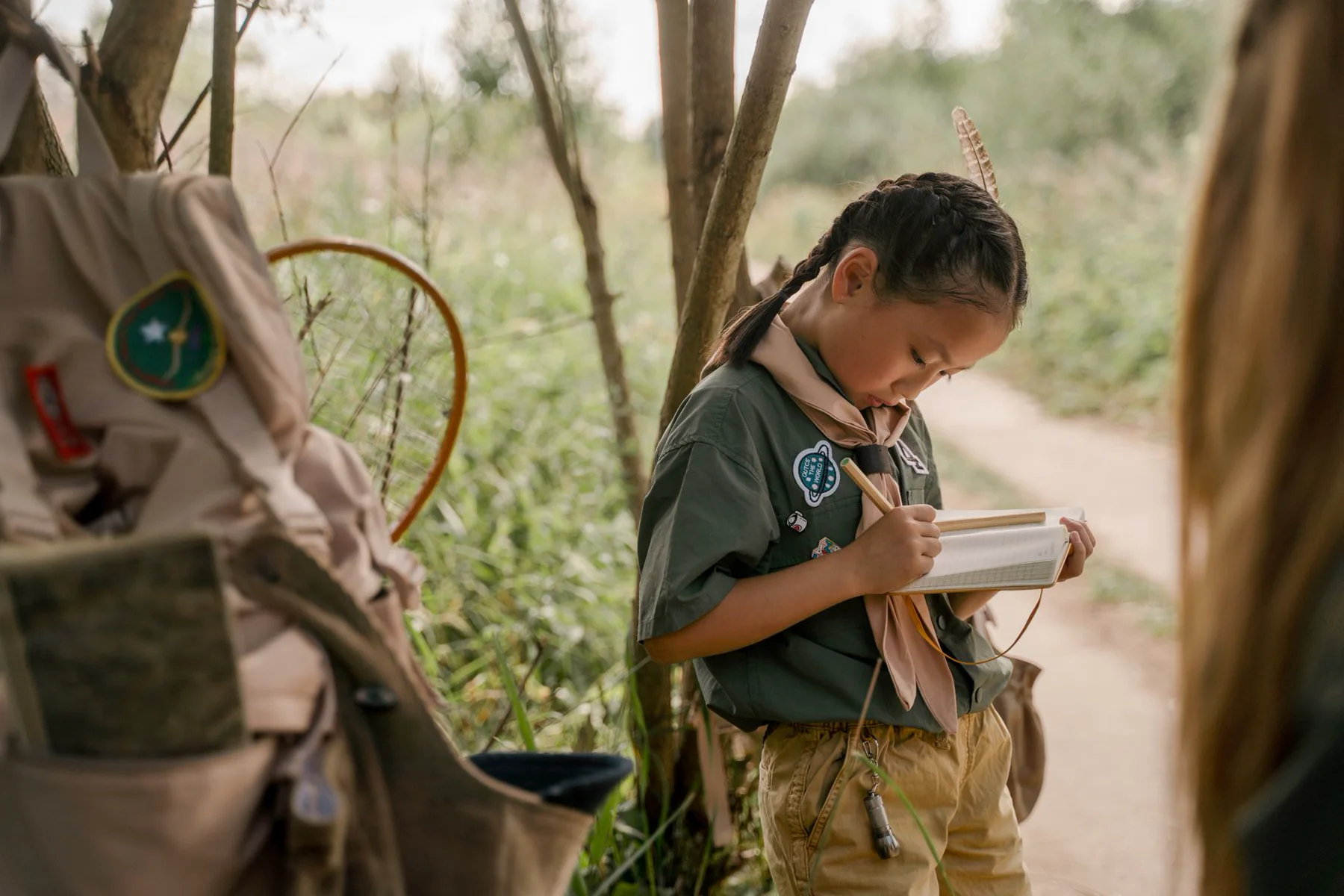
One question and a place you can revisit
A field notebook begins with a question, not a list of names. Which birds use the same tree? When do the first flowers appear on your street? A tree pit, square or short stretch of park is enough. Choose somewhere easy to revisit: repeated ordinary visits reveal more than one exceptional walk.
A small notebook and pencil will do, as will a note on your phone. What matters is being able to find each entry again and keep what you saw separate from what you think it means.
Make visits comparable
Return with a simple routine: perhaps ten minutes once a week on roughly the same route. Record changes in time of day, rain, construction or maintenance. Write down occasions when you do not see the animal you expected, but do not treat one absence as evidence that a population has disappeared.
Nature will not follow your timetable. Flowering can shift and a species can go unnoticed. A consistent notebook preserves those uncertainties and helps you ask a better question next time.
The essentials of a useful entry
Begin with the date, time, approximate place, duration and relevant conditions: sunshine, wind, rain or shade. Describe the setting and then the organism or trace that caught your attention. Number, approximate size, shape, colour and behaviour usually say more than words such as ‘pretty’ or ‘strange’.
A photo or drawing helps, but it does not replace context. The US National Park Service likewise uses date, place, weather and open questions as the basis for nature-journaling exercises.
Describe first, identify second
Write ‘dark insect with two yellow bands visiting purple flowers’ before proposing a species name. The description remains useful even if the identification later changes. Add an identification as a separate, provisional layer: ‘possibly a bumblebee; needs confirmation’. Do not let an app’s suggestion erase what you actually observed.
A sample entry might read: ‘18:20, neighbourhood park, overcast, 12 minutes. Three similar insects visit the same flowers; one seems to carry pollen on its legs. I cannot tell whether it touches the stigma.’ The uncertainty points to what to check next.
Sketch relationships, not just specimens
Note the flowering plant, the shade, damp soil or a bird using fruit. A simple sketch can preserve the positions of a tree, hedge and open patch without publishing exact coordinates. Songs, chewed leaves, seeds and decaying wood are also observations, even when you cannot identify their cause.
Later you can compare visits under sun and cloud, or a square before and after pruning. A comparison alone does not prove a cause; it gives you a more precise question to pursue.
Observe without creating harm
Do not handle wildlife, open shelters or approach nests and young for a better picture. If an animal changes its behaviour because of you, step back. Follow local access rules and stay on permitted routes. A useful observation does not require a close-up at any cost.
Before sharing, check coordinates and clues in text or images. For sensitive species and places, generalise the location or keep the precise record private. GBIF advises adjusting the precision of sensitive records and explaining when details are withheld.
Return to your notes
After several weeks, sort entries by date and look for modest patterns: a plant in flower, disappearing fruit or a visitor seen only under certain conditions. Mark gaps too. Were you always there at the same hour? Are your photos comparable? Those questions are more valuable than a rushed species list.
Your first notebook need not be perfect. If it preserves context, uncertainty and respect for the place, it is already a useful guide to nearby life and a starting point for checking better sources.
Sources and method
This story synthesises the references below and separates possible observations from conclusions that would need more evidence. It does not present original FaunaGuide fieldwork or replace expert identification.
- Nature Journaling — Core details and questions for a nature journal
- 7 Ways to Safely Watch Wildlife — Watching wildlife without disturbance
- Current Best Practices for Generalizing Sensitive Species Occurrence Data — Protecting sensitive locations