Explanation
Finding Direction Against Drift: A Question Studied in Young Ospreys
Migration can take birds across geographic barriers and into changing weather conditions. A study of young ospreys raises the question of navigation during a transoceanic journey, but the information available here does not allow specific cues to be attributed to them or its results to be summarized.
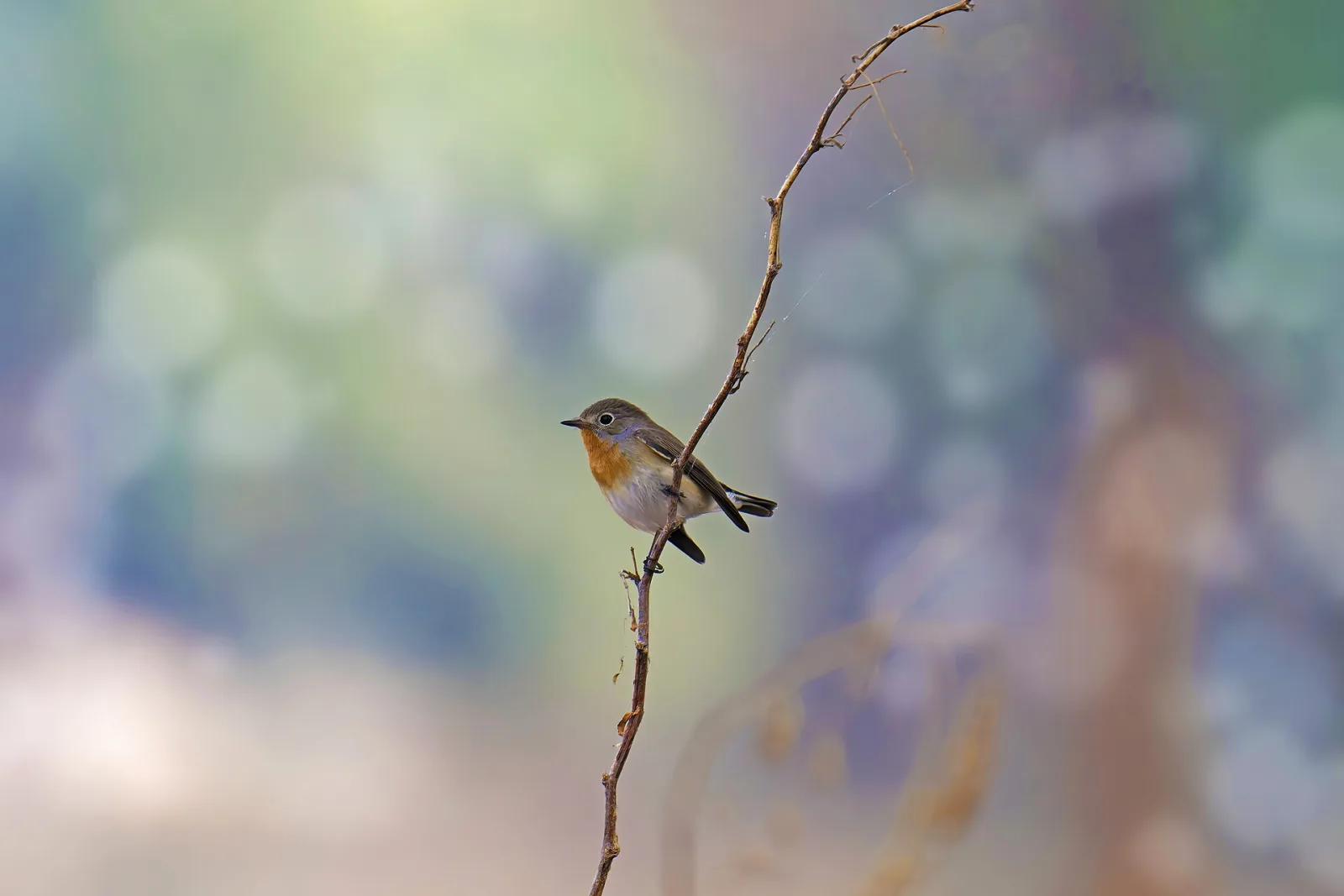
A navigation question on a demanding journey
Migration does not take place in a constant setting: birds may cross geographic barriers, encounter changing weather, and pass through unfamiliar environments. For this reason, navigation is studied alongside other aspects of the journey, such as physiology and stopovers. This provides context for the problem, but does not by itself reveal which cues a particular species uses. (Evidence: 581, 597)
What it means to compensate for drift
In the context of navigation, drift compensation is a problem posed for animals moving through the air or sea: to counteract drift, they need to be able to navigate. The idea describes an orientation challenge; it does not show that all birds respond in the same way or identify a specific sensory cue that would enable them to do so. (Evidence: 587)
The specific example of ospreys
A 2014 publication is titled “Juvenile Osprey Navigation during Trans-Oceanic Migration” and presents the navigation of young ospreys during a transoceanic migration. The title identifies the case under investigation, but the summary available for this synthesis does not provide results that would show how they oriented, what route they took, or whether they corrected for drift. (Evidence: 587)
Possible cues and limits of the evidence
A review of animal navigation describes Earth’s magnetic field as a possible source of directional information and also as possible positional information, or a “map,” that some animals might use. This is a general possibility, not evidence that these ospreys used it. In addition, reviews of migration point to gaps and conflicting evidence in the study of navigation. (Evidence: 589, 597, 599)
Sources and method
This story synthesises the references below and separates possible observations from conclusions that would need more evidence. It does not present original FaunaGuide fieldwork or replace expert identification.
- Editorial: Optimal bird migration: Implications for navigation, physiology, and stopover ecology — Frontiers | Editorial: Optimal bird migration: Implications for navigation, physiology, and stopover ecology During migration, birds cross considerable geographical barriers, experience changing weather conditions, and face unfamiliar environments with un
- Juvenile Osprey Navigation during Trans-Oceanic Migration. — Juvenile Osprey Navigation during Trans-Oceanic Migration - PMC To compensate for drift, an animal migrating through air or sea must be able to navigate. Although some species of bird, fish, insect, mammal, and reptile are capable of drift compensation, o
- Varieties of visual navigation in insects. — Varieties of visual navigation in insects - PMC The behaviours and cognitive mechanisms animals use to orient, navigate, and remember spatial locations exemplify how cognitive abilities have evolved to suit a number of different mobile lifestyles and habi
- Magnetic maps in animal navigation. — Magnetic maps in animal navigation - PMC In addition to providing animals with a source of directional or ‘compass’ information, Earth’s magnetic field also provides a potential source of positional or ‘map’ information that animals might exploit to asses
- A hidden Markov model to identify and adjust for selection bias: an example involving mixed migration strategies. — A hidden Markov model to identify and adjust for selection bias: an example involving mixed migration strategies - PMC An important assumption in observational studies is that sampled individuals are representative of some larger study population. Yet, th
- Bird migration — Bird migration is a seasonal movement of some birds between breeding and wintering grounds that occurs twice a year. It is typically between northern and southern regions. Migration carries inherent risks, including predation and other hazards en route. T
- Reverse migration (birds) — Reverse migration, also called reverse misorientation, is a phenomenon whereby a bird migrates in the opposite direction to that typical of its species during the spring or autumn. For example, if a bird breeding in central Asia reverses its normal southe
- Animal migration — Animal migration is the relatively long-distance movement of individual animals, usually on a seasonal basis. It is the most common form of migration in ecology. It is found in all major animal groups, including birds, mammals, fish, reptiles, amphibians,
- Micronesian navigation — Micronesian navigation techniques are those navigation skills used for thousands of years by the navigators who voyaged between the thousands of small islands in the western Pacific Ocean in the subregion of Oceania, that is commonly known as Micronesia.
- Navigation: How Birds Find Their Way When They Migrate | All About Birds — Navigation: How Birds Find Their Way When They Migrate White-crowned Sparrow by Keith Kennedy / Macaulay Library. Updated May 2026; first published April 2008. Twice a year billions of birds take to the skies as ... Share White-crowned Sparrow by Keith Ke
- Bird Migration - Migratory Species (U.S. National Park Service) — Bird Migration - Migratory Species (U.S. National Park Service) Bird Migration Official websites use .govA .gov website belongs to an official government organization in the United States. Secure .gov websites use HTTPSA lock ( ) or https:// means you've
- New frontiers in bird migration research | U.S. Geological Survey — New frontiers in bird migration research Bird migrations are impressive behavioral phenomena, representing complex spatiotemporal strategies to balance costs of living while maximizing fitness. The field of bird migration research has made great strides o
- Bird Movement and Migration | U.S. Geological Survey — Bird Movement and Migration Migration is an amazing annual event. Every year billions of animals – birds, mammals, insects, and fish – make long-distance journeys from breeding grounds to wintering grounds. Most northern hemisphere birds migrate southward
- New frontiers in bird migration research — New frontiers in bird migration research Bird migrations are impressive behavioral phenomena, representing complex spatiotemporal strategies to balance costs of living while maximizing fitness. The field of bird migration research has made great strides o
- 6 Migratory Birds USGS is Following | U.S. Geological Survey — 6 Migratory Birds USGS is Following You might follow a lot of accounts on Twitter or Instagram, but at the USGS we follow the birds. With the help of lightweight GPS-transmitters to track migratory birds in near real-time and classic tools like bird bands
- Migratory Birds | U.S. Geological Survey — Migratory Birds Migratory Birds Home Science Data Multimedia Publications Web Tools Software News Connect Filter Total Items: 128 September 8, 2026 Redesigning the Eastern Breeding Waterfowl Population and Habitat Survey USGS and partners are revising the
- Migration | All About Birds — Migration | All About Birds Migration | All About Birds https://www.allaboutbirds.org/news Your online guide to birds and birdwatching Mon, 22 Jun 2026 19:53:57 +0000 en-US hourly 1 https://wordpress.org/?v=7.1.1 The Great Swallow Debate at the Birth of A
- Exploring Bird Migration: Your Questions Answered | Bird Academy • The Cornell Lab — Exploring Bird Migration: Your Questions Answered | Bird Academy • The Cornell Lab Have you ever wondered what triggers migration, how birds navigate, or the challenges they encounter? Join us for a Q&A focused on bird migration, featu ... Thumbnail image
- Migración de las aves - Wikipedia, la enciclopedia libre — La migración de las aves consiste en los viajes estacionales regulares realizados por muchas especies de aves. Además de la migración, las aves realizan otros movimientos en respuesta a cambios en la disponibilidad de alimentos, de hábitat o climáticos, q
- Safe Flight, Dark Night (U.S. National Park Service) — Safe Flight, Dark Night (U.S. National Park Service) Safe Flight, Dark Night Official websites use .govA .gov website belongs to an official government organization in the United States. Secure .gov websites use HTTPSA lock ( ) or https:// means you've sa
- Danubio — El Danubio es uno de los ríos más importantes de Europa, que recorre la parte centro-oriental, en dirección principalmente oeste a este, pasando, o limitando, diez países —Alemania, Austria, Eslovaquia, Hungría, Croacia, Serbia, Rumania, Bulgaria, Moldav
- Bird of prey — Birds of prey or predatory birds, also known as raptors, are hypercarnivorous species of bird that actively hunt and feed on other vertebrates, mainly mammals, reptiles, and smaller birds. In addition to speed and strength, these predators have keen eyesi
- Lac d'Annecy — Le lac d'Annecy est un lac de France situé dans les Alpes du Nord, en Haute-Savoie, dans la région Auvergne-Rhône-Alpes. Par sa superficie, il est le deuxième lac d'origine glaciaire de France après celui du Bourget, très proche, et exception faite de la
- Algeria — L'Algeria (AFI: /ald͡ʒeˈria/; in arabo الجزائر?, al-Jazāʾir; in berbero algerino standard: ⴷⵣⴰⵢⴻⵔ, Dzayer), ufficialmente Repubblica Algerina Democratica e Popolare (in arabo الْجُمْهُورِيَّة ٱلْجَزَائِرِيَّة ألدِّيمُقْرَاطِيَّة ٱلشَّعْبِيَّة?, al-Jumhū
- Aves — Aves são uma classe de seres vivos vertebrados endotérmicos caracterizada pela presença de penas, um bico sem dentes, oviparidade de casca rígida, elevado metabolismo, um coração com quatro câmaras e um esqueleto pneumático resistente e leve. As aves estã
- Bútio-de-faces-cinzentas — Bútio-de-faces-cinzentas Status de conservação Pouco preocupante (IUCN 3.1) Classificação científica Domínio: Eukaryota Kingdom: Animalia Filo: Chordata Classe: Aves Ordem: Accipitriformes Família: Accipitridae Género: Butastur Espécie: B. indicus Nome bino
- Europe — Europe Localisation de l'Europe. Superficie 10 180 000 km2 Population 744 094 971 hab. (2025) Densité 73 hab./km2 Pays 50 Principales langues albanais, allemand, anglais, arménien, basque, biélorusse, bosnien, bulgare, catalan, croate, danois, espagnol, e
- Au rapinyera — Un alica d'a especie Aquila chrysaetos. As aus rapinyeras, aus rapinyaderas u aus de garrapinya son aus depredaderas que cazan emplegando as garras que tienen bien poderosas y rematadas con unglas ganchudas, y o pico ta descarnar as presas. Por un regular
- Donua — Donua Land Þēodscland, Ēastrīce, Slofacland, Ungerland, Croatland, Serbland, Rumǣnia, Pulgaraland, Muldofland Cumb landrīca Þēodscland, Ēastrīce, Slofacland, Ungerland, Croatland, Serbland, Rumǣnia, Pulgaraland, Muldofland, Ucræȝna, Sƿissland, Eotol, Slof