Inside the forest
While wood is transformed
A fallen trunk is not the end of a story: it is shelter, food and the setting for a slow transformation.
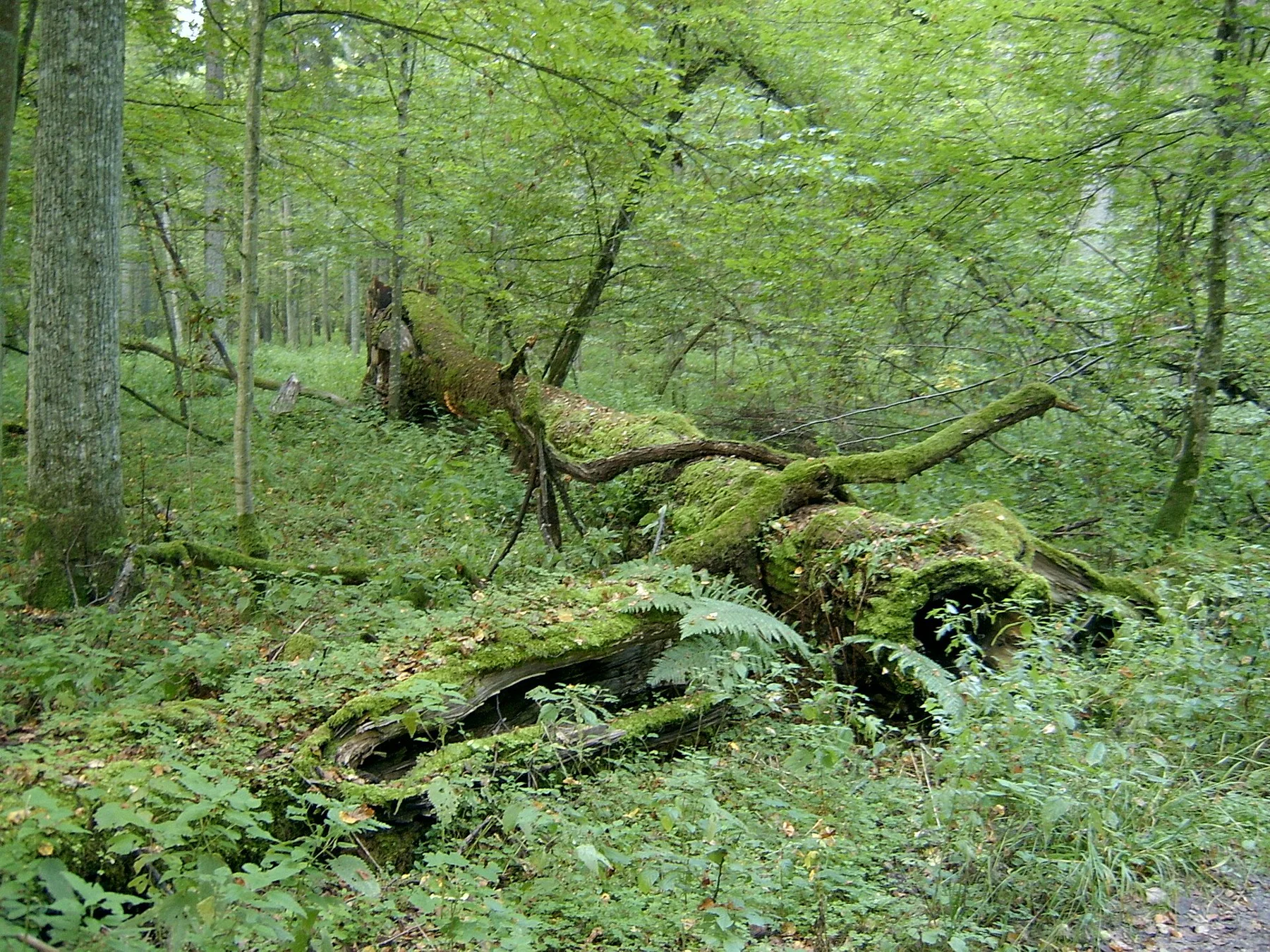
A fallen tree remains part of the forest
A log on the ground may look still, but it has not left the ecosystem. Bark cracks, moisture varies across the wood and new spaces become available to fungi and invertebrates. The tree species, log size, climate and contact with soil all matter.
‘Dead wood’ describes the tree, not an absence of life. Forest research treats fallen wood as a carbon store, a substrate and a physical part of the habitat.
The mushroom is not the whole fungus
A mushroom, crust or bracket is often a reproductive structure. Hyphae may already extend through the wood long before a fruiting body appears. Decomposer fungi release enzymes that alter tough components of plant cell walls and make the material available to other processes.
Not every forest fungus has the same role: some associate with roots and others are pathogens. A fruiting body beside a log is not enough to infer its function; the substrate and less visible features also matter.
Decay has no universal timetable
Fresh, hard wood with intact bark offers different conditions from a damp, soft log. As its structure and chemistry change, the communities living in it can change too. Yet there is no single fixed procession of species that every fallen tree must follow.
US Forest Service research shows that fungal assemblages respond to microclimate and forest conditions. Decay stage is a useful clue, not a precise clock for dating a log.
A small landscape beneath the bark
Wood provides surfaces, cavities and moisture. Some invertebrates tunnel through or fragment it; others eat fungi or shelter in its spaces. One log can have a dry, sunny face and a damp side against the soil, creating several microhabitats within one object.
Fungi do not work alone. Bacteria and invertebrates also take part, with their roles changing by place and decay stage. Removing every piece of fallen wood can remove opportunities for organisms that depend on it.
Carbon, nutrients and management
As wood decomposes, carbon moves among organic matter, soil and atmosphere. The rate and destination vary, so saying that a log simply ‘fertilises’ the ground misses part of the story. It also stores carbon for a time and adds physical structure to a forest.
Keeping fallen wood may help associated organisms, but safety, fire risk, regulations and management aims all matter. Watching a log in place is usually more informative than pulling it apart.
Read a log without dismantling it
Choose a piece visible from an allowed path. Record the tree species only if you can identify it confidently, then note approximate diameter, shade, apparent moisture, soil contact and remaining bark. Look for fruiting bodies, galleries and changes in texture without tearing anything away. Visit after rain and in another season: no mushrooms in sight does not mean no fungi.
Photograph the whole log as well as a detail. If you cannot name an organism, a careful description still makes a useful record.
Identification is not proof of edibility
A mushroom’s shape and colour can change with age and moisture. Reliable identification may require its base, fertile surface, substrate and other features absent from a single photograph. This article is about ecology, not collecting or eating wild fungi.
Never eat a wild mushroom on the strength of a photo, an app or this text. If ingestion may have occurred, promptly contact a local medical or poison service. Caution is part of good woodland observation.
Sources and method
This story synthesises the references below and separates possible observations from conclusions that would need more evidence. It does not present original FaunaGuide fieldwork or replace expert identification.
- A review of the role of fungi in wood decay of forest ecosystems — The role of fungi in wood decay
- Linking wood-decay fungal communities to decay rates — Fungal communities and microclimate variation
- Quantifying carbon stores and decomposition in dead wood: A review — Carbon and deadwood dynamics
- Mushroom poisoning: Don’t invite the death angel to dinner — Limits of identification and safety when considering consumption