Explanation
How a Floral Visit Can Transport Pollen
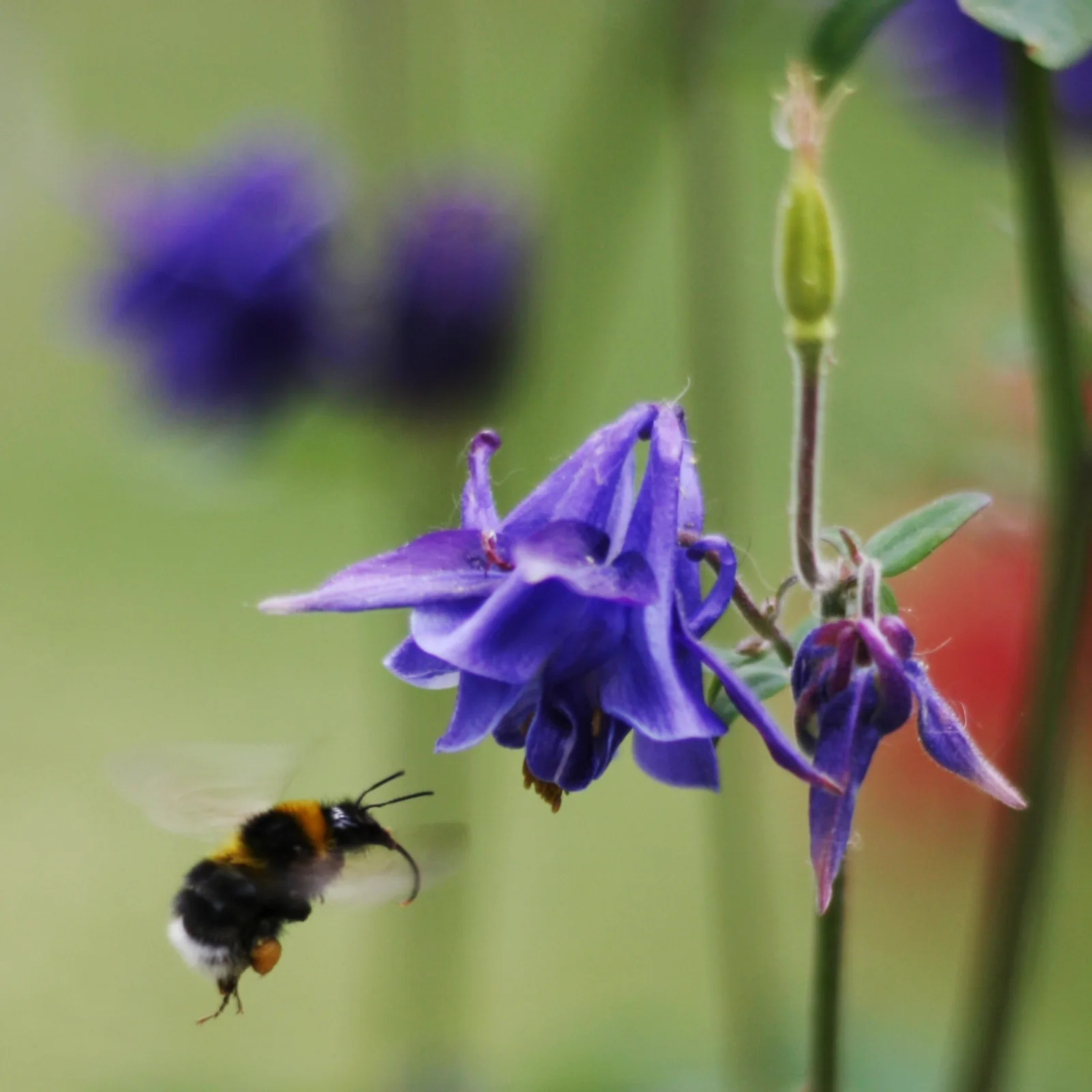
A visit to a flower can set pollen transport in motion: an animal picks it up while seeking resources and may carry it to other flowers. The evidence supports explaining this general principle, but not reconstructing the exact contact between any visitor and any flower.
The Process in General Terms
Pollination is the transfer of pollen grains from an anther—the male part of a flower—to a stigma, the receptive part. This transfer can occur within the same flower or between flowers; pollen can also be transported by wind or water. An animal visit is therefore one possible route, not the full definition of pollination. [335]
From Seeking Resources to Transport
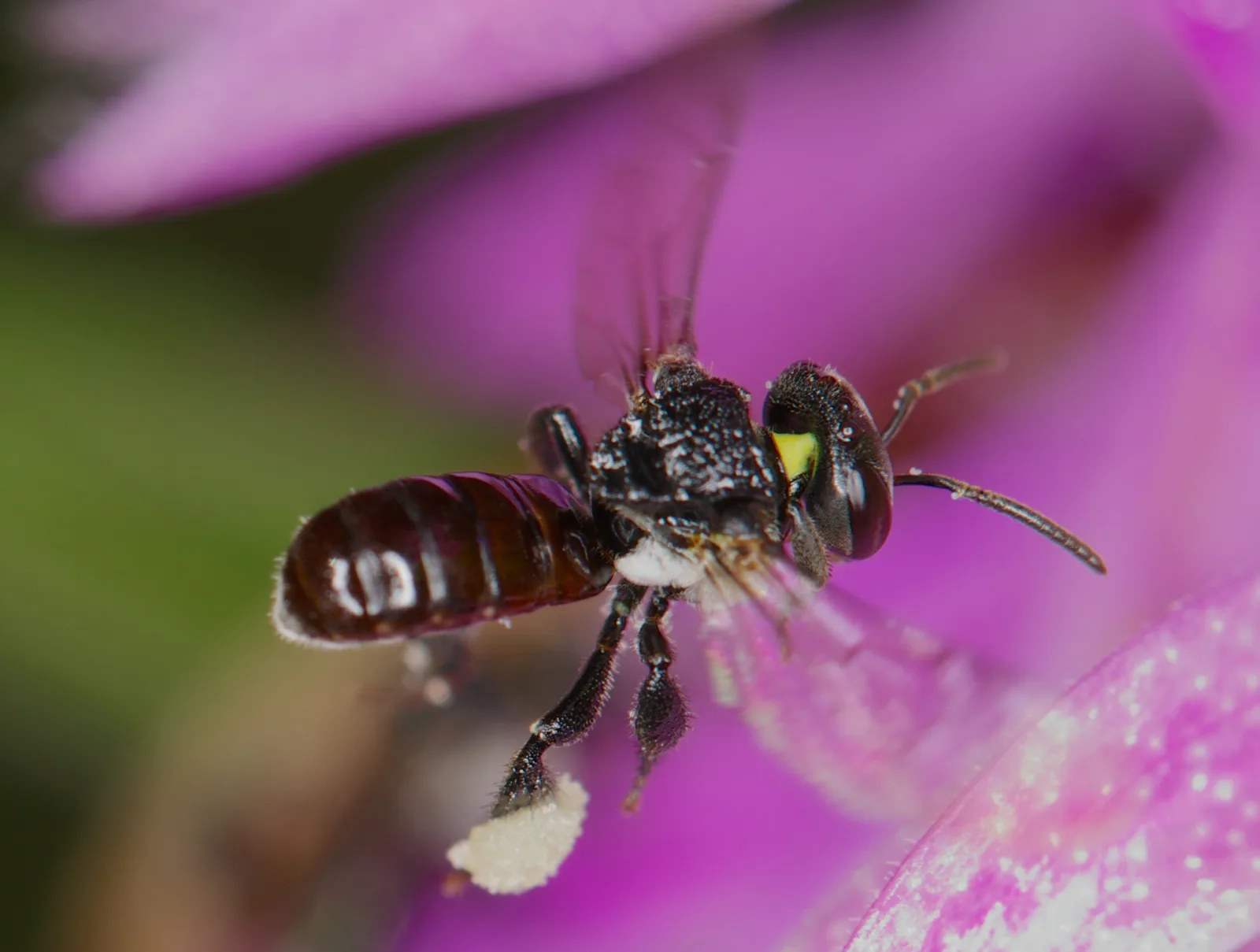
Many animals visit flowers to obtain resources such as nectar or pollen. While feeding, they may become coated with pollen and carry it with them when they visit another flower. If some grains reach a stigma, the transfer described as pollination takes place. This explanation remains at a general level: the sources do not specify which part of the body touches each structure or the exact sequence of movements made by an individual visitor. [331] [335]
A Visit Alone Does Not Prove the Outcome
Seeing an insect on a flower is not enough to establish that effective transfer occurred: for pollination to take place, pollen must reach a stigma. The available information defines this process, but does not quantify what proportion of visits achieve it or allow comparisons of its frequency or effectiveness among species, places, and conditions. This article explains the general mechanism, not the outcome of any particular visit. [335] [673]
A Documented Case: Thrips and Stellera
A study of Stellera chamaejasme and the thrips Frankliniella intonsa provides a specific example, not a rule for all flowers. The authors found that adult thrips could act as effective pollinators, as could some long-tongued lepidopterans. The thrips preferentially visited inflorescences at an intermediate flowering stage and laid eggs in the floral tubes; excluding them from flowers reduced the plant’s seed production and also the number of larvae in the flowers. [203]
What Was Observed and What Remains a Possible Explanation
In this case, the study linked the flowering stage preferred by adult thrips with egg laying and the subsequent presence of larvae in the flowers. The authors proposed that floral chemical cues, such as volatile compounds or scents, could help guide this preference. This mediation is presented as a possible explanation, not as a mechanism established by the available information; nor does it describe the exact bodily contact that occurs during each visit. [203]
Sources and method
This story synthesises the references below and separates possible observations from conclusions that would need more evidence. It does not present original FaunaGuide fieldwork or replace expert identification.
- A new brood-pollination mutualism between Stellera chamaejasme and flower thrips Frankliniella intonsa. — A new brood-pollination mutualism between Stellera chamaejasme and flower thrips Frankliniella intonsa - PMC Brood pollination mutualism is a special type of plant-pollinator interaction in which adult insects pollinate plants, and the plants provide bree
- Ants are more than just curious bystanders to some flowers-they act as significant pollinators. — Ants are more than just curious bystanders to some flowers—they act as significant pollinators - PMC Ant–plant associations are ubiquitous and highly diverse in almost all terrestrial environments, resulting in complex ecological networks. Although ant–pl
- Insects and Pollinators - National Agricultural Library - USDA — Insects and Pollinators | National Agricultural Library Find databases and information on insects and pollinators, beekeeping, invasive species, and more. Insects and Pollinators Insects have segmented bodies, legs with joints, and external skeletons, cal
- How to identify pollinating insects / RHS — How to identify pollinating insects / RHS <p>Garden plants help support a range of pollinating insects. Use this spotter guide to identify those that visit your garden or a local green space.</p> Study & learnSchool gardeningTeaching resourcesSearch allBa
- Top tricksters: Plants winning at pollination | Kew — Top tricksters: Plants winning at pollination | Kew Be amazed at the clever techniques plants use to attract their pollinators, be it birds, beetles or bats. 6 November 2019 4 min read Top tricksters: Plants winning at pollination Be amazed at the clever
- How Plants Reproduce | RHS Advice — How Plants Reproduce | RHS Advice Discover the fascinating ways plants reproduce and tips to encourage propagation in your garden. Quick facts Plants multiply by sexual reproduction or by making clones of themselves 1 Poor pollination is a common cause of
- Pollinator bug hunt / RHS — Pollinator bug hunt / RHS Look for the insects that visit flowers and observe them taking pollen from flower to flower. Study & learnSchool gardeningTeaching resourcesSearch allBackPollinator bug huntPollinator bug huntLook for the insects that visit flow
- Visitantes Florales de la FAUBA | Facultad de Agronomía - UBA — Visitantes Florales de la FAUBA | Facultad de Agronomía - UBA Más información Ingresar al glosario Descargar glosario en PDF Más información Ingresar al glosario Descargar glosario en PDFEn esta sección encontrarás información más detallada de los visitan
- Polinización - Wikipedia, la enciclopedia libre — La polinización es el proceso de transferencia de polen desde los estambres hasta el estigma o parte receptiva de las flowers en las angiospermas, donde germina y fecunda los óvulos de la flor, haciendo posible la producción de semillas y frutos. El tra
- Polinización | Biodiversidad Mexicana — Polinización | Biodiversidad Mexicana Polinización La polinización es la transferencia de granos de polen de la parte masculina de una flor (antera) a la parte femenina (estigma) de otra o de la misma flor. Es un proceso ecológico de gran importancia. El
- Pollinators: decline in numbers | RHS Advice — Pollinators: decline in numbers | RHS Advice Understand why pollinators are declining and what you can do to help reverse the trend. Quick facts Common names - Almost any insect that visits flowers including bumblebees; solitary bees; wasps; hoverflies an
- Polinización — Polinización | Biodiversidad Mexicana Polinización La polinización es la transferencia de granos de polen de la parte masculina de una flor (antera) a la parte femenina (estigma) de otra o de la misma flor. Es un proceso ecológico de gran importancia. El
- Insecta — Los insectos (Insecta) son una clase de animales invertebrados del filo de los artrópodos, caracterizados por presentar un par de antenas, tres pares de patas y dos pares de alas (que, no obstante, pueden reducirse o faltar). La ciencia que estudia los in
- Hummingbird — Hummingbirds are birds native to the Americas and comprise the biological family Trochilidae. With approximately 375 species and 113 genera, they occur from Alaska to Tierra del Fuego, but most species are found in Central and South America. As of 2026, 2
- Bombus — Les bourdons sont des insectes sociaux du genre Bombus et de la famille des Apidae. Ce sont d'importants pollinisateurs. Les différentes espèces de bourdons se nourrissent du nectar des fleurs et récoltent le pollen pour nourrir leurs larves. Quelques esp
- Pokémon di prima generazione — La prima generazione dei videogiochi della serie Pokémon comprende i titoli Pokémon Rosso e Blu (1996) e Pokémon Giallo (1998). Essa introduce il primo gruppo di 151 Pokémon. Le creature sono state concepite da un gruppo di meno di dieci disegnatori, coor
- Insekten — Insekten, wissenschaftlich Insecta (von lateinisch insectum, „das Eingeschnittene“), auch Kerbtiere oder Kerfe genannt, sind die artenreichste Klasse der Gliederfüßer (Arthropoda) und zugleich die mit absoluter Mehrheit auch artenreichste Klasse der Tiere
- Lista de episódios de Naruto — Esta é uma lista dos episódios da série de anime Naruto, adaptação da Parte I da série de mangá de mesmo nome, escrita e ilustrada por Masashi Kishimoto. O anime foi produzido pelo Studio Pierrot junto com a TV Tokyo[carece de fontes]? e exibido entre 3 d
See and listen
Images, sounds and scenes
Resources that complement the information, with their origins and reuse conditions.
Documentary photograph: What Happens During an Insect’s Visit to a Flower