Collection
Signs of Life in Dead Wood
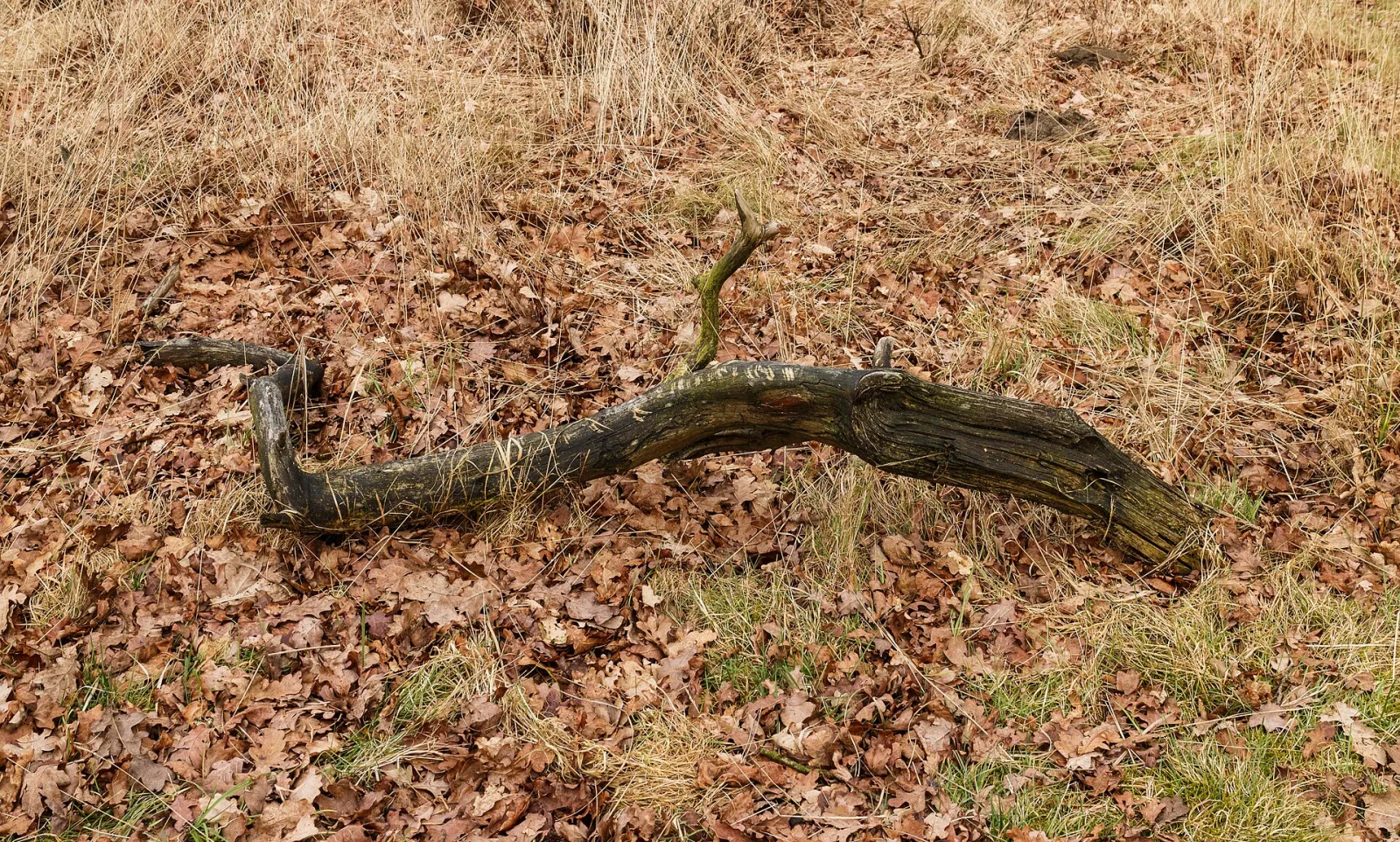
Dead wood is not an empty setting: the collected sources describe it as habitat for diverse organisms. This collection compares three approaches—cryptogams, forest planning, and the fall of standing dead trees—without turning them into an identification guide or attributing findings that the available sources do not show.
Selection Criteria and Scope
The collection brings together sources linking dead or decaying wood with habitats and forest processes. They were selected for that explicit connection and because they allow us to distinguish between an ecological study, a planning tool, and a paper on standing dead trees. This is not a species inventory or a collection of visual clues for identifying them. The sources cover different contexts; they do not describe a single region or authorize generalizing their conclusions to all forests. [136, 145, 160]
What Is Documented
The study on cryptogams addresses organisms associated with different deadwood structures in temperate broadleaf forests not dominated by beech. Its abstract presents dead wood—standing or fallen, and especially large pieces—as habitat for specialized organisms; it mentions insects, fungi, lichens, and bacteria. The available excerpt does not provide the study's results or allow specific species to be named. [136]
DecAID, for its part, defines standing dead trees, fallen wood, and decaying live trees as decaying-wood elements. It describes these elements as habitat for many terrestrial organisms and as contributors to ecosystem productivity and diversity. It is an advisory tool based on data and research from Oregon and Washington, designed to guide management planning. [160]
Three Approaches, Not One Conclusion
The sources complement one another, but they are not interchangeable. The cryptogam study focuses on the diversity of organisms associated with different deadwood structures; DecAID synthesizes information for forest-planning purposes; and Oberle's article addresses the fall of standing dead trees and its possible consequences for habitat, public safety, and the carbon cycle. The available abstract of the latter presents these impacts as context for the work; it does not provide detailed results here. [136, 145, 160]
Explanations and Hypotheses: Keep the Boundary Clear
The explanation supported by these sources is limited: dead wood can provide habitat for diverse organisms, and its availability and composition are considerations in forest planning. However, the available excerpts cannot establish which species will occur on a particular piece of wood, what signs can be used to identify them, or how their communities change according to wood type. Nor is an original hypothesis presented here as though it were a finding. [136, 160]
Omissions and Collection Maintenance
Species lists, identification guidance, and claims about quantitative results are omitted because the supplied material does not verify them. The text about moose in boreal forests is also excluded: the available excerpt provides metadata and does not allow a sufficiently developed connection with the focus of this collection to be verified. [137]
The collection is maintained according to an explicit editorial criterion: include sources that provide verifiable context about dead wood and forest life, preserve the geographic scope stated by each source, and update or remove claims when the consulted material does not support them. Differences among ecological studies, management tools, and work on forest processes should remain visible rather than being merged into a universal conclusion. [136, 145, 160]
Sources and method
This story synthesises the references below and separates possible observations from conclusions that would need more evidence. It does not present original FaunaGuide fieldwork or replace expert identification.
- Dead wood quality influences species diversity of rare cryptogams in temperate broadleaved forests — Dead wood quality influences species diversity of rare cryptogams in temperate broadleaved forests Abstract: Dead wood is one of the most important indicators of forest naturalness and the most important manageable habitat for biodiversity in forests. Sta
- The role of moose as a disturbance factor in managed boreal forests — Edenius L., Bergman M. et al. (2002) The role of moose as a disturbance factor in managed boreal forests home focus and scope journal policies Focus and scope Peer review process Openness and transparency Publication frequency Archiving Article processing
- When a tree falls: Controls on wood decay predict standing dead tree fall and new risks in changing forests. — When a tree falls: Controls on wood decay predict standing dead tree fall and new risks in changing forests - PMC When standing dead trees (snags) fall, they have major impacts on forest ecosystems. Snag fall can redistribute wildlife habitat and impact p
- Dead wood, living legacies: habitat for a host of fungi. | US Forest Service Research and Development — Dead wood, living legacies: habitat for a host of fungi. | US Forest Service Research and Development T T T Articles Data and Tools Publications Treesearch Understory National Forest Service Library Multimedia Treesearch Dead wood, living legacies: habita
- What is DecAID Advisor? — What is DecAID Advisor? × Inventory Plots Interactive Maps Close What Is the DecAID Advisor? Introduction Decayed wood elements -- snags, down wood, and live decaying trees -- are habitat for many organisms that live in terrestrial ecosystems, and contrib