At a glance
Essentials
- Distribution
- It has become naturalized in parts of the Americas, Australia, and New Zealand, in addition to its native range.
- Habitat
- It grows in meadows and other areas of low-growing grass, including lawns, parks, and gardens; it is also recorded in compact, somewhat moist soils.
- Activity
- The flower heads open in the light and may close at night or in bad weather.
Observation guide
What to look for
- 01
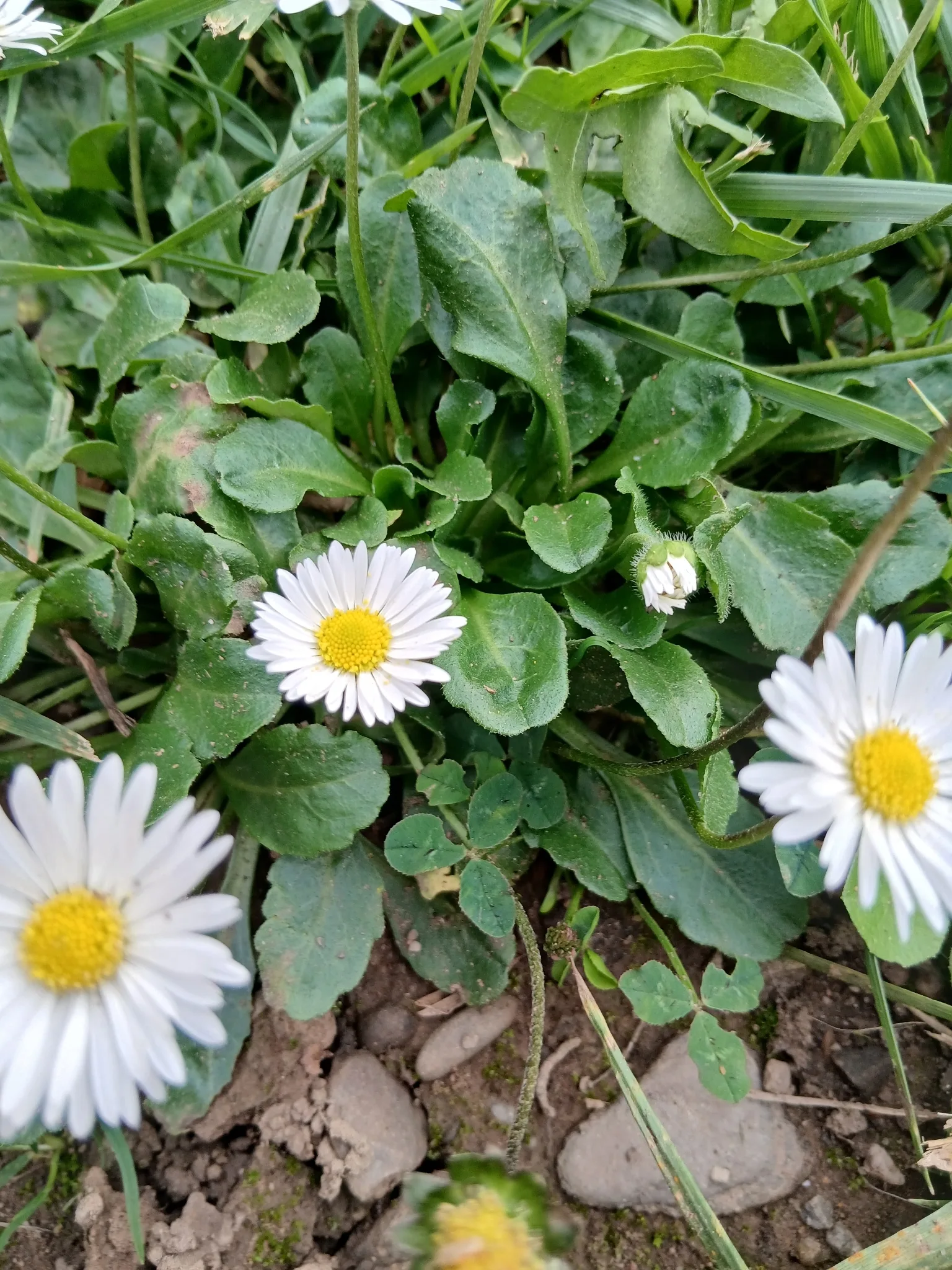
The small, rounded or spoon-shaped leaves form a ground-level rosette; the flowering stems are leafless.
- 02
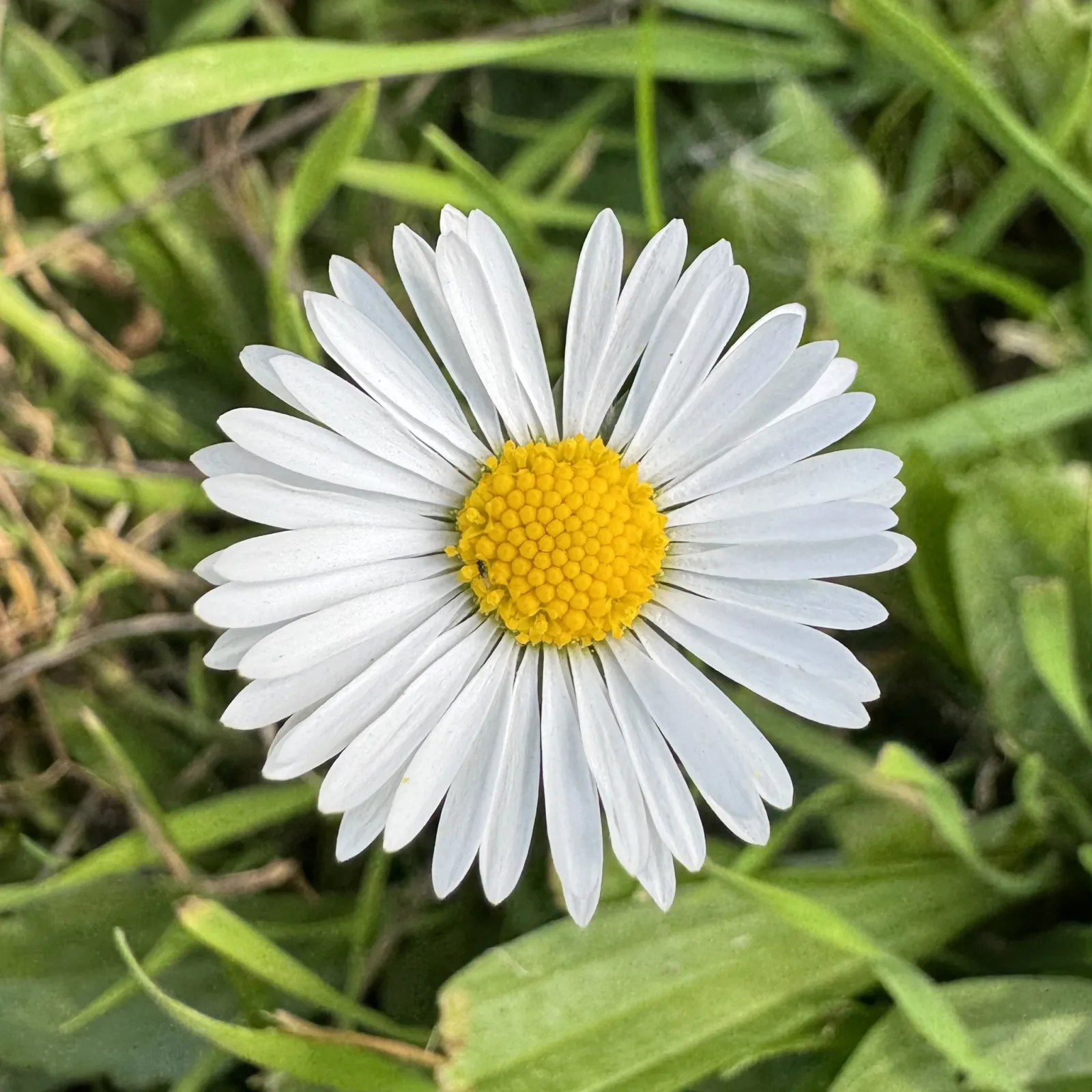
Each flower head has a yellow center of small florets surrounded by white florets, which may have pink or purple tones.
Lighting, age and viewing angle can hide features. If identification affects consumption, handling or conservation, consult specialist sources.
Ecology
Description and characteristics
Bellis perennis is a perennial herb that forms a basal rosette of small, rounded or spoon-shaped leaves. Leafless flowering stems grow from it, bearing flower heads composed of numerous small florets: those in the center are yellow, while the outer ones are white, sometimes tinged with pink or purple. It produces small, dry fruits called achenes, without a pappus; it can reproduce by seed and also vegetatively.
It grows in low-growing vegetation, such as meadows, lawns, parks, and gardens, and can thrive in compact, somewhat moist soils. The flower heads open in the light and may close at night or in bad weather; insects visit them, including bees, bumblebees, hoverflies, and flies. In addition to its native range, it has become naturalized in parts of the Americas, Australia, and New Zealand.