At a glance
Essentials
- Size
- Stems can exceed 1.5 m under favourable growing conditions. The range may vary with age, sex and population.
- Distribution
- Its native range comprises Macaronesia, northern and northeastern tropical Africa, the Arabian Peninsula and Europe to Siberia and Iran.
- Habitat
- Grows primarily in the temperate biome.
Observation guide
What to look for
- 01
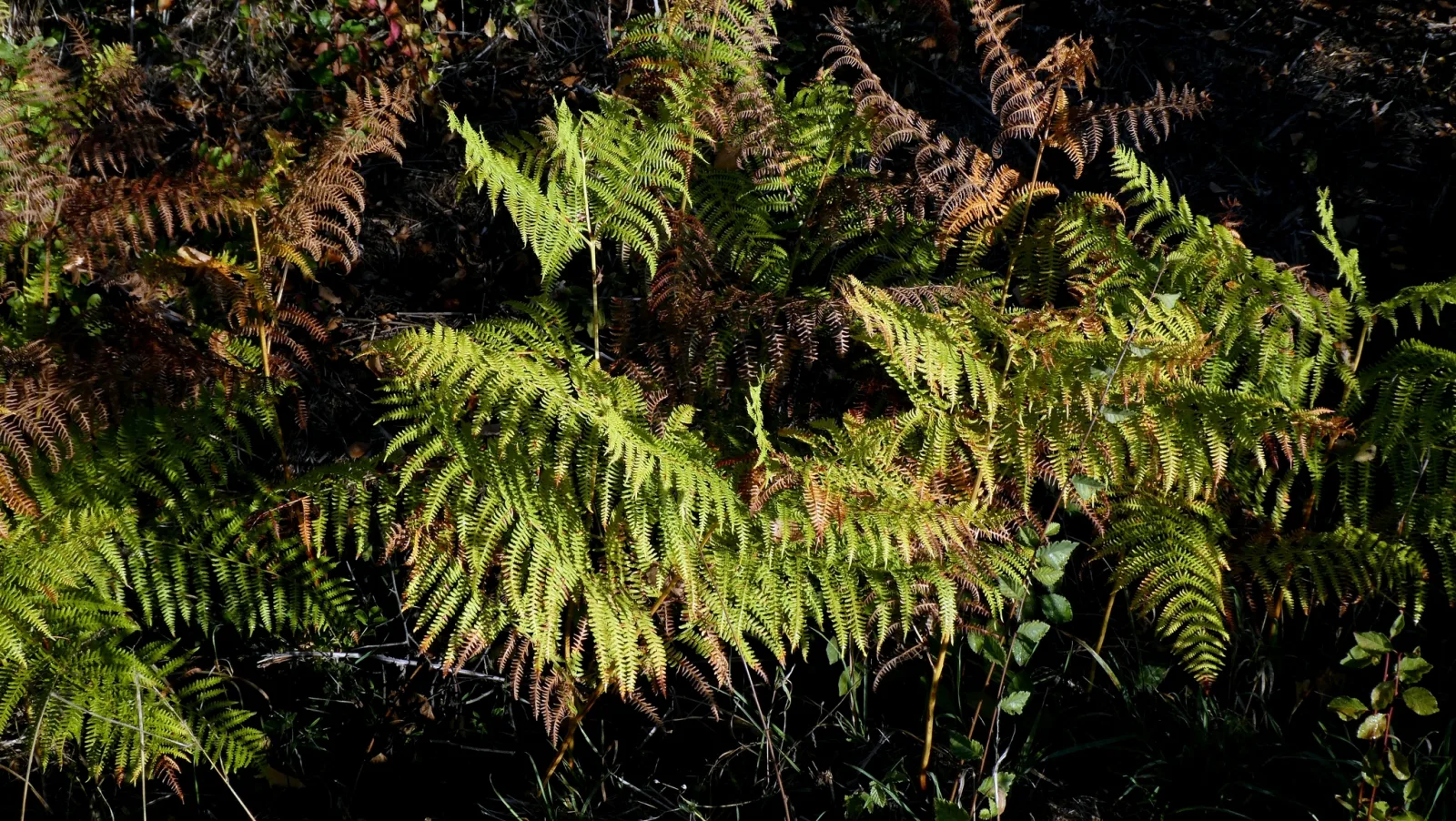
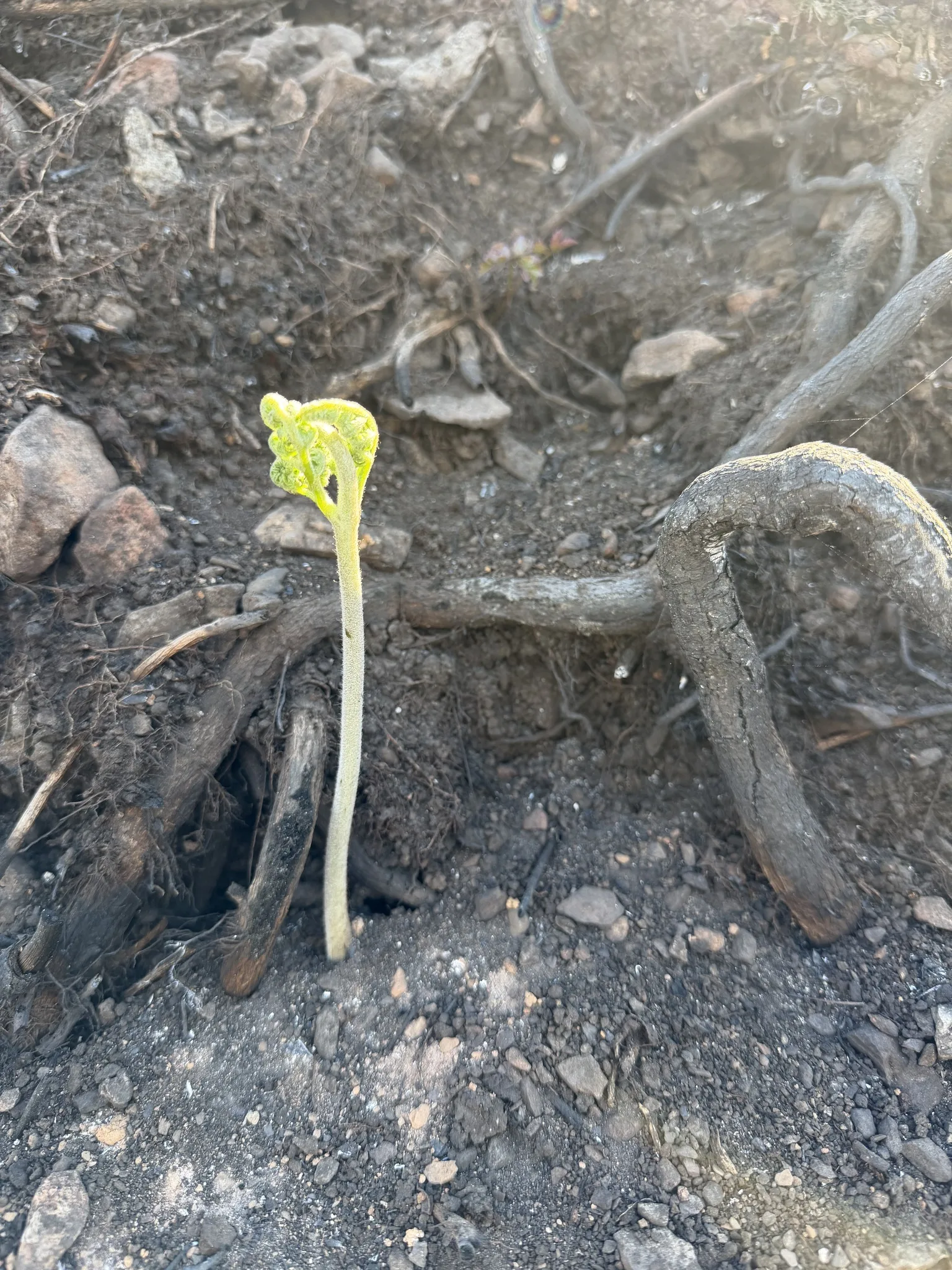
Triangular, divided fronds, unfolding from curled young shoots.
- 02
Extensive underground rhizomes, from which new stems emerge.
Lighting, age and viewing angle can hide features. If identification affects consumption, handling or conservation, consult specialist sources.
Ecology
Description and characteristics
Pteridium aquilinum produces triangular, divided fronds. Below ground it maintains an extensive network of rhizomes: these are stems, not simply roots, and new shoots arise from them. Young fronds emerge curled and unfold as they grow. Under favourable conditions, stems can exceed one and a half metres.
Spread combines rhizomes and windborne spores. Rhizomes allow an established patch to advance underground; spores can give rise to plants farther away. In the UK, new growth appears in spring and fronds become reddish-brown in autumn before dying back to ground level. The disappearance of the fronds does not mean that the perennial plant has vanished.
Its presence also provides wildlife shelter and food for various caterpillars. Traditional consumption of young shoots in some places does not make them advisable to eat: there are concerns about carcinogenic compounds in the plant, and eating them or feeding them to animals is not recommended.