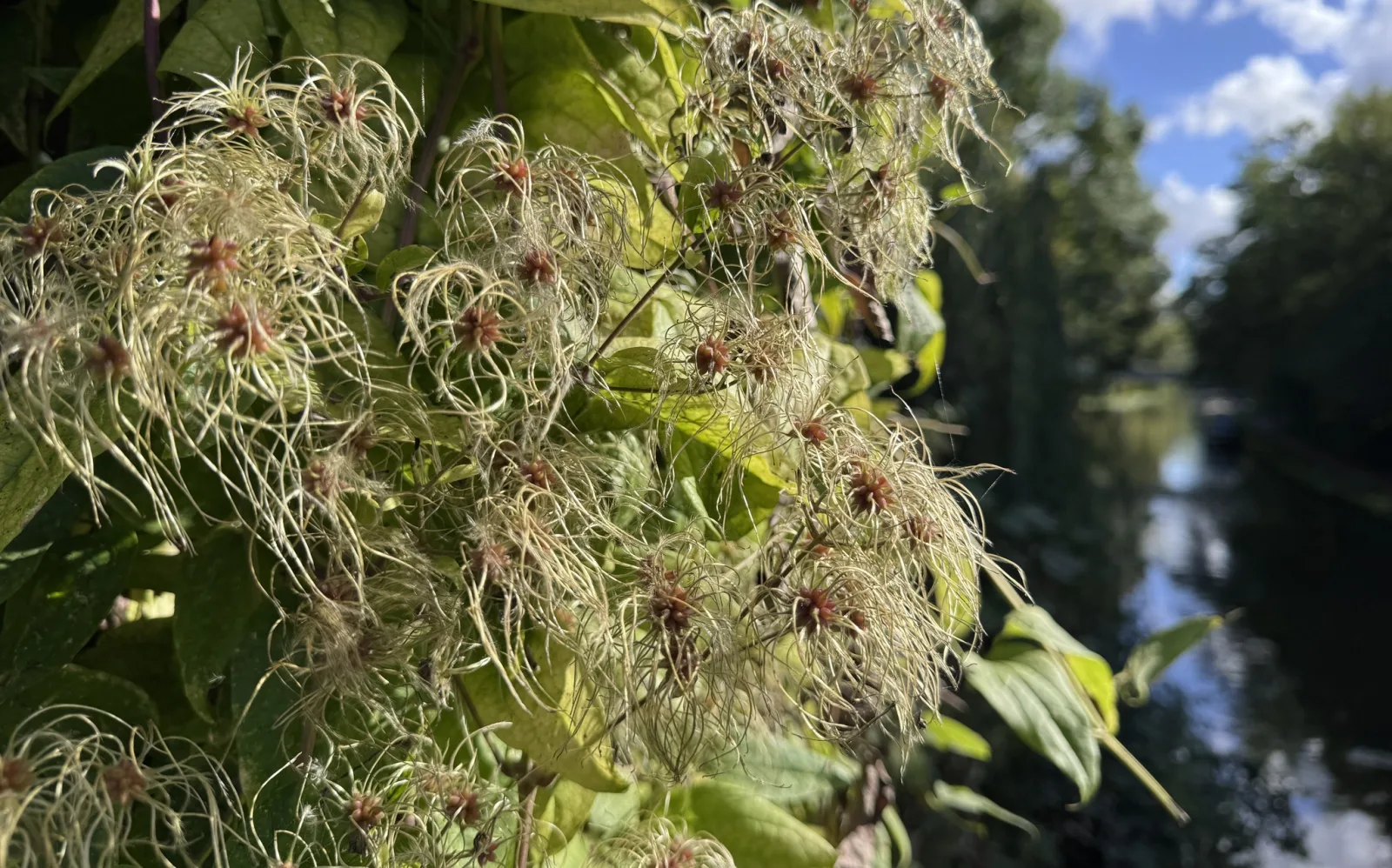
At a glance
Essentials
- Distribution
- Its native range includes Europe. It has also been introduced to New Zealand, where it has been noted for invasive behavior.
- Habitat
- It grows mainly in the temperate biome and is described as a European liana; specific plant communities are not specified.
Observation guide
What to look for
- 01
It has branched, grooved stems, visible on its climbing portions.
- 02
Its leaves are deciduous and do not remain on the plant throughout the year.
- 03
The flowers are greenish-white and fragrant, with velvety sepals beneath them.
- 04
It has a climbing habit, a characteristic growth form of the species.
Lighting, age and viewing angle can hide features. If identification affects consumption, handling or conservation, consult specialist sources.
Ecology
Description and characteristics
Clematis vitalba is a climbing plant with branched, grooved stems. It has deciduous leaves, meaning they do not remain on the plant all year, and produces fragrant flowers with a greenish-white hue. Beneath the flowers are sepals with a velvety appearance. These traits make its general form recognizable and distinguish this description of the species from those of other ornamental clematis; the shape and arrangement of its leaves, as well as further floral details, are unspecified.
The species grows mainly in the temperate biome and is described as a European liana. Its climbing habit is part of its ecology; in places where it has been introduced, such as New Zealand, it has been noted for invasive behavior. One account links this expansive capacity to its dispersive reproduction, vigor, and climbing growth. The specific types of vegetation it occupies and local soil or moisture conditions are not specified, so a more precise habitat cannot be assigned.
In addition to its visible features, the stem contains xylem, tissue that conducts water through vessels. Vessels with relatively wide conduits and the pit membranes separating neighboring vessels have been studied in this species. In stem samples, those membranes in older growth rings were found to be shrunken and stiffer than those in recent growth, a change associated with tissue aging. Regarding its annual cycle, its foliage is known to be deciduous and its reproductive system favors dispersal; flowering and fruiting seasons are not specified, nor are its developmental stages described in detail.