At a glance
Essentials
- Habitat
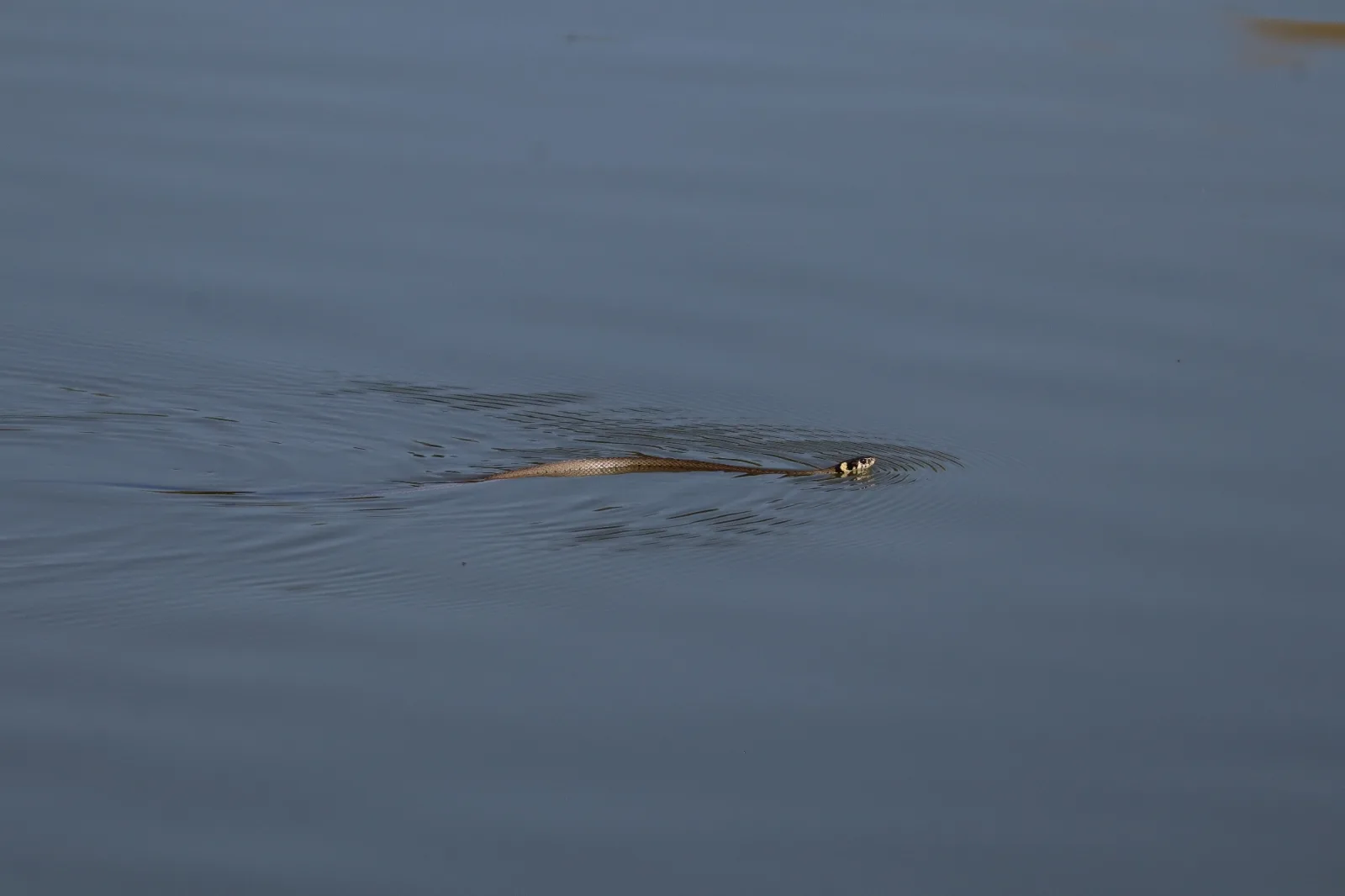
- Usually found near bodies of water.
- Activity
- Usually diurnal, with documented twilight and nighttime activity.
- Diet
- Mainly amphibians; adults more often eat metamorphosed frogs than tadpoles.
Observation guide
What to look for
- 01
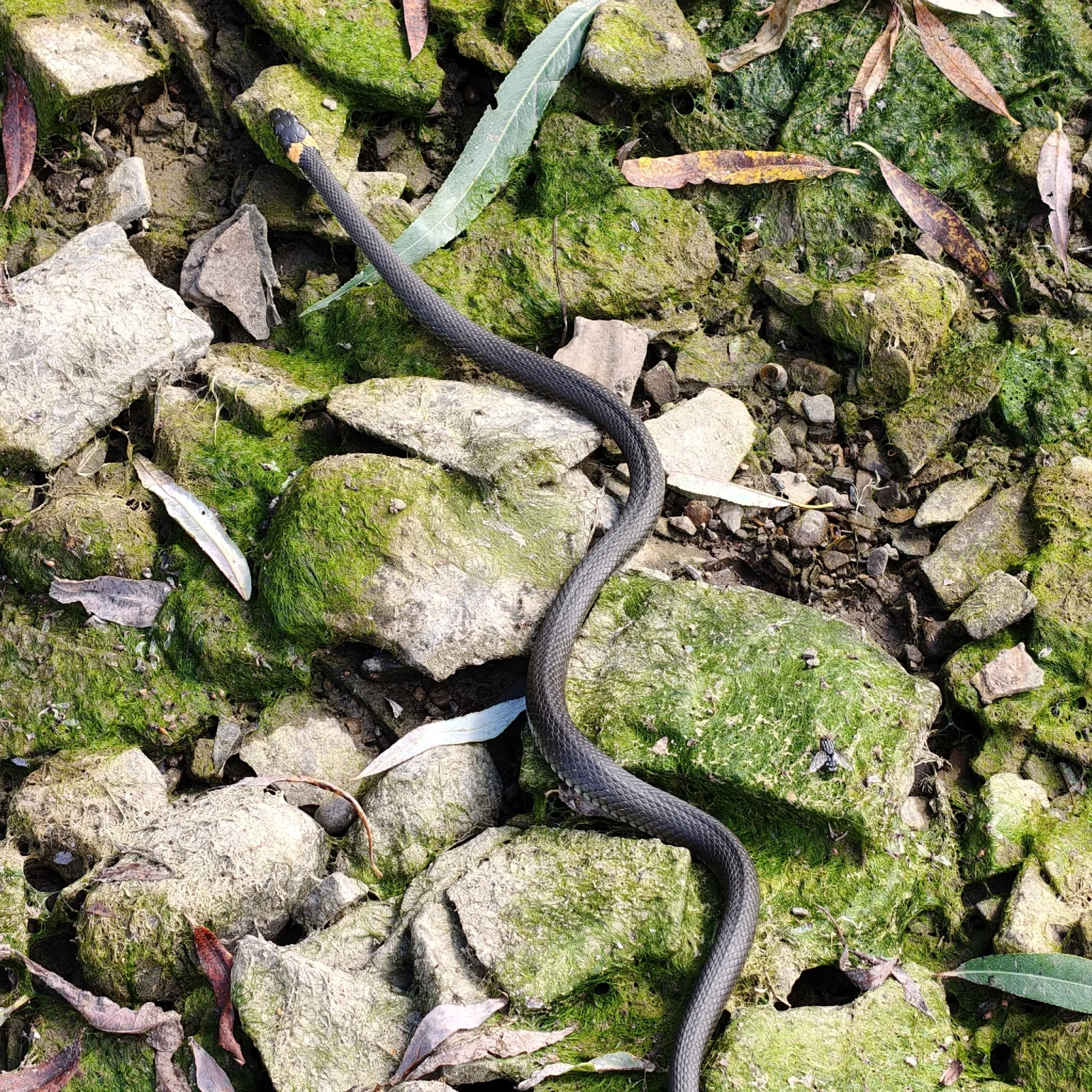
Variable colour, with common and striped forms.
- 02
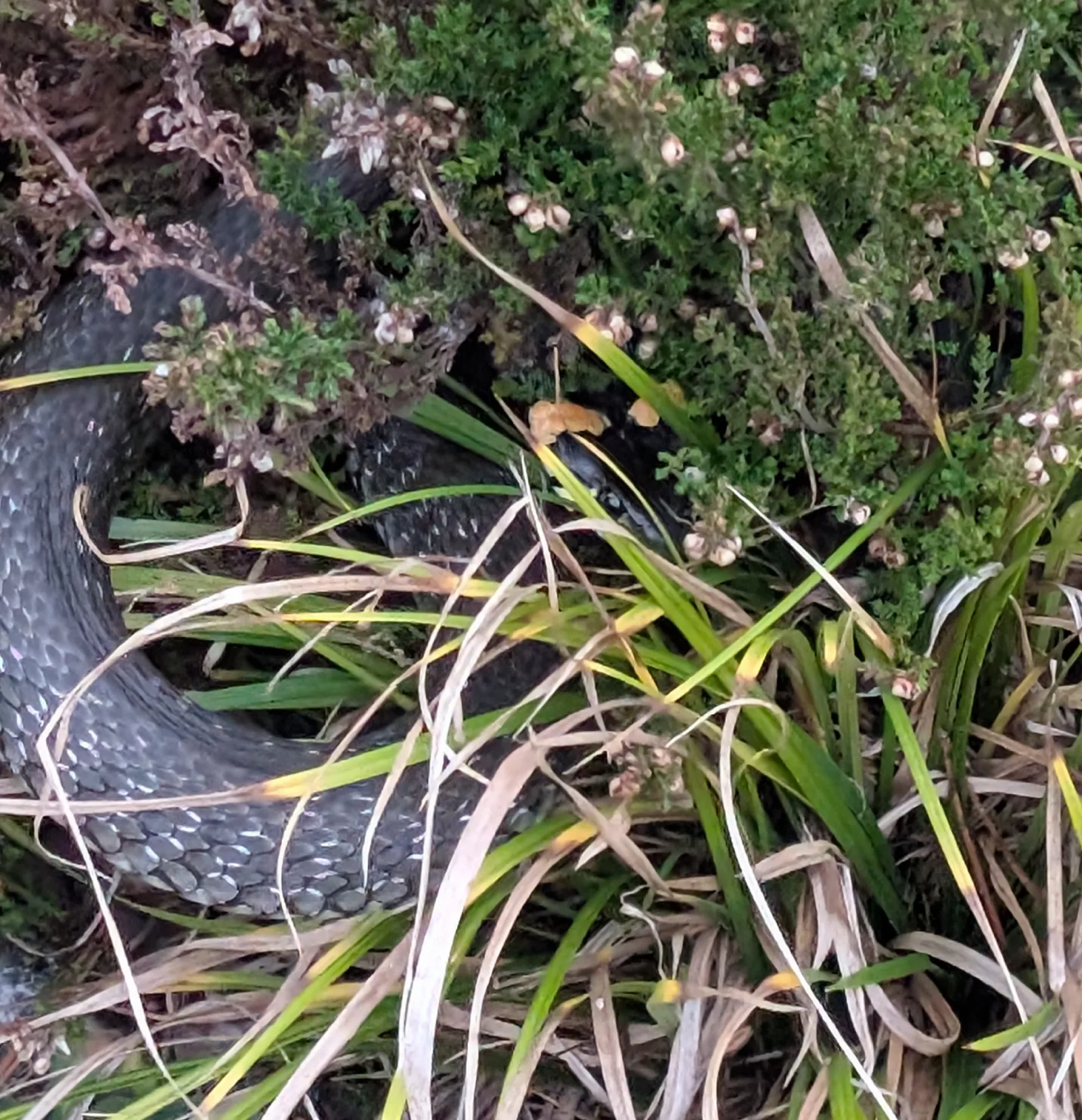
Very dark melanistic individuals occur; they do not represent every individual.
Lighting, age and viewing angle can hide features. If identification affects consumption, handling or conservation, consult specialist sources.
Ecology
Description and characteristics
Natrix natrix shows variation in colour: common-looking forms, striped forms and very dark melanistic individuals occur. These forms do not occur in the same proportions in every population. Colour is therefore not uniform across the species and is not sufficient on its own to identify it.
Amphibians play a central role in its diet. Adults more often eat frogs that have completed metamorphosis than tadpoles. By eating animals associated with water and becoming prey for terrestrial predators, it connects the two food webs. This relationship allows material of aquatic origin to pass into terrestrial ecosystems.
Activity is not confined to a single part of the day. Although usually considered diurnal, it has also been observed at twilight and at night. This flexibility does not make every population nocturnal. The available records reveal behaviour that observations made only in daylight may miss.