At a glance
Essentials
- Size
- In males, body length excluding the tail is 48 to 68 mm, according to the data presented for the species. The range may vary with age, sex and population.
- Distribution
- Its native range extends across central and southern Europe; the Spanish atlas records its presence from Asian Turkey and the Black Sea coasts to the Iberian Peninsula, and north to the Netherlands. Introduced, breeding populations occur in the United States, including those studied in Ohio.
- Habitat
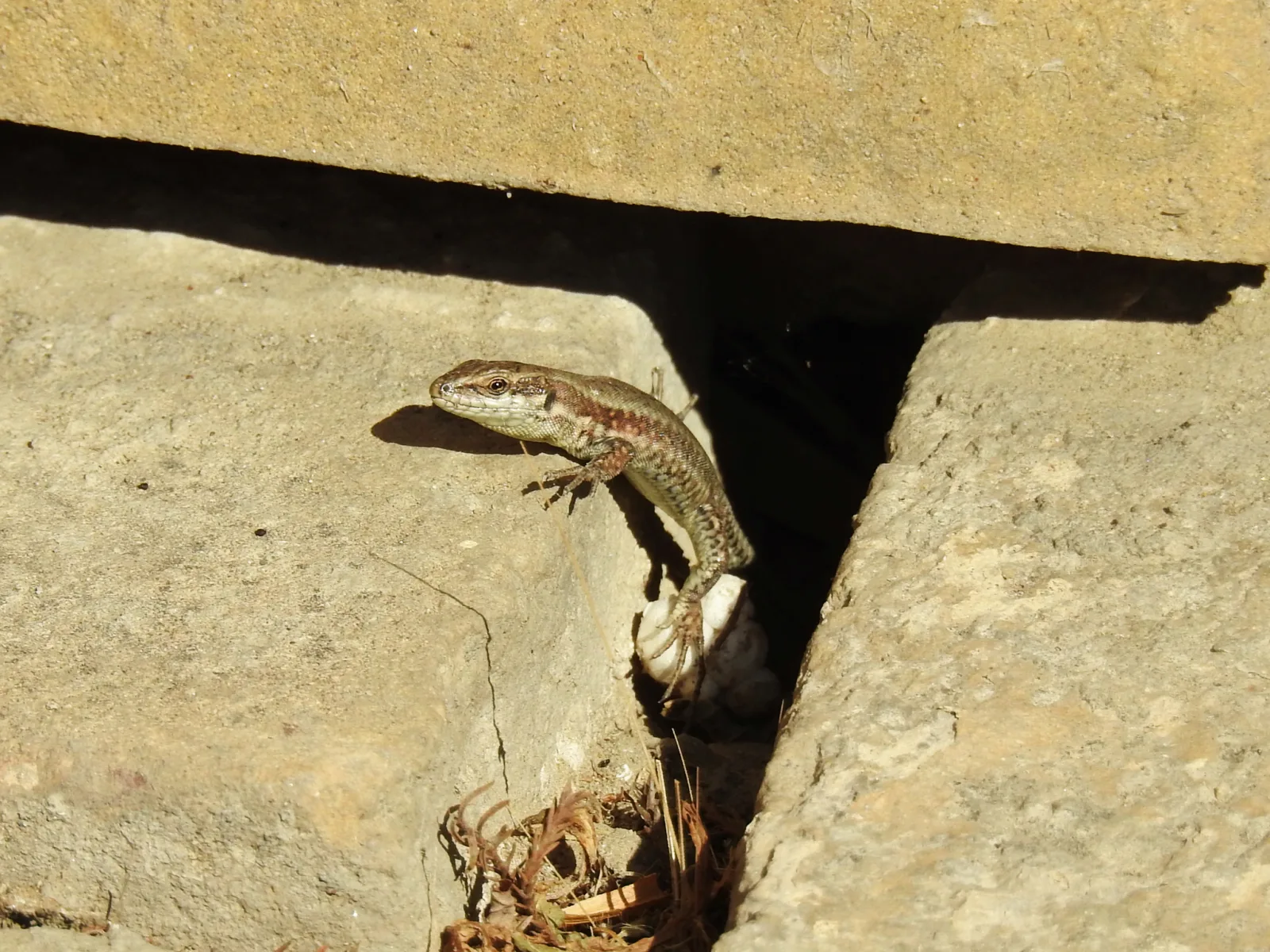
- It occupies varied habitats, from human structures to deciduous forests; it also lives on walls and rocky outcrops, and in some areas shared with Podarcis hispanica it uses earthen slopes and ground areas.
- Activity
- It is diurnal and thermophilic, actively searching for food; it may remain active during a large part of the year.
- Diet
- It feeds on insects.
Observation guide
What to look for
- 01
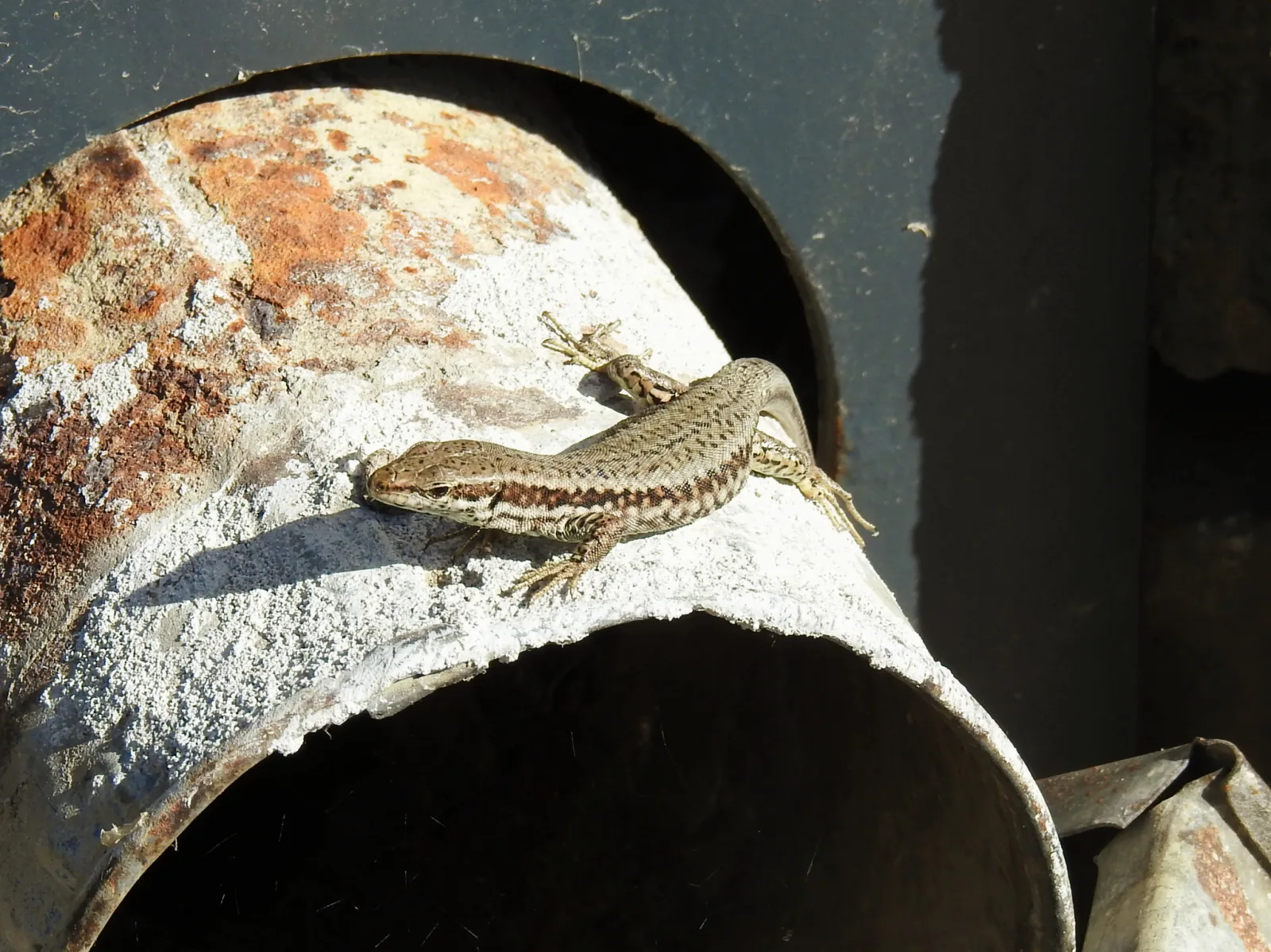
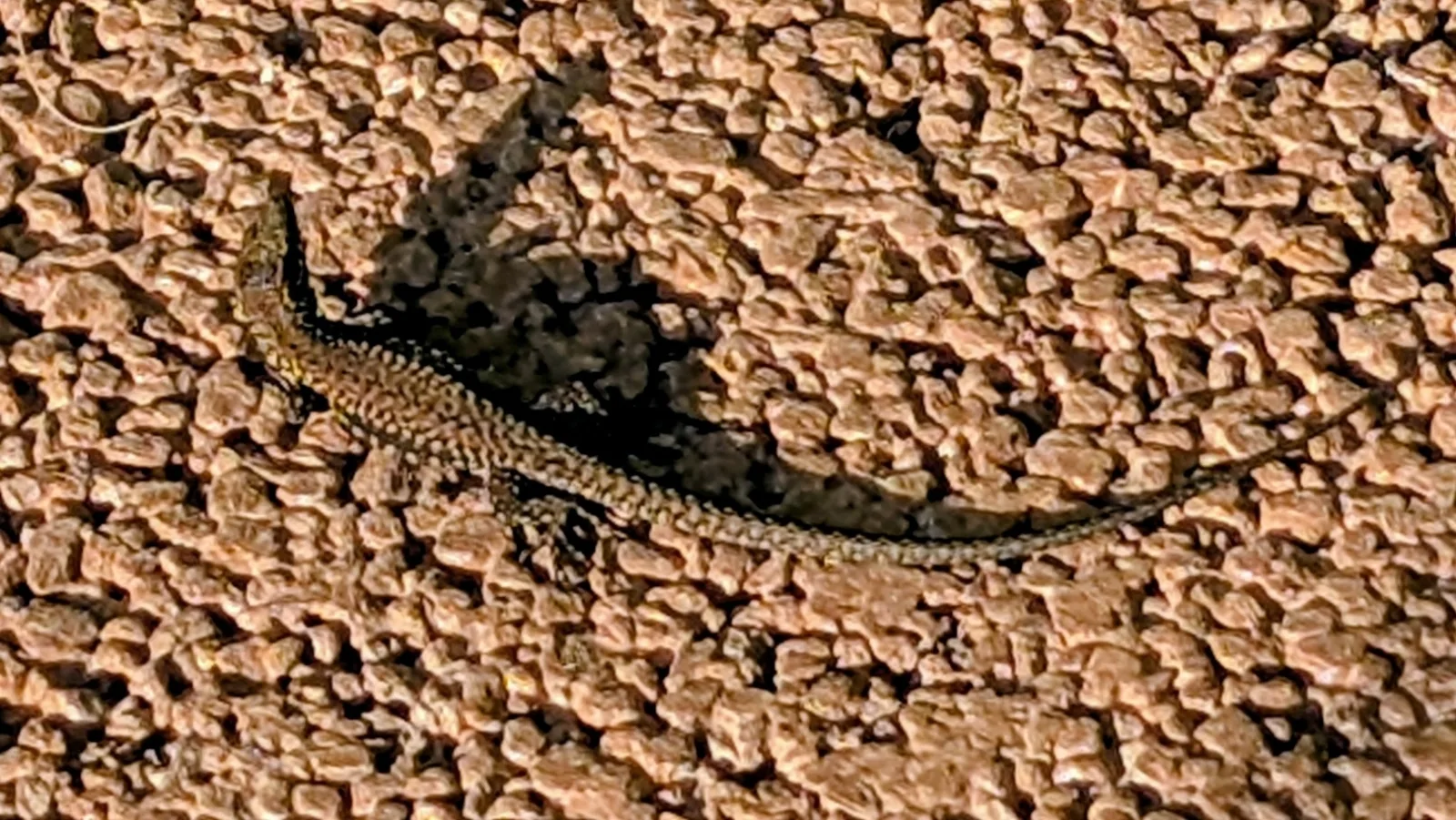
Dorsal pattern: the back may have a line of black dots against brownish, grayish, or greenish tones.
- 02
Lateral band: a dark band is usually visible on each side; it is plain in females and young males, while in adult males it may have darker spots.
- 03
Throat and belly: the throat has a black reticulated pattern; the belly ranges from whitish to reddish and may show blue ocelli on some outer scales.
Lighting, age and viewing angle can hide features. If identification affects consumption, handling or conservation, consult specialist sources.
Ecology
Description and characteristics
The variation in coloration is notable in Podarcis muralis: the back may show brownish, grayish, or greenish tones, sometimes with black spots. A line of black dots on the back and a dark band on each side of the body are often distinguishable. In females and young males, this band is usually plain; in adult males, it may bear dark spots. The belly ranges from whitish to reddish, and some outer scales may show blue ocelli; the throat has a black reticulated pattern. In males, snout-to-vent length ranges from 48 to 68 mm according to the data collected for the species. ¹
Its use of habitat ranges from human structures to the interior of deciduous forests. In areas where it does not share space with the Iberian lizard, it is found on stone walls and among accumulations of rocks. Where both species live in the same area, P. muralis commonly uses earthen slopes and ground areas, while P. hispanica occupies the rocks. In the eastern part of its Iberian range, it is associated with areas of non-Mediterranean climate; there, annual precipitation of 800 mm has been indicated as the species’ southern limit. It is diurnal, thermophilic, and actively searches for food; it also shows an affinity for human-made structures. ²
In the annual cycle described for the species, mating takes place in spring. The female digs a small hole, buries a clutch of three to eight eggs, and the eggs hatch after two or three months. When winter arrives, the lizards seek refuge in crevices and spend the cold months hibernating. Males are territorial toward other males, whereas females move about more freely. Like other lizards, it can detach its tail if a predator grasps it, and later regenerates it. Its diet includes insects. ³