At a glance
Essentials
- Distribution
- Eastern Atlantic, from the Arctic Circle to Morocco.
- Habitat
- Rocky seabeds with holes and tunnels. On British and Irish coasts, described from the lower shore to about 60 m depth.
Observation guide
What to look for
- 01
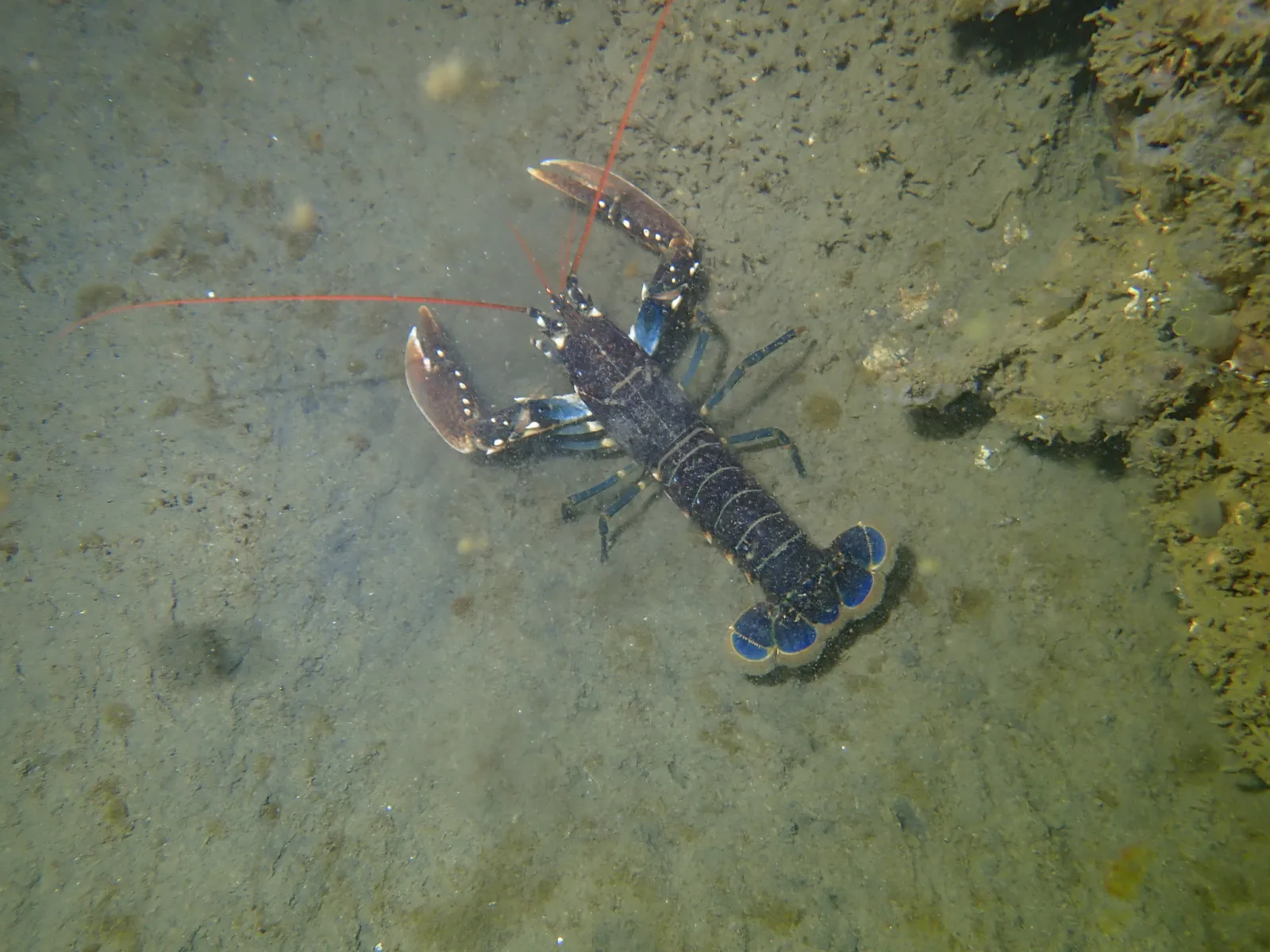
Blue upper surface with spots and a yellowish underside.
- 02
First pair of legs with two large, slightly unequal claws.
- 03
Large eyes, about the same width as their stalks.
Lighting, age and viewing angle can hide features. If identification affects consumption, handling or conservation, consult specialist sources.
Ecology
Description and characteristics
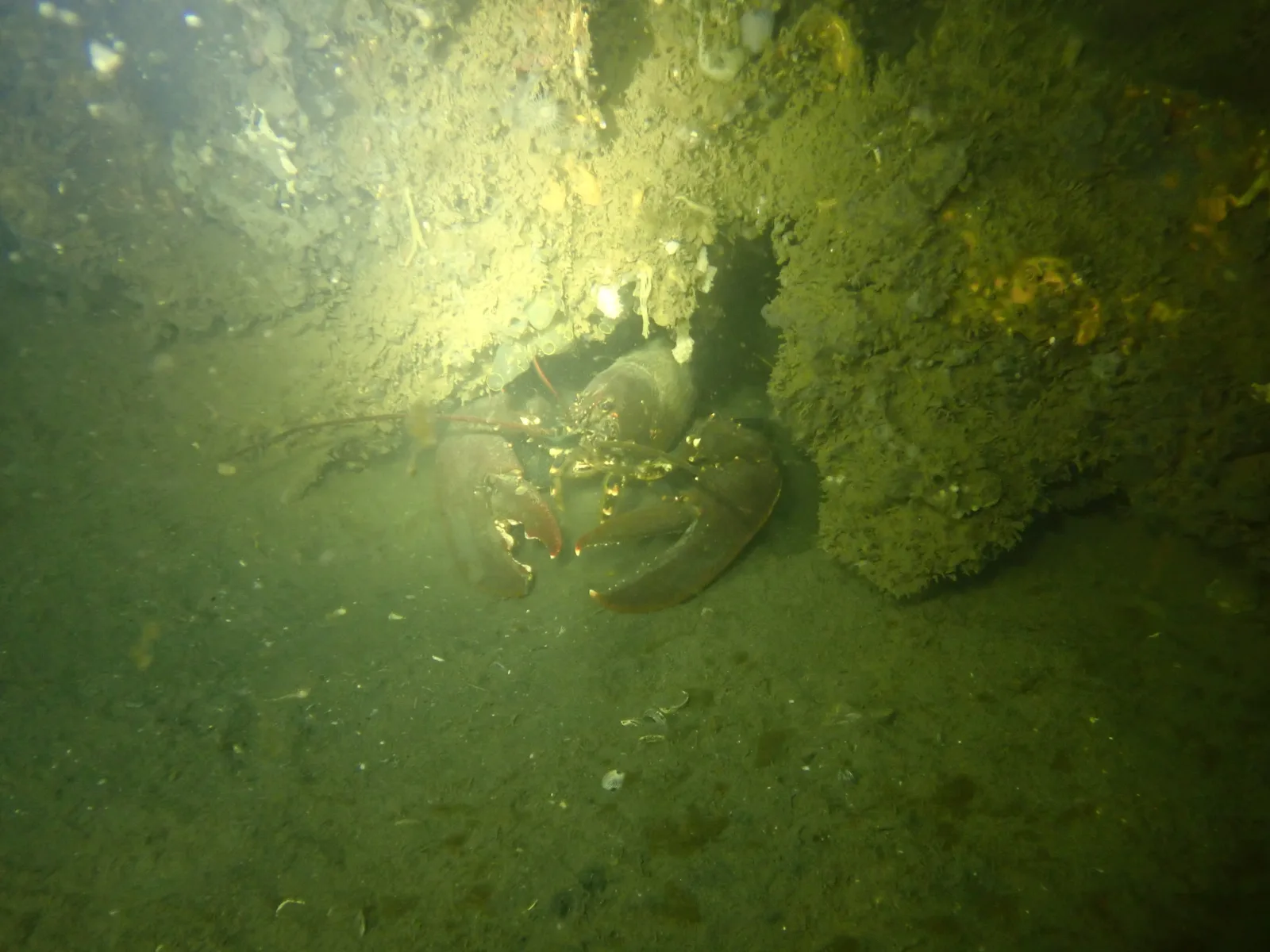
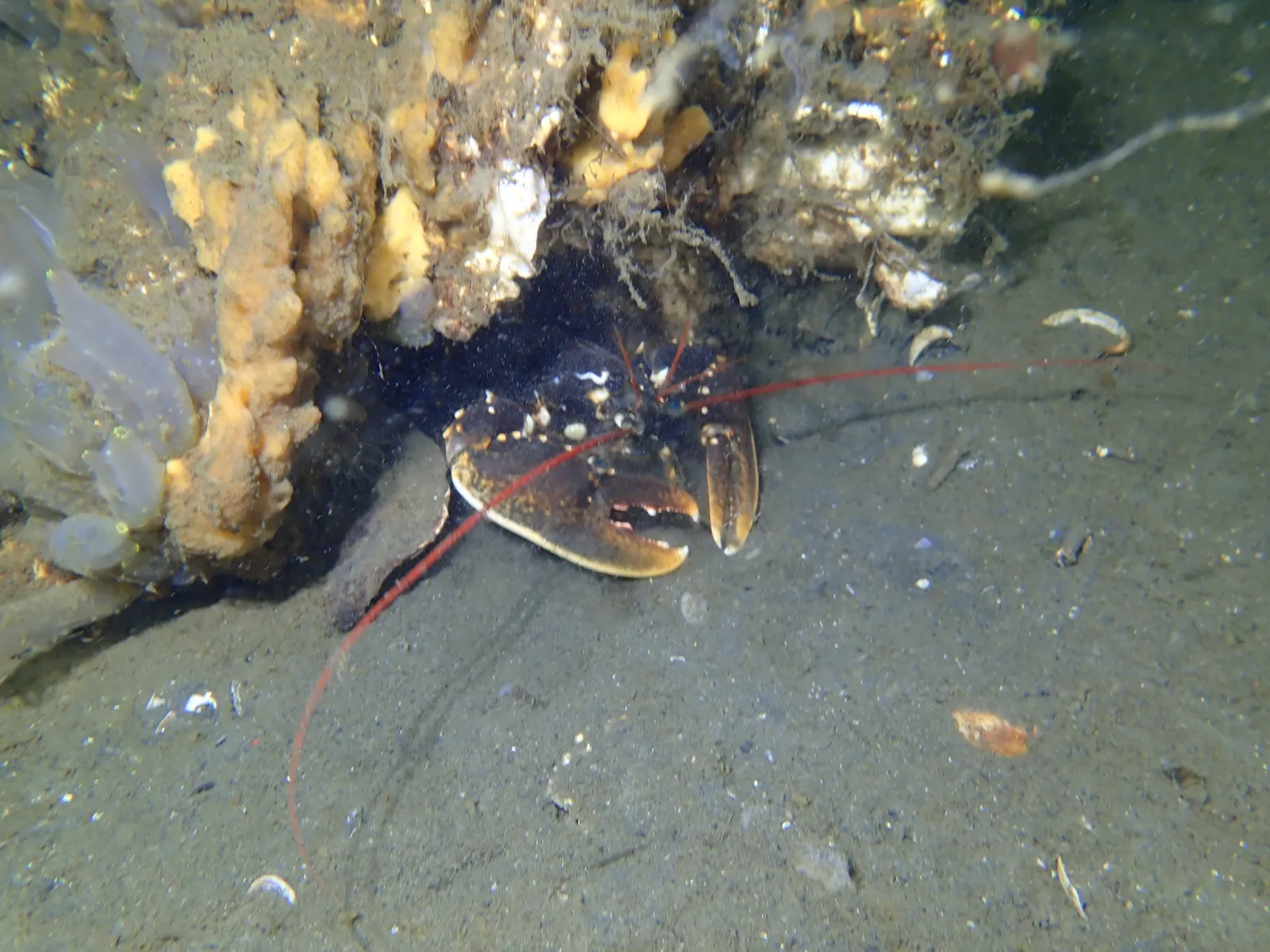
Homarus gammarus has a distinctive blue upper surface, with spots that may merge, and a yellowish underside. The first pair of legs bears two very large, slightly unequal claws. The body has a slightly granular surface but lacks large spines or ridges. Its eyes are large, about the same width as the stalks that support them.
It lives on rocky substrates, occupying holes and excavated tunnels. The account for British and Irish coasts places these shelters from the lower shore to about 60 metres deep. This environment combines a firm seabed with spaces in which the animal can shelter; the stated depth should not be understood as a limit applying to every population.
Its distribution includes the eastern Atlantic, from the Arctic Circle to Morocco. It is not the same species as the American lobster, Homarus americanus, whose natural range lies on the other side of the North Atlantic. Although both belong to the genus Homarus, this similarity does not make their ranges interchangeable.