At a glance
Essentials
- Distribution
- It is distributed across Europe and much of Asia, with its range described as extending to the Far East; it is also recorded in northwestern Africa. The precise extent varies between regions.
- Habitat
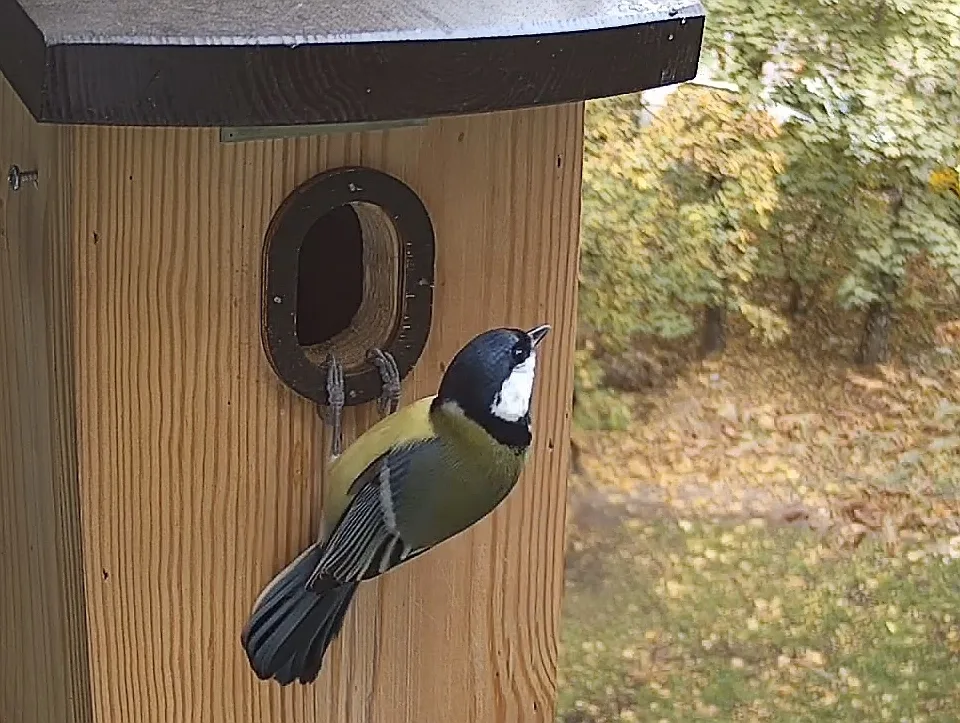
- Across its range, it occupies deciduous and mixed forests, wooded edges, parks and gardens; it also uses cavities in trees and walls, as well as nest boxes, for breeding.
- Activity
- It is described as generally sedentary, although some populations make partial movements; outside the breeding season it may gather in small groups.
- Diet
- It mainly eats insects, larvae and other small invertebrates, as well as seeds, fruit and nuts; the proportions of these foods vary with the season and availability.
Observation guide
What to look for
- 01
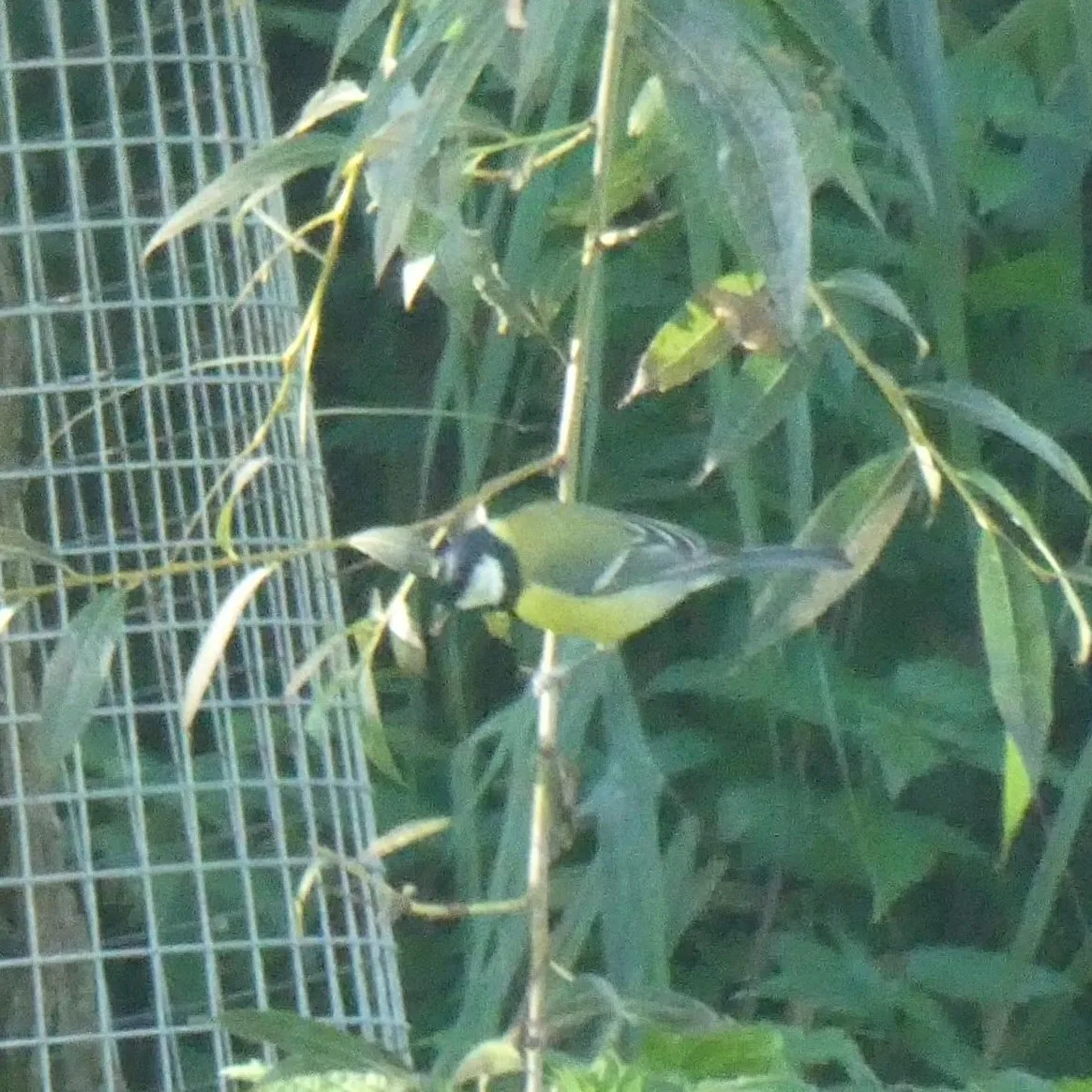
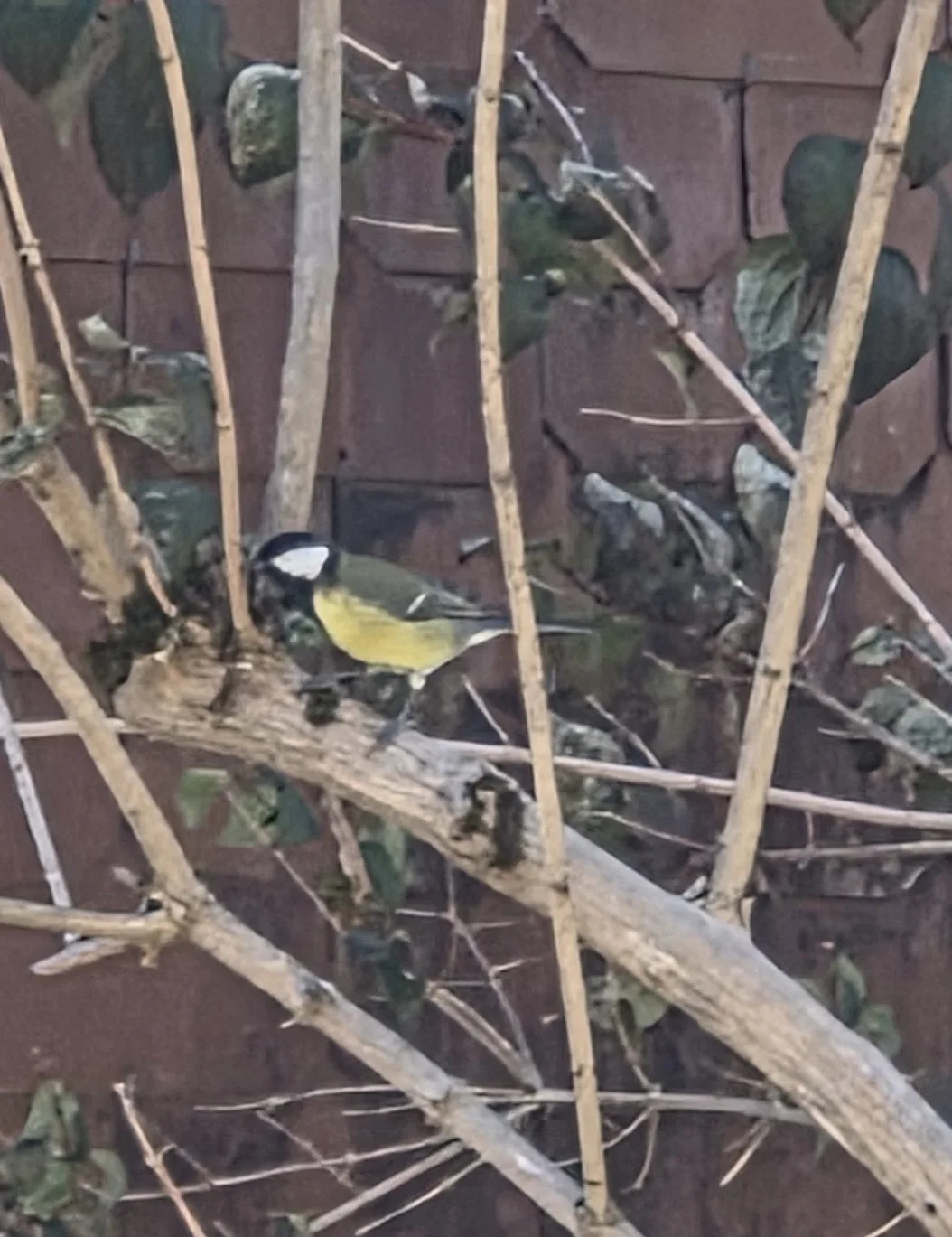
Black head and white cheeks: in adults, the facial contrast stands out alongside the yellow breast.
- 02
Yellow breast with a black band: a longitudinal stripe crosses the breast and belly; it is usually broader in males.
- 03
Olive-green back: the greenish upperparts contrast with the bluish-grey shades of the wings and tail.
- 04
Two-note song: in the United Kingdom, it is described as high-pitched, repetitive and resembling “see-saw.”
Lighting, age and viewing angle can hide features. If identification affects consumption, handling or conservation, consult specialist sources.
Ecology
Description and characteristics
Parus major is a passerine in the family Paridae. In adults, the contrasting plumage combines a black head and throat, white cheeks, a yellow breast crossed by a black band, and an olive-green back. The wings and tail may show bluish-grey shades. Males and females look alike, although the ventral band is usually broader and more pronounced in males; juveniles appear duller and, according to available descriptions, their cheeks may be yellowish rather than white. This combination of features makes the bird recognizable, although its appearance varies with age and sex.
It occupies a variety of wooded environments, from deciduous or mixed forests to parks, gardens and groves in inhabited landscapes, across its wide range. Its diet changes with seasonal availability: it eats insects and larvae, as well as other small invertebrates, and also seeds, fruit and nuts. Animal prey predominates during the breeding season; at other times it may make greater use of plant foods. It forages among foliage and branches and may hold food with its feet while eating. Outside the breeding season it is described as forming small groups, sometimes with other members of the tit family. In the United Kingdom, it is recognized by a high-pitched, repetitive two-note song; this description of the song applies to that region.
For breeding, it uses cavities, especially holes in trees, but also openings in walls and nest boxes. The nest is built from materials such as moss, hair and feathers. The clutch consists of pale eggs with small reddish spots; sources describe variation in clutch size and in some details of breeding timing, so no egg count or universal breeding season is specified here. After incubation, the chicks hatch, grow in the nest and then leave it as fledglings. Breeding in nest boxes and juvenile survival after the young leave the nest have been monitored in particular populations, and findings from those local populations do not necessarily apply universally to the species.