At a glance
Essentials
- Size
- 170–330 micrometers in length. The range may vary with age, sex and population.
- Distribution
- Wide distribution in freshwaters.
- Habitat
- Freshwater environments.
- Activity
- Swimming in helical trajectories; avoidance reaction to adverse stimuli.
- Diet
- Bacteria, yeasts, and flagellated algae.
Observation guide
What to look for
- 01
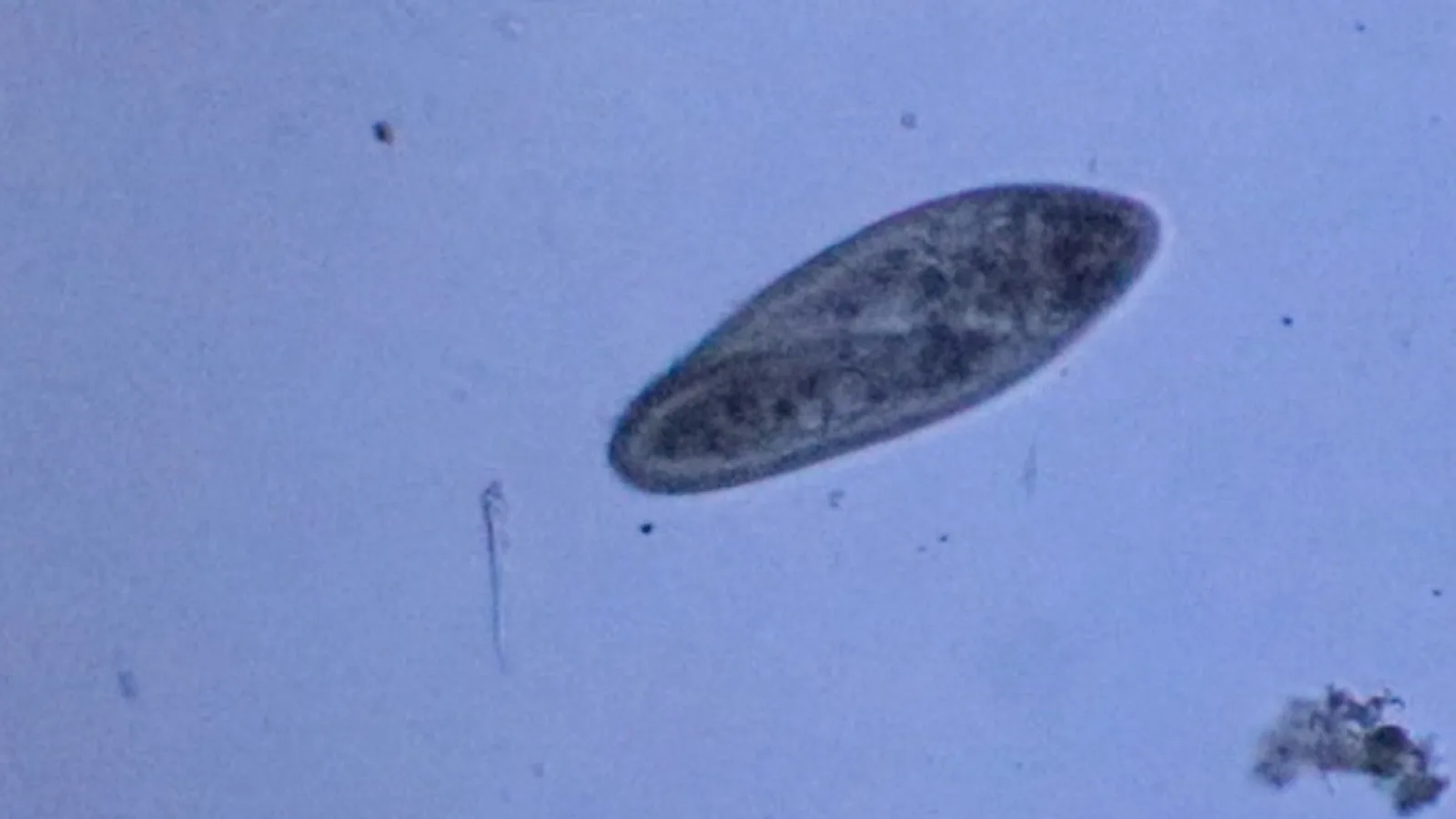
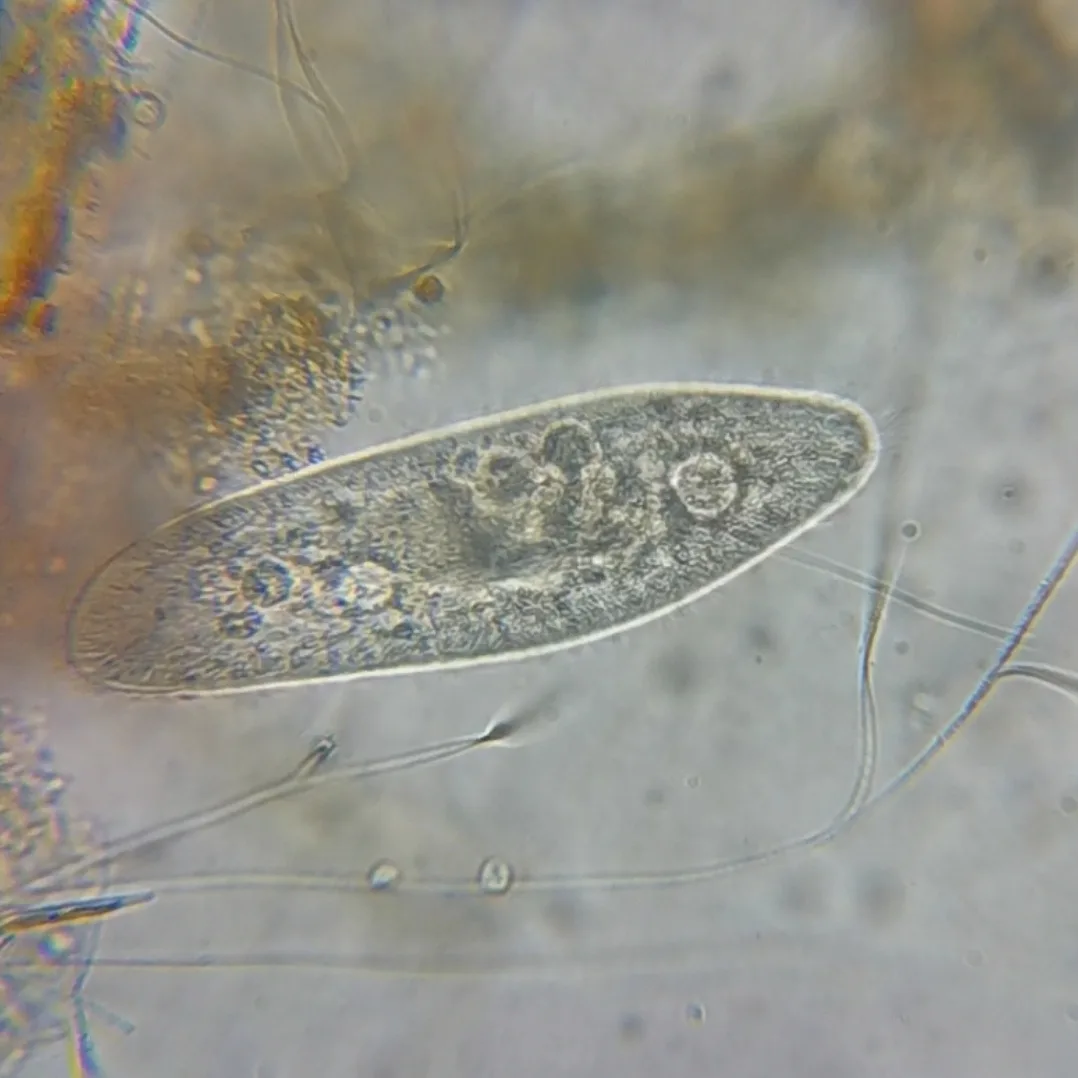
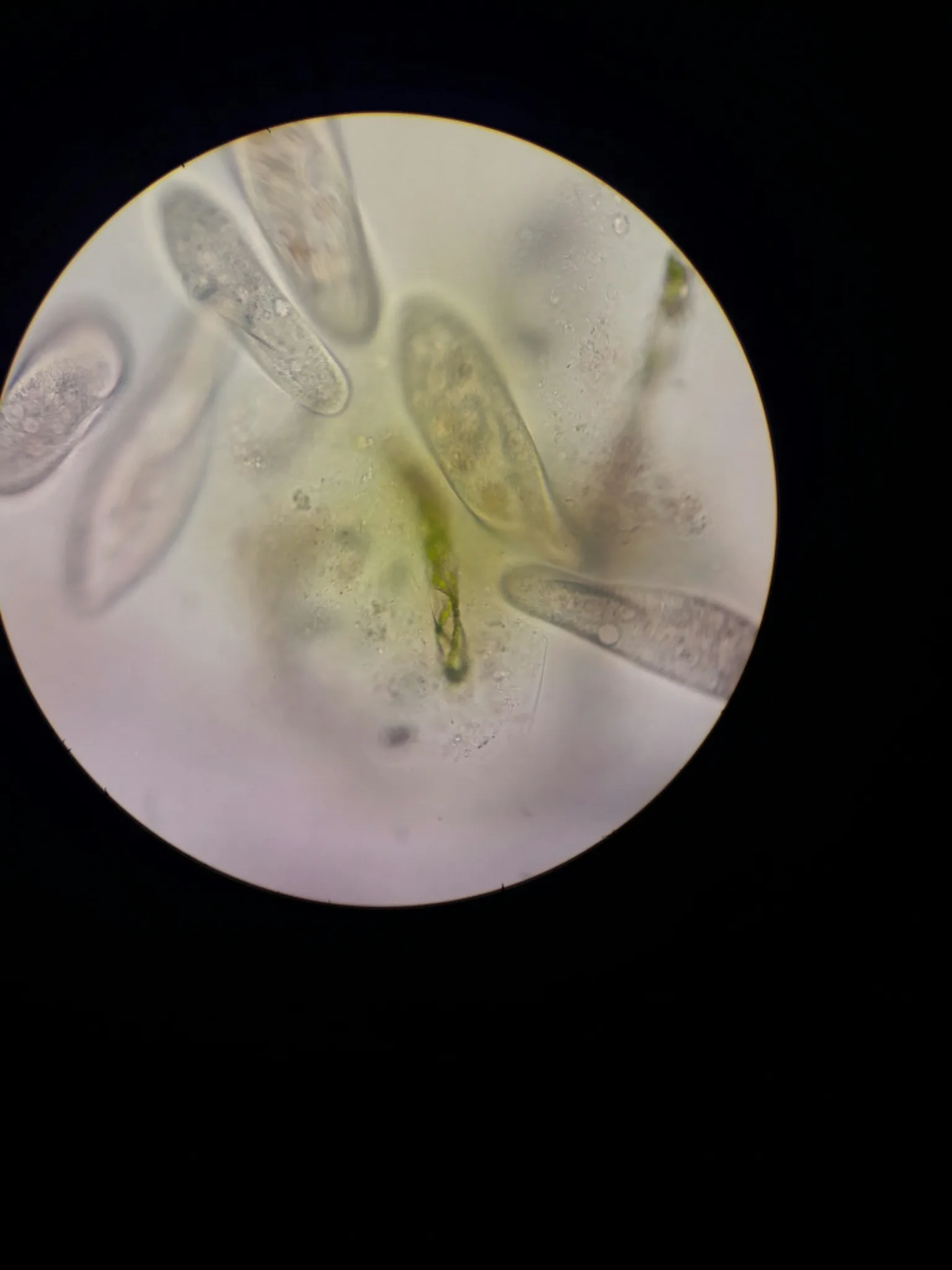
Spindle-shaped body, rounded at the anterior end and pointed at the posterior end.
- 02
Surface uniformly covered by cilia and presence of two star-shaped contractile vacuoles.
Lighting, age and viewing angle can hide features. If identification affects consumption, handling or conservation, consult specialist sources.
Ecology
Description and characteristics
Paramecium caudatum is a unicellular protist of the phylum Ciliophora, order Peniculida. Its body measures between 170 and 330 micrometers, with a spindle shape that rounds off at the anterior end and tapers to an obtuse point at the posterior end. The surface is uniformly covered by cilia, microscopic organelles that allow locomotion and food capture. It possesses two star-shaped contractile vacuoles, distributed radially, which regulate the water content of the body. The cell contains two nuclei: a large macronucleus and a compact micronucleus, essential for survival and reproduction respectively. It feeds on bacteria and small eukaryotic cells, such as yeasts and flagellated algae, forming food vacuoles that circulate through the cytoplasm. It reproduces asexually by binary fission, dividing transversally to generate two identical daughter cells.