At a glance
Essentials
- Distribution
- It occurs across large parts of Europe and northwestern Asia, with records extending east to Lake Baikal; its range may be patchy.
- Habitat
- It lives in varied habitats, including grasslands, steppes, dunes, heaths, hedgerows, and forest edges; in northern areas it may depend on sunny sandy sites.
- Activity
- It is diurnal; it basks, forages, and may also remain beneath vegetation.
- Diet
- It feeds on arthropods, including insects and spiders.
Observation guide
What to look for
- 01
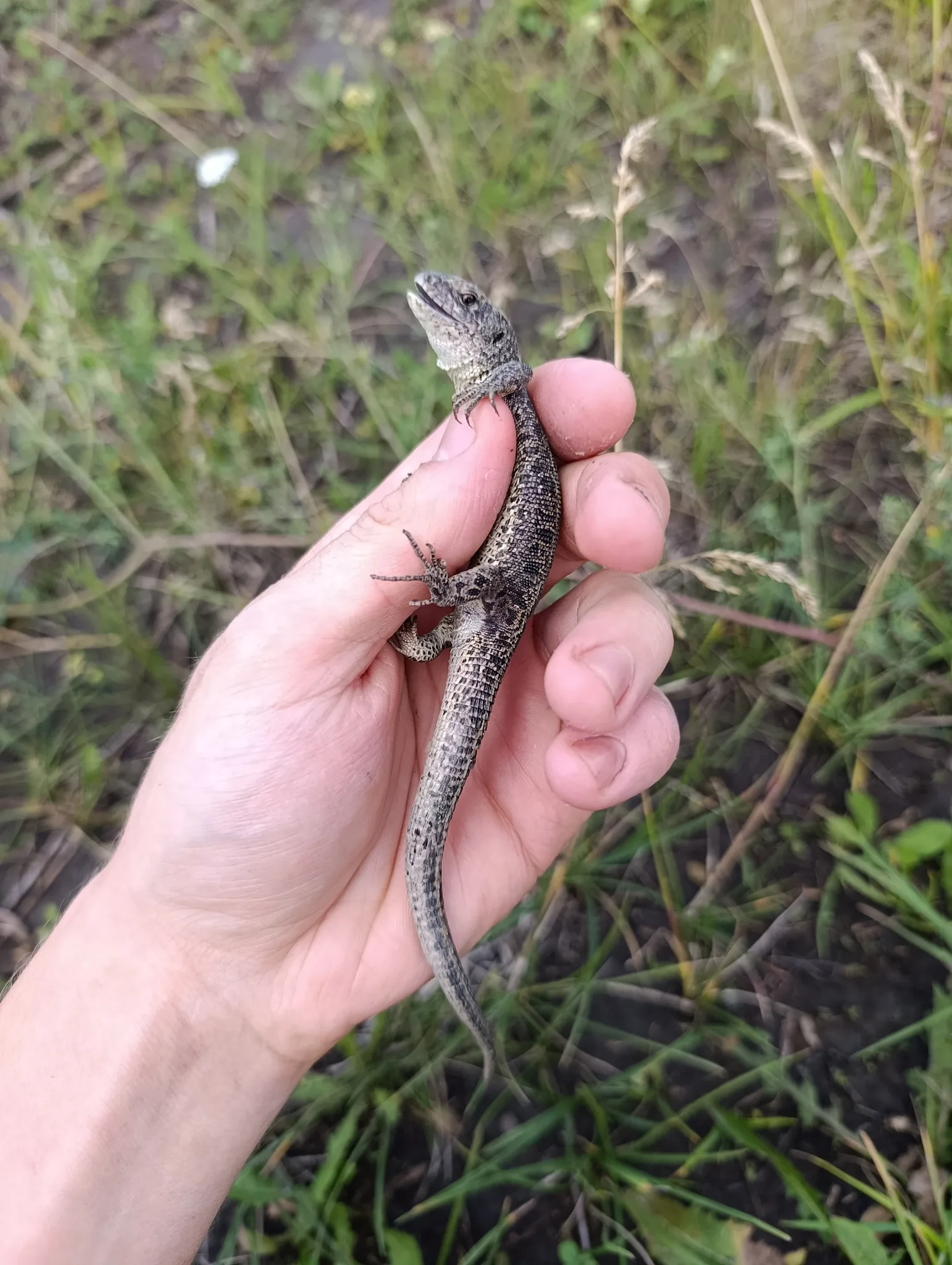
The body is robust, with a massive-looking head and neck that are especially noticeable in males.
- 02
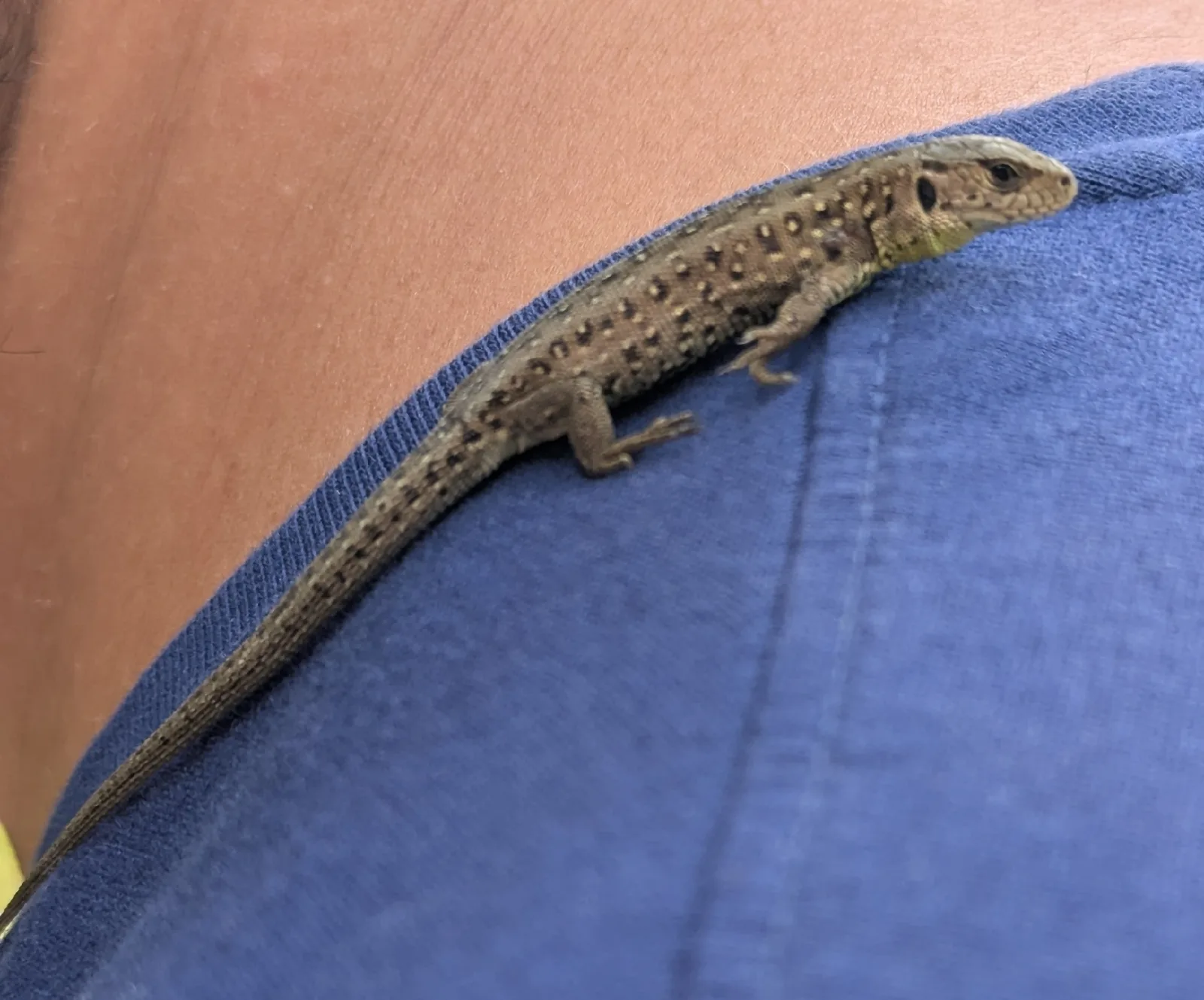
The back and flanks usually have dark spots with pale centers; pale lines and transverse markings may also be visible on the back.
- 03
During the breeding season, males may show intense green flanks, while females usually retain brownish or grayish tones.
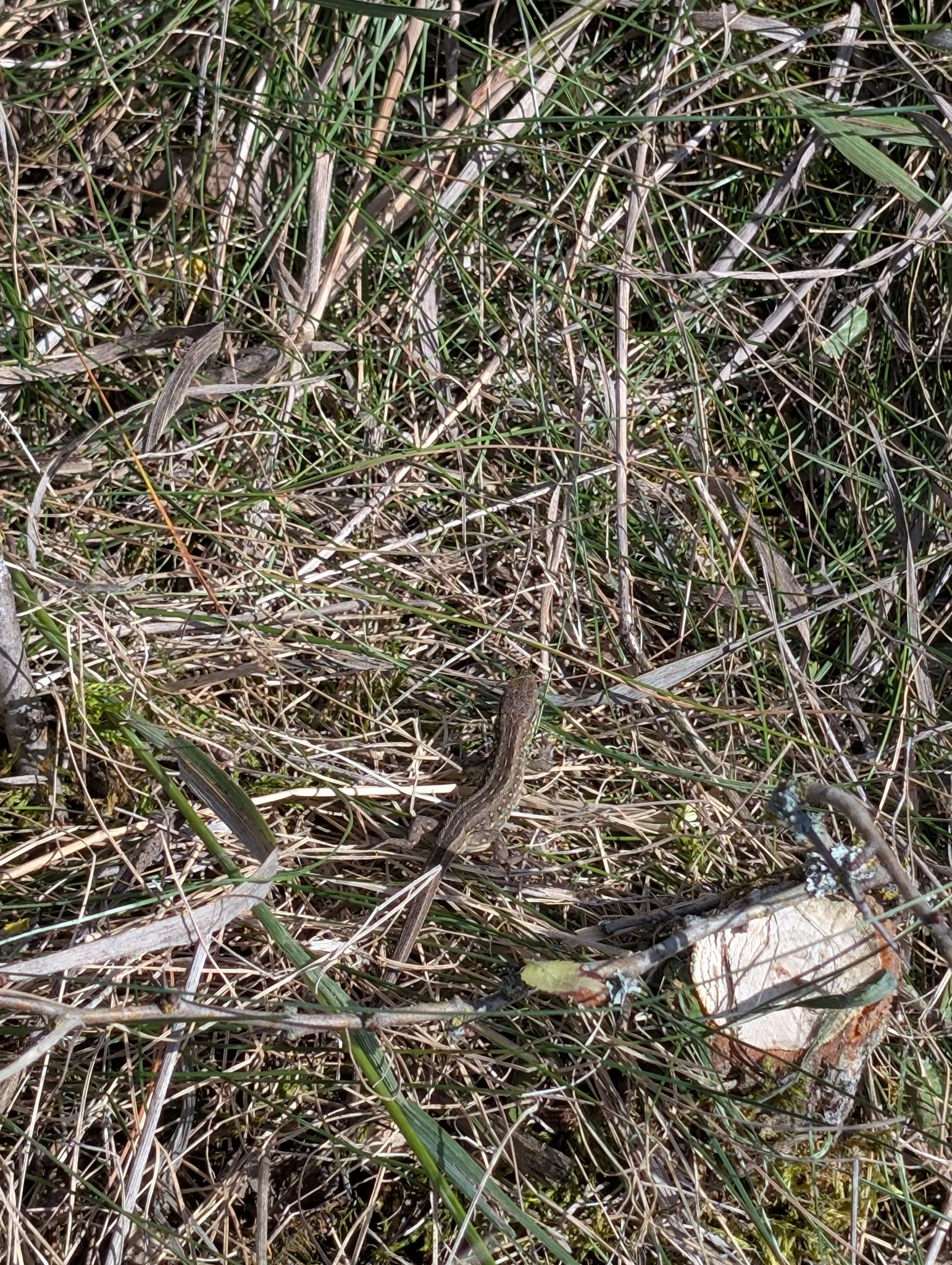
Lighting, age and viewing angle can hide features. If identification affects consumption, handling or conservation, consult specialist sources.
Ecology
Description and characteristics
Lacerta agilis is a robust-looking lizard in the family Lacertidae. Its coloration and pattern vary considerably among individuals, sexes, age groups, and populations. The back and flanks usually bear dark spots with pale centers, and the back may show pale longitudinal lines alongside dark transverse markings. In many northwestern European populations, males develop intense green flanks during the breeding season; females are usually brownish or grayish, with pale lines and spots. The head and neck of males may appear relatively larger and more massive. The combination of pattern and color is not the same throughout the species’ range.
It occupies a variety of environments, including grasslands, steppes, coastal dunes, hedgerows, and forest edges, as well as dry ground with rocky outcrops, slopes, and heaths. In the colder parts of its northern range, sunny sandy areas may be especially important: sun-warmed soil provides places to regulate body temperature and for egg incubation. Occurrence in different environments does not mean that the species is uniformly or continuously distributed across its range, as its distribution may be patchy. It is diurnal; it spends time basking and foraging, and may also remain beneath vegetation. Outside the mating period, it tends to live alone.
During the breeding period, males pursue females and may compete aggressively with other males. After mating, females lay eggs, from which juveniles hatch. Accounts describe egg-laying and the emergence of young, but differ on some quantitative details of the cycle; clutch size and hatchling dimensions are therefore not specified here. Its diet includes arthropods such as insects and spiders. The range covers large parts of Europe and extends into northwestern Asia, as far as the vicinity of Lake Baikal; its limits and the continuity of populations vary by region.