At a glance
Essentials
- Distribution
- It is found in the Northern Hemisphere. In Great Britain it is widespread except on high moorland and in mountains; it is also recorded in western Europe and parts of North America, from New England to the southeastern United States and adjacent areas of Canada.
- Habitat
- It inhabits gardens and a variety of other environments; it places its webs among shrubs and vegetation, in open spaces frequented by insects.
- Activity
- In Great Britain it is most visible in autumn; females may stay at the center of the web while males search for mates.
- Diet
- It captures insects, including flies, wasps, beetles, and butterflies.
Observation guide
What to look for
- 01
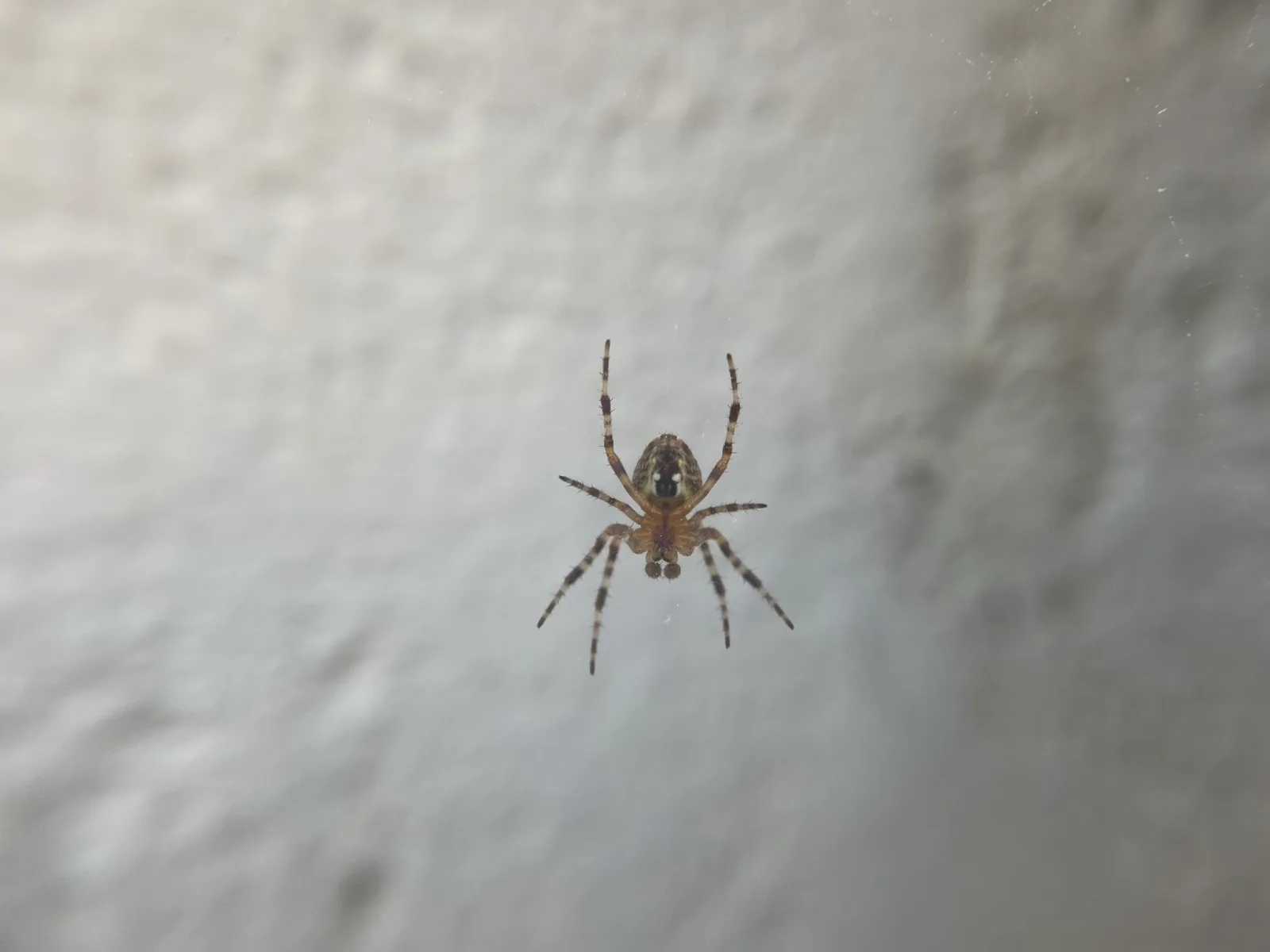
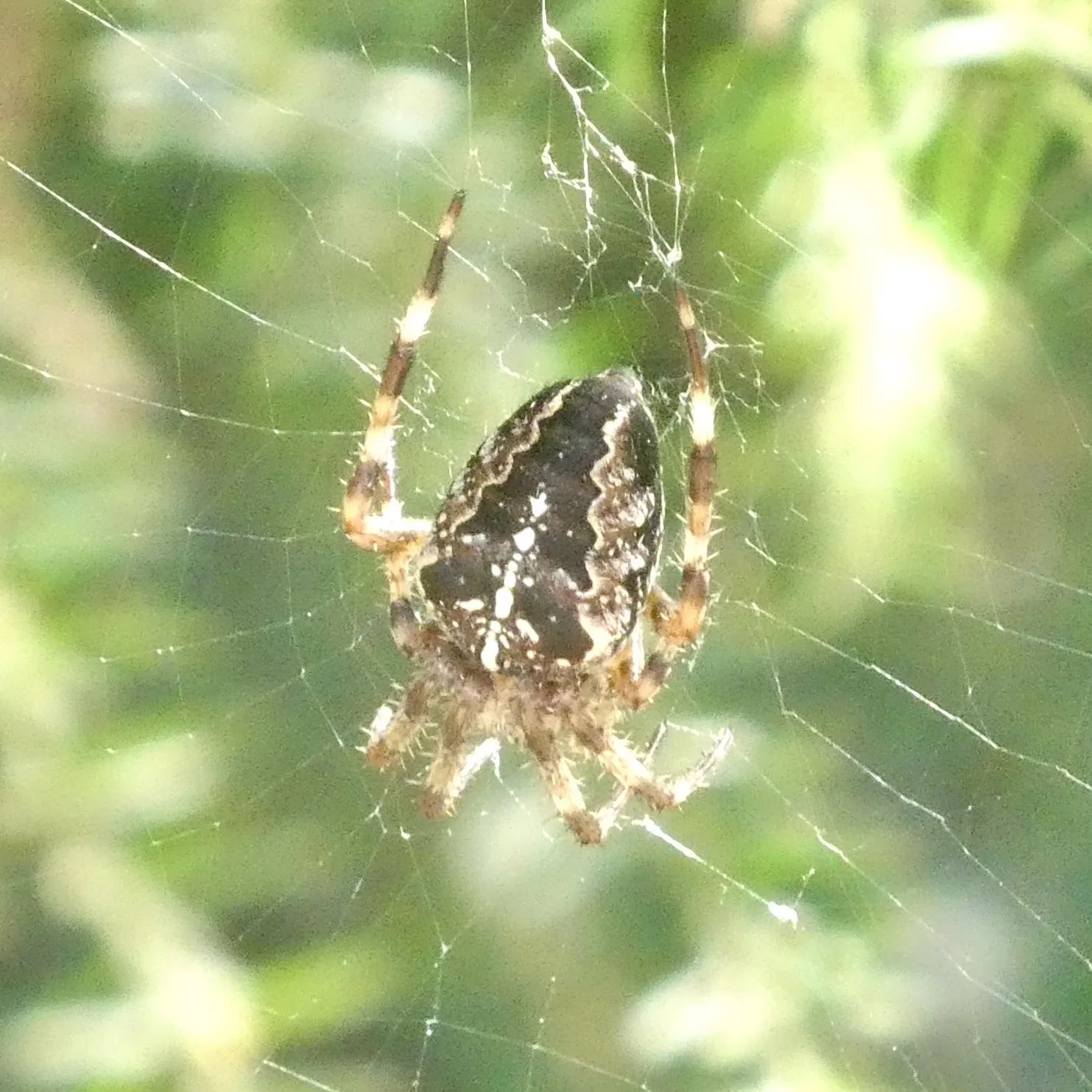
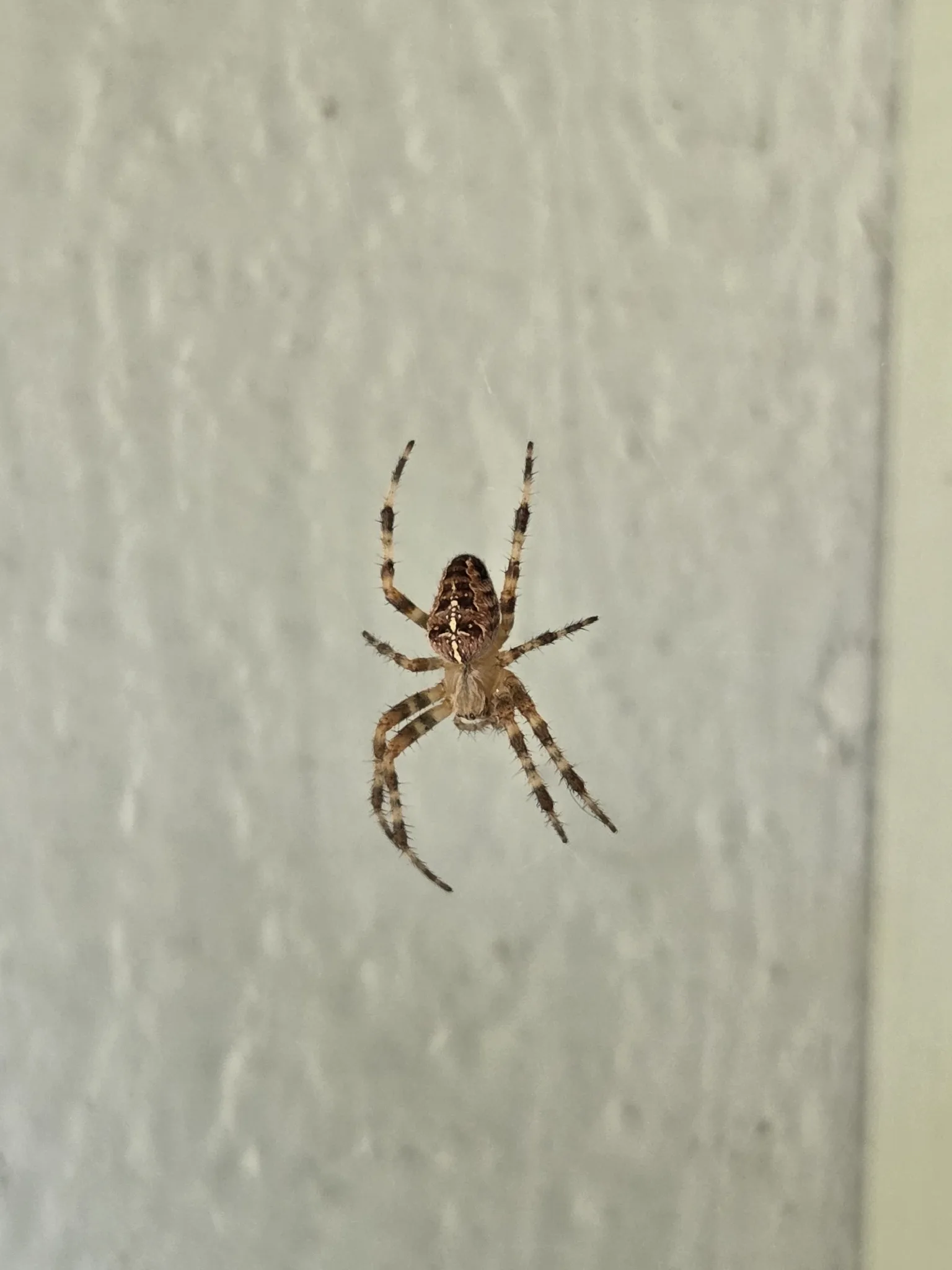
Pale dorsal cross: the abdomen has white or silvery spots and lines arranged in a cruciform pattern.
- 02
Variable background color: the body may be dark or brownish, as well as orange or pale yellow.
- 03
Orb web: it builds a circular web, often nearly vertical, with radial threads and a capture spiral.
- 04
Female at the center of the web: in British gardens, it is often seen sitting in the middle of its web during autumn.
Lighting, age and viewing angle can hide features. If identification affects consumption, handling or conservation, consult specialist sources.
Ecology
Description and characteristics
Appearance and markings. Araneus diadematus is an araneomorph spider in the family Araneidae, known for building orb webs. Its body is relatively robust and rounded; the dorsal part of the abdomen has pale markings arranged like a cross, formed by spots and lines with an almost silvery sheen. The background color varies: it can range from dark, brownish or grayish shades to orange, yellow, or pale yellow-green. This variation in the background does not remove the pale pattern, which is the species’ most characteristic visual feature.
Web and feeding. It builds a circular silk web with supporting radial threads and a capture spiral. In gardens, the webs are often nearly vertical, stretched between vegetation or across relatively open spaces where insects pass. The spider may wait in the center, with its head facing down, or stay among nearby vegetation, connected to the web by a signal thread. When prey is caught, it approaches by following the vibrations, bites it, and wraps it in silk to feed later. Its diet includes flying insects such as flies, wasps, and beetles; butterflies have also been described among the prey it captures.
Seasons and life cycle. In Great Britain it is seen mainly in late summer and autumn, when it reaches adult size and females may be seen sitting in the center of their webs. Egg-laying occurs in autumn; the eggs are protected in a silk sac, and the young emerge the following spring. One account of its life cycle notes that newly hatched spiderlings stay grouped for a few days and overwinter as juveniles before reaching maturity in their second summer. In British gardens, it is also reported that many males die or are eaten by females after mating, and that the females stop hunting to remain beside the eggs and die in late autumn.