At a glance
Essentials
- Distribution
- Its documented range includes Great Britain, Europe and north-western Asia; in Scandinavia it reaches areas near the Arctic Circle.
- Habitat
- It lives in damp environments, including cool forests at higher elevations, wet meadows, mountain lakes, ponds and watercourses.
- Activity
- It usually seeks food at night or on rainy days, shelters in damp places during the day and spends the winter in cavities in the ground.
- Diet
- It eats invertebrates such as insects and their larvae, woodlice, spiders, snails and earthworms; tadpoles eat algae and plant matter.
Observation guide
What to look for
- 01
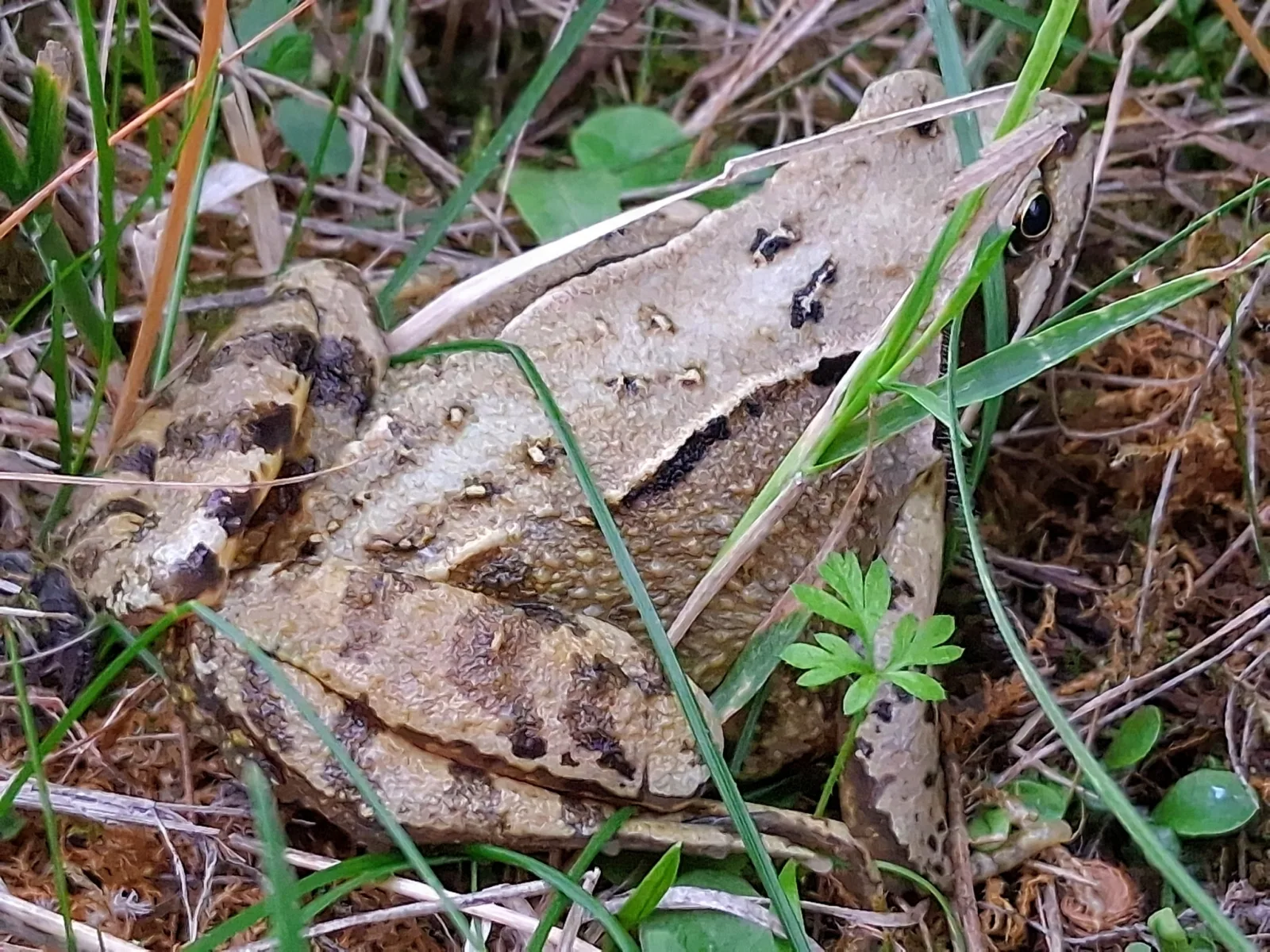
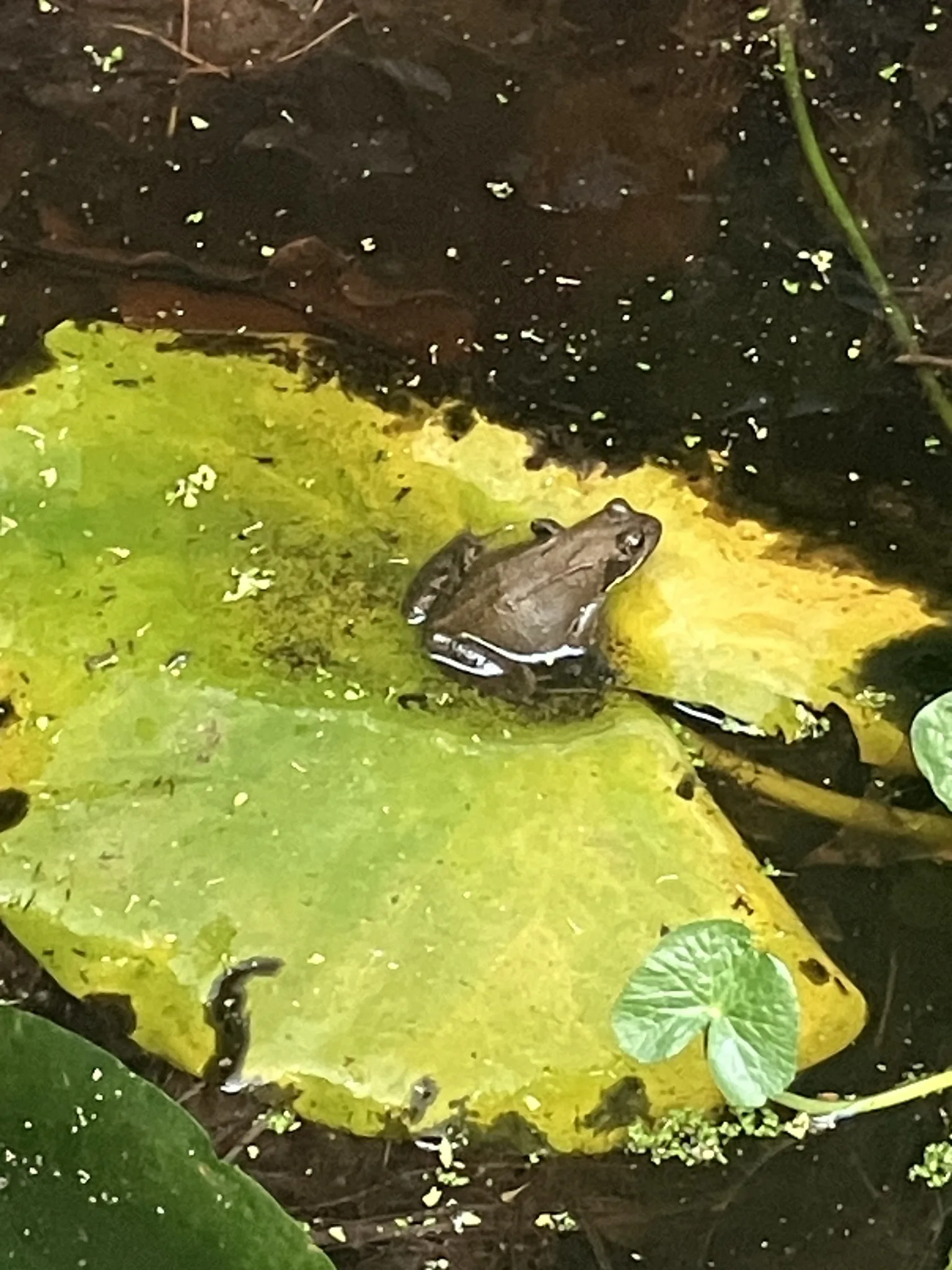
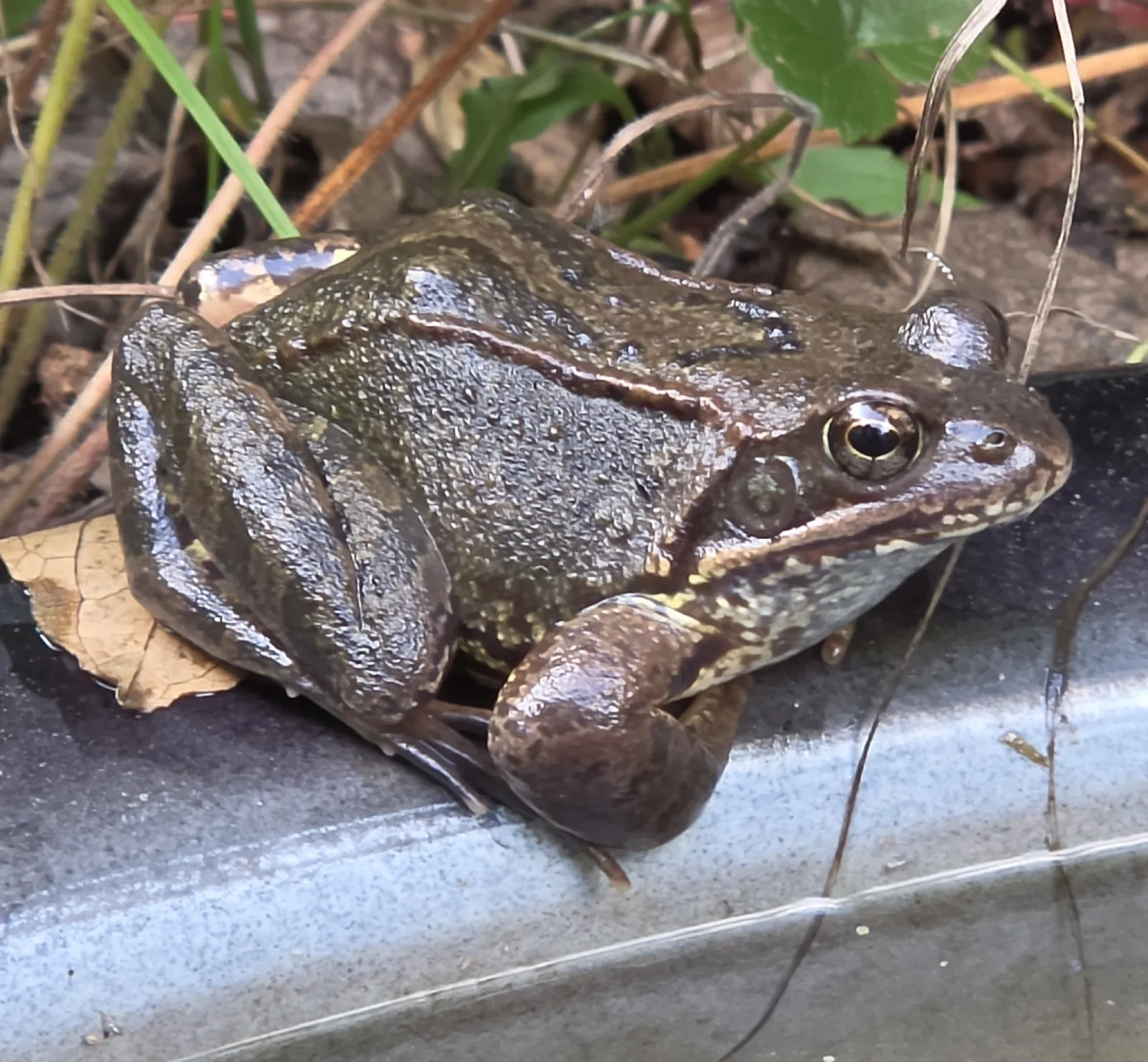
The adult has a short, squat body without a tail, joined to a broad, flattened head.
- 02
It usually has a dark brownish-black triangular mark around the tympanum.
- 03
Body coloration varies and may be brown, grey, olive, yellowish or even pinkish.
- 04
During the breeding season, males may have bluish areas on the back and throat.
Lighting, age and viewing angle can hide features. If identification affects consumption, handling or conservation, consult specialist sources.
Ecology
Description and characteristics
Rana temporaria is a short, stout amphibian without a tail in its adult stage, with a broad, flattened head. Its hind legs are strong and are used for both jumping and swimming. Its coloration usually includes shades of brown, but it may also be grey, olive, yellowish or pinkish. A dark brownish-black triangular patch is present around the tympanum. There are differences between the sexes: females are usually more yellowish and may have reddish spots on their flanks; during the breeding season, males may develop bluish areas on the back and throat.
It occupies a variety of damp environments throughout its range and is common in cool forests at higher elevations and in wet meadows. It is also found in mountain lakes, ponds, lakes and watercourses. Although it can move away from water, it usually hides in damp places during the day and seeks food at night or on rainy days. In winter, it remains in shelters in the ground. Its diet varies with age: tadpoles eat algae and, as they grow, also plant matter and sometimes small insects; juveniles and adults eat invertebrates, including insects, larvae, woodlice, spiders, snails and earthworms.
Breeding takes place in water and fertilization is external. During mating, the male clasps the female as she lays eggs in gelatinous coverings, grouped in masses; the adults do not care for the eggs afterwards. Aquatic tadpoles with gills hatch from the eggs. During metamorphosis, the hind legs appear first, followed by the front legs; the gills disappear, lungs develop and the tail is absorbed. The juveniles leave the water and begin a semi-aquatic life. The breeding season varies by location: in the warmer lowlands it is reported from February to March, and it may extend until June in the north and at higher elevations. Sexual maturity is reached at about three years of age, and individuals may return to the water where they underwent metamorphosis to breed.