At a glance
Essentials
- Distribution
- Its native range extends across Europe as far as the Caucasus, North Africa and parts of western Asia reaching Iraq. It has also been introduced to various regions of the Americas, southern Africa, Australia and New Zealand.
- Habitat
- In its native range, which extends across Europe, North Africa and parts of western Asia, it occurs in hedgerows, scrub, woodland margins and deciduous forests; it grows in sun or partial shade and in varied soils.
Observation guide
What to look for
- 01
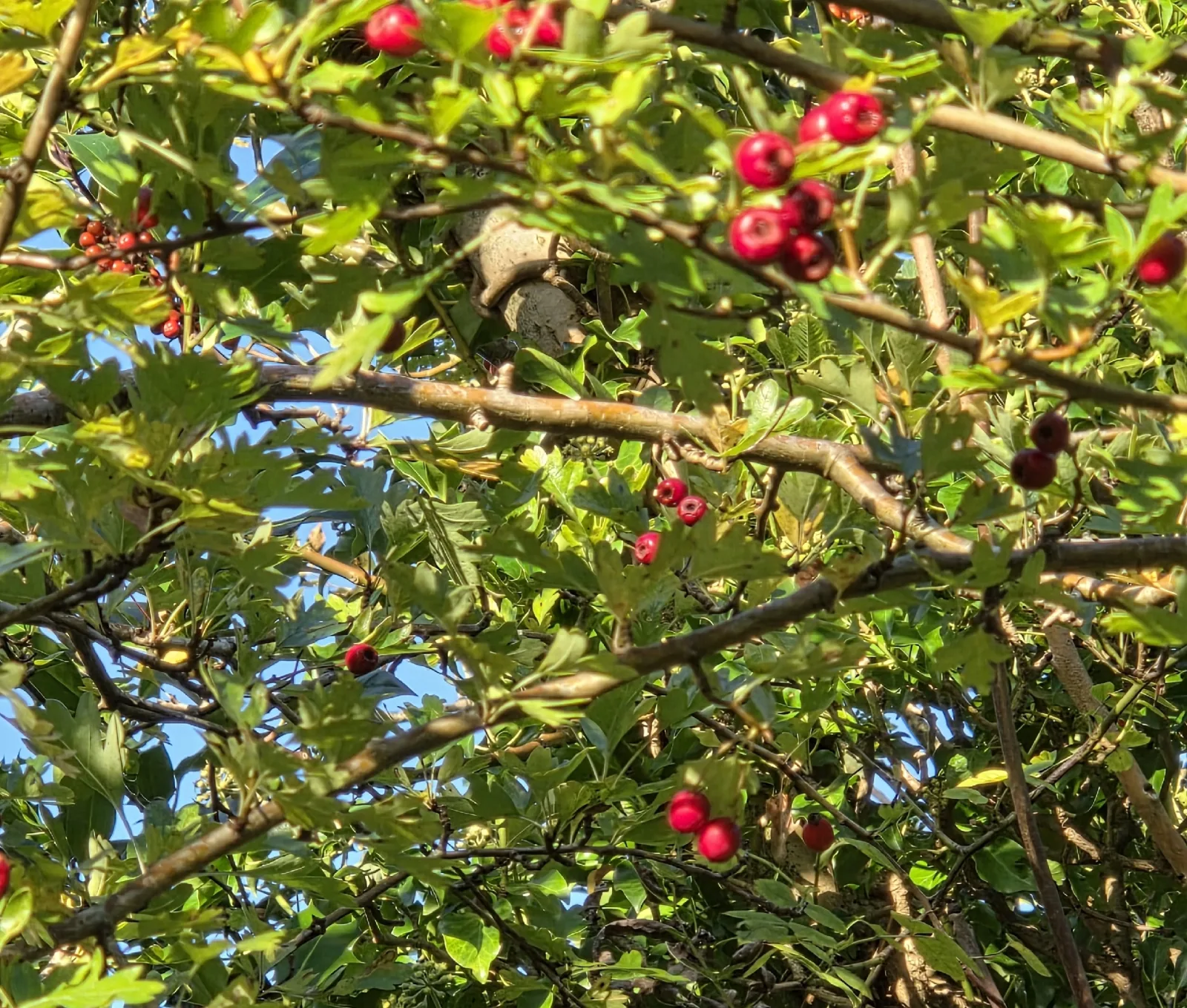
The deeply lobed leaves, with open lobes and toothed edges, are visible during the growing season.
- 02
The flowers have five petals, usually white, and a single style, a feature visible on close examination.
- 03
Its fruits are small, oval, dark-red pomes when ripe, generally containing one seed.
- 04
The young branches bear spines, and the shrub usually forms a dense crown of thickly packed branches.
Lighting, age and viewing angle can hide features. If identification affects consumption, handling or conservation, consult specialist sources.
Ecology
Description and characteristics
Growth form and leaves. Crataegus monogyna is a woody plant in the rose family that grows as a shrub or small tree and forms a dense crown. Its young branches bear spines; the bark is brown or grayish brown and may have orange fissures. The leaves, which fall during the unfavorable season, are simple, obovate in outline and deeply divided into lobes, often with toothed edges. Their upper surface is darker than the lower one. In autumn, they may turn yellow before falling. The combination of spiny branches and compact foliage gives the plant a dense appearance.
Flowers and fruits. The flowers are bisexual and grouped in corymbs, often with several flowers together. Each has five petals, usually white and occasionally pink, numerous stamens and a single style; the flowers are fragrant and visited by pollinating insects. In the European native range, flowering takes place in late spring, though timing may vary by location. After pollination, fleshy, small, oval pome fruits develop, becoming dark red when ripe. Each fruit usually contains one seed. The contrast between the pale flowers and red fruits makes different stages of its annual cycle easy to observe.
Ecology and reproduction. Within the species’ native range, its habitats include hedgerows, scrub, woodland edges and deciduous forests. It can grow in a wide variety of substrates and develop in full sun or partial shade. Reproduction occurs mainly by seed: insects pollinate the flowers, and various animals subsequently eat the fruits. Birds are important dispersers, carrying the seeds and expelling them in their droppings. The dense foliage provides shelter for birds, while the flowers offer resources to pollinating insects. To distinguish it from closely related species such as Crataegus laevigata, the more deeply lobed leaves and flowers with a single style are useful features; however, these species can hybridize, making identification less straightforward in intermediate forms.