At a glance
Essentials
- Distribution
- Recorded in Spain, Portugal, France and Italy, among other European countries, and also in parts of the Americas, Africa and Oceania. These records alone do not describe its native range.
- Habitat
- In Australia it is common in urban gardens and suburbs; it was introduced there from Europe.
- Activity
- Mainly nocturnal; it may also be active by day when humidity is high.
- Diet
- Vegetables, flowers, fruit, ornamental plants and weeds.
Observation guide
What to look for
- 01
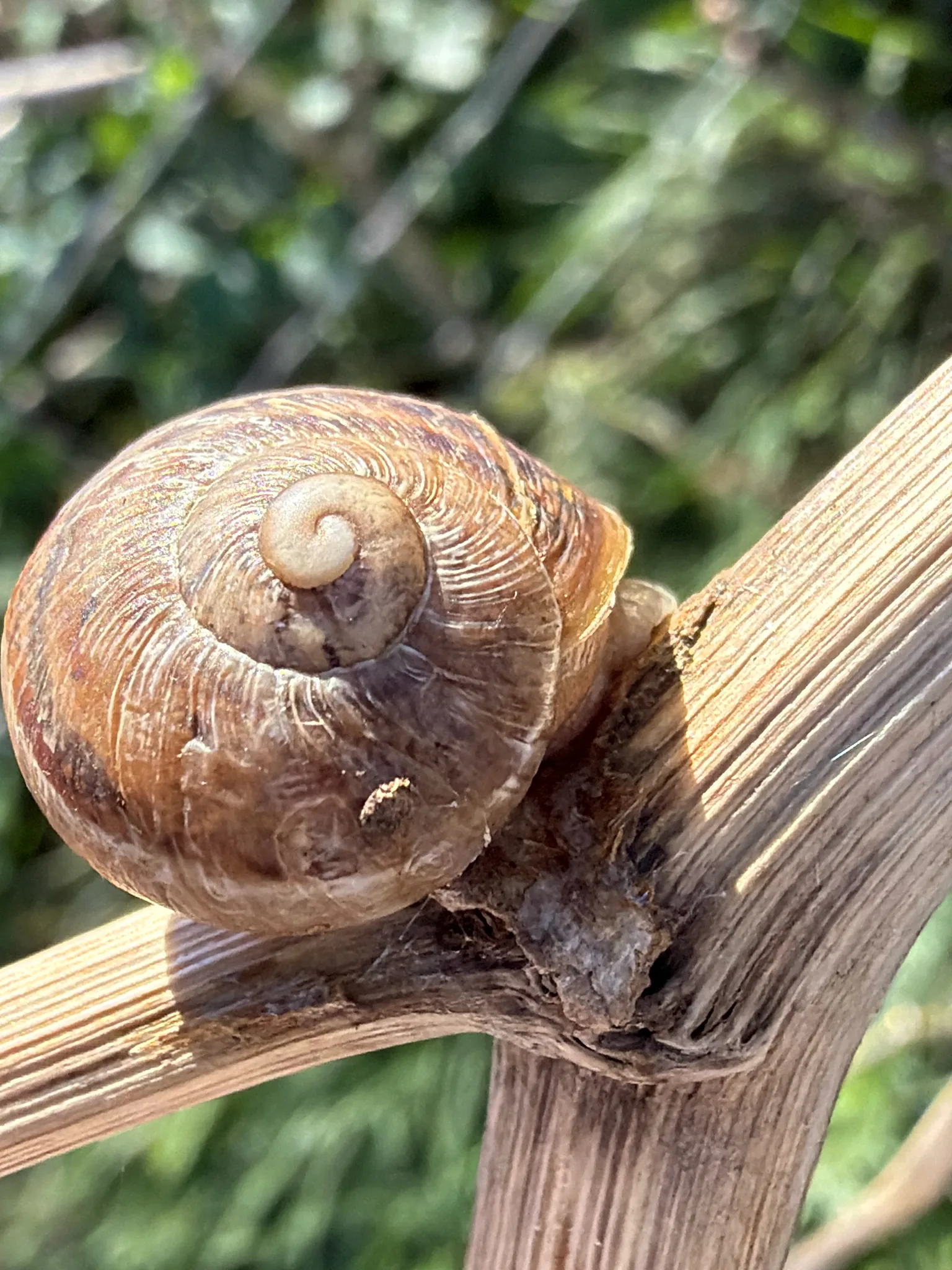
Rounded shell with a variable pattern of brown bands and mottling.
- 02
Wrinkled surface, visible when the shell is examined closely.
- 03
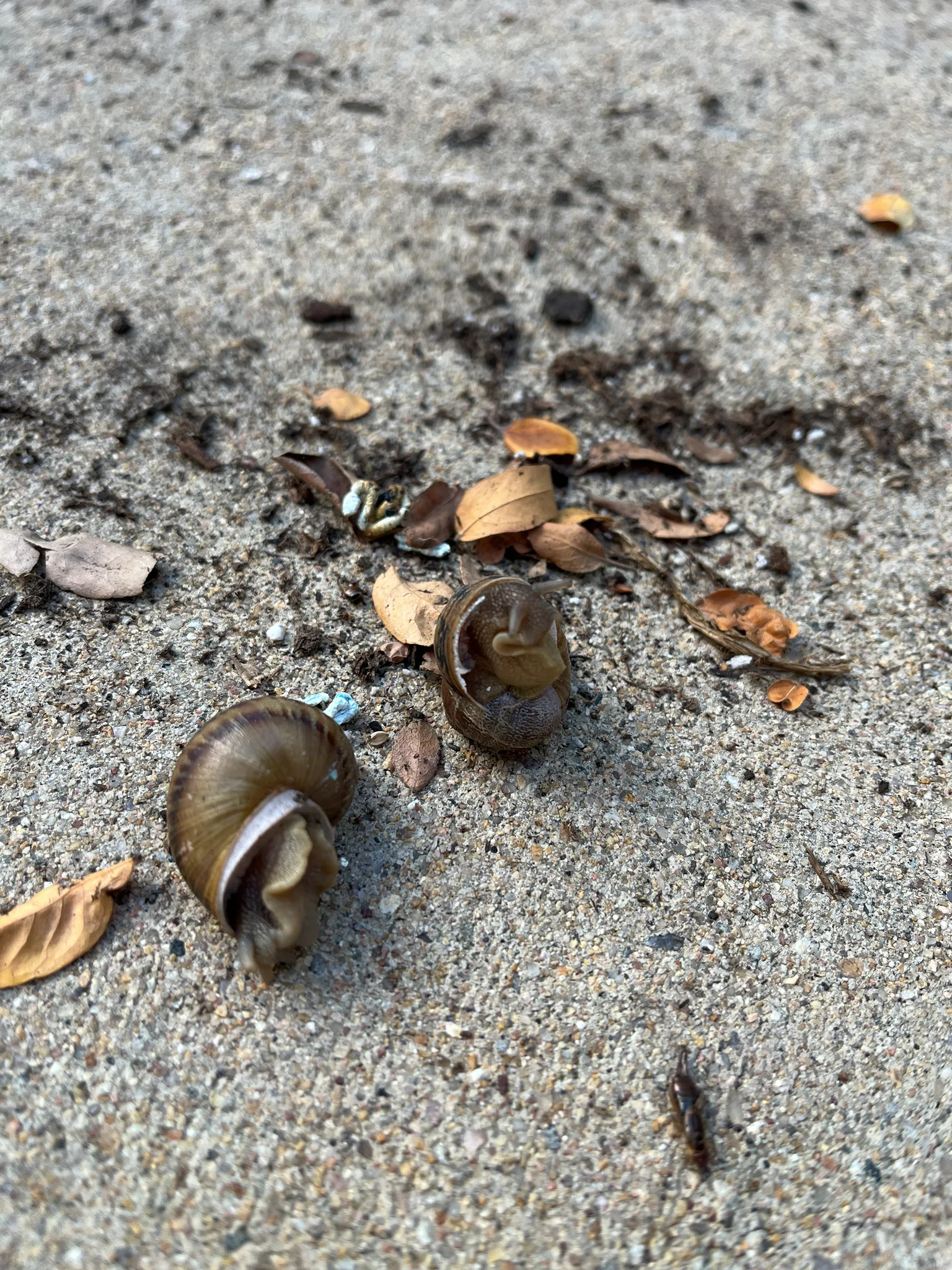
White lip around the opening in mature individuals.
Lighting, age and viewing angle can hide features. If identification affects consumption, handling or conservation, consult specialist sources.
Ecology
Description and characteristics
Cornu aspersum has a rounded shell patterned with lighter and darker brown stripes, bands and mottling; some individuals have white flecks. Irregular wrinkles are visible on close inspection. In adults, a white lip borders the opening. The pattern varies between individuals rather than being uniform throughout the species.
It feeds on a wide range of plants, including vegetables, flowers, fruit plants and weeds. Mild, damp conditions favour activity. In cold weather it may bury itself and close its shell with hardened mucus; in dry conditions it also seals the opening to reduce water loss. It is hermaphroditic and lays white eggs in a nest dug into soil. Laying frequency depends on factors including temperature and humidity.
Mucus serves more than one purpose. This species produces protective secretions and two kinds of secretion from the foot: one adhesive and another lubricating. These different properties contribute to the animal’s interaction with the surface on which it moves.