At a glance
Essentials
- Distribution
- Its native range includes Europe, North Africa, and western Asia. It has been introduced to many regions beyond that range; for example, it is naturalized in waterways in North America, including Virginia.
- Habitat
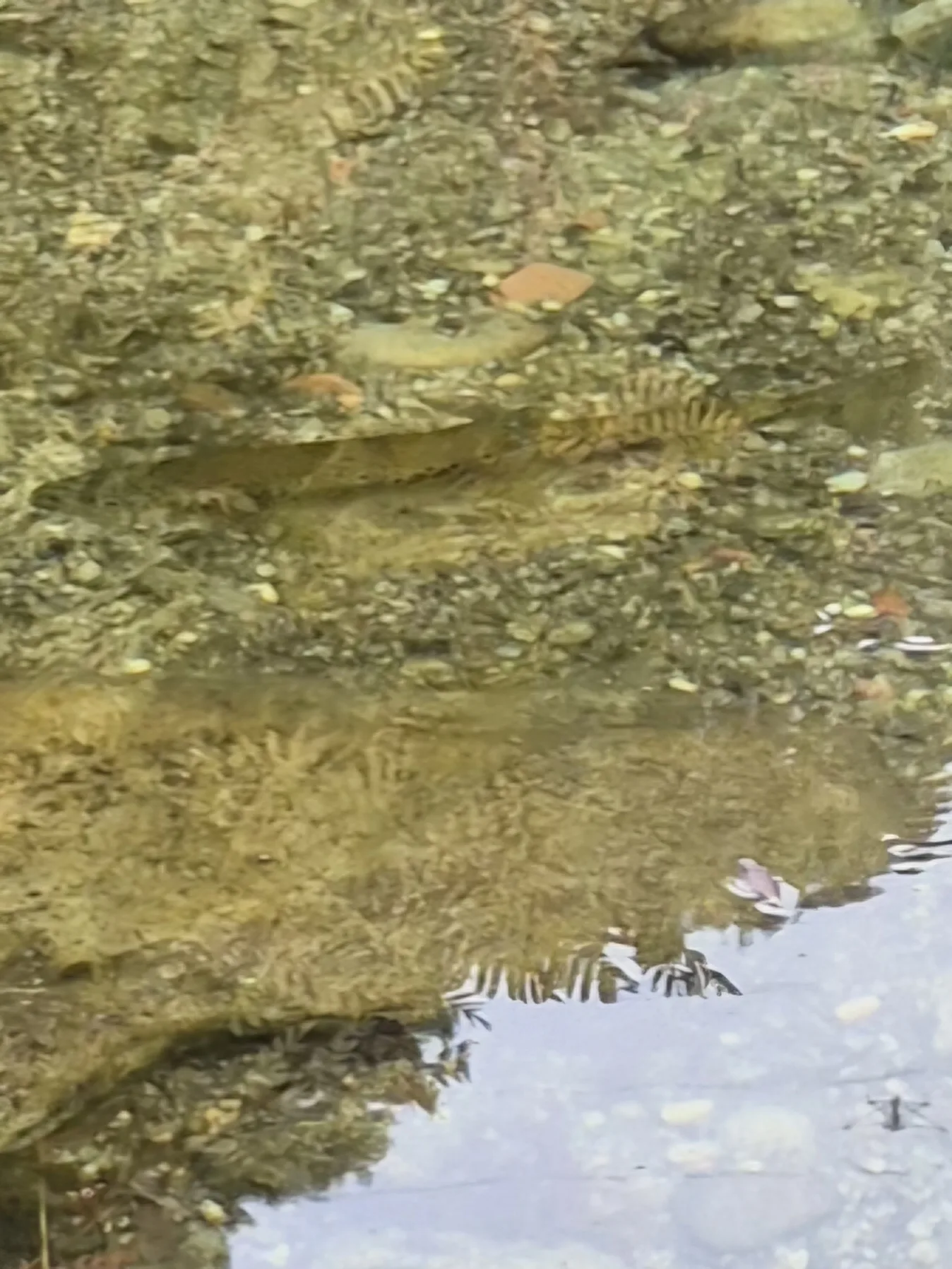
- Inhabits freshwater, including streams and rivers, as well as lakes and reservoirs. In Shenandoah it is described in river sections with gentler gradients; reproduction in Virginia streams takes place in gravel between pools and riffles.
- Activity
- It may be active by day or night; in Douglas Creek, Wyoming, the juveniles observed sheltered among bank stones during the day and were more visible at night.
- Diet
- It mainly consumes invertebrates and crustaceans; larger individuals may eat fish. Other food resources have also been described in some environments.
Observation guide
What to look for
- 01
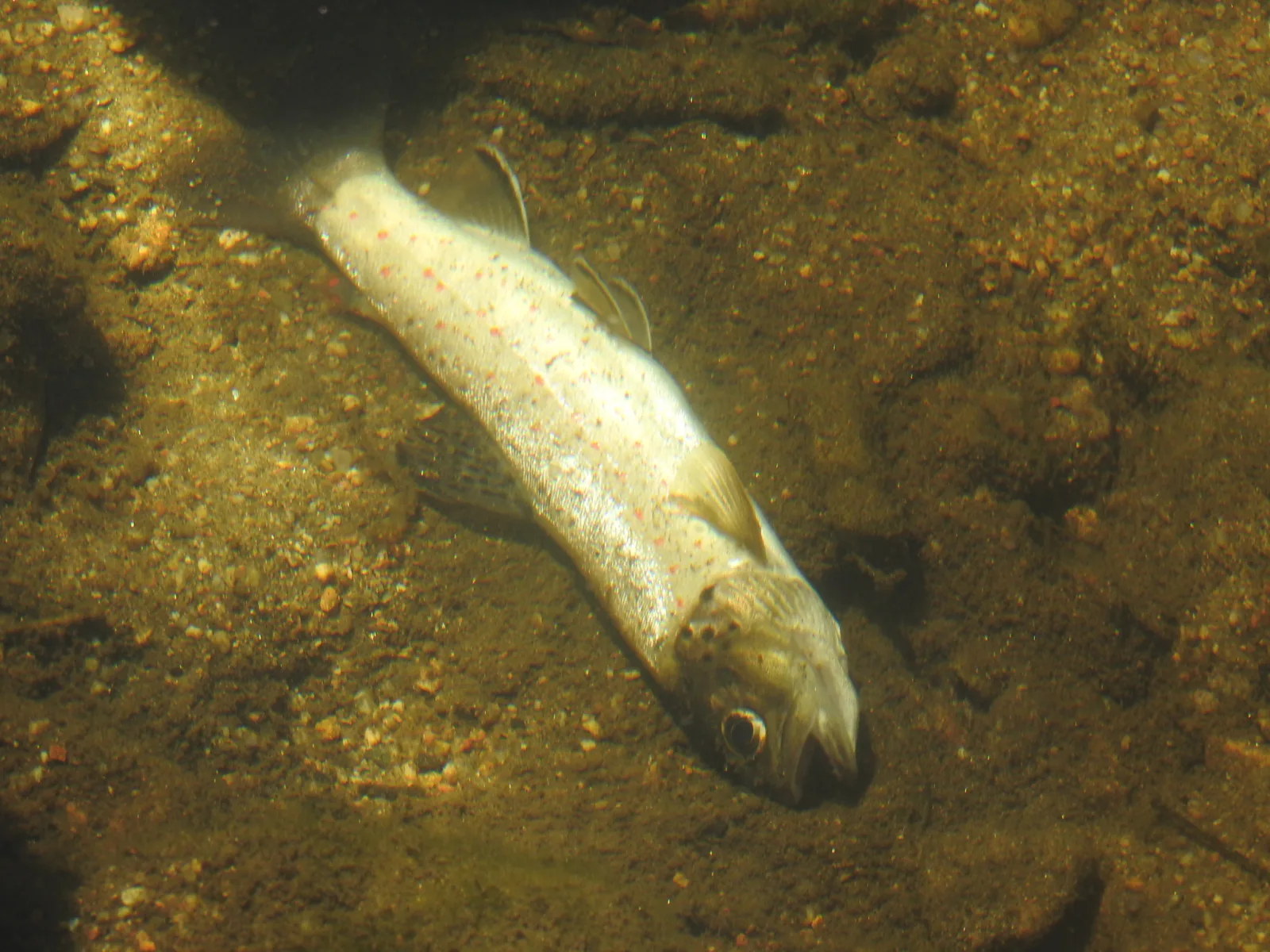
Its body is elongated and spindle-shaped, with a brown or olive back that lightens toward the flanks and belly.
- 02
It has dark spots on the head, back, and sides; in the Bighorn Canyon description, they do not extend to the tail or cover the belly.
- 03
The flanks bear reddish or orange spots, some with a paler, white, or bluish halo.
- 04
The belly and underside of the jaw are light-colored, described as white, pearly, cream, or golden.
Lighting, age and viewing angle can hide features. If identification affects consumption, handling or conservation, consult specialist sources.
Ecology
Description and characteristics
Salmo trutta is a fish in the family Salmonidae with an elongated, spindle-shaped body. Its back is usually brown, olive, or coppery, becoming lighter toward the flanks, which may be yellowish; the belly is whitish, pearly, or cream-colored. It has dark spots on the head, back, and sides, and orange or reddish spots on the flanks; some are surrounded by a pale halo. In the Virginia populations described by the National Park Service, the dorsal fin also has dark spots, and the lower fins have white margins. During the breeding season, males may develop an elongated, hooked jaw and brighter colors.
The species inhabits freshwater environments such as streams and rivers, and can also live in lakes and reservoirs. In the mountain streams of Shenandoah, Virginia, it occurs in sections with slower currents and gentler gradients; the local account also records populations in rivers and larger bodies of water. Gravel substrate is important for reproduction: in the Virginia streams described by the National Park Service, females excavate nests in gravel sections between pools and riffles. It is primarily carnivorous, consuming invertebrates and crustaceans; larger individuals may also include fish in their diet. Diet composition depends on the environment and available resources.
Its life cycle varies among populations. Some trout remain in their home stream, while others move to lakes or the sea and return to freshwater to reproduce; a return to the natal watercourse before spawning has been described. The Virginia populations covered by the National Park Service reproduce in autumn, generally between October and November and sometimes through December; in the park streams studied there, they reach reproductive maturity between one and three years of age. Eggs are laid in nests excavated in gravel; accounts also describe juvenile stages moving from gravel nests into more open areas of the streambed to feed. In Douglas Creek, Wyoming, the juveniles observed sheltered among stones along the banks during the day and emerged more often at night: this behavior applies to that stream and the period studied, not necessarily to all populations.