At a glance
Essentials
- Distribution
- It is described from tropical and temperate seas; the reported range includes the eastern Atlantic, the Mediterranean, the Black Sea, the coasts of southern England and South Africa, several Atlantic islands, and the western Atlantic.
- Habitat
- It lives in tropical and temperate seas and shelters in holes or crevices on rocky seafloors.
- Activity
- It is reserved; it moves along the seafloor or propels itself with jets of water expelled through its siphon.
- Diet
- It feeds mainly on crabs and other crustaceans; in an observation in the U.S. Virgin Islands, it left its shelter in search of sea snails and clams.
Observation guide
What to look for
- 01
Eight arms with suckers distributed along each arm.
- 02
Rapid color change in the skin, visibly altering its appearance.
- 03
Beak and radula in the mouth, associated with its way of feeding.
Lighting, age and viewing angle can hide features. If identification affects consumption, handling or conservation, consult specialist sources.
Ecology
Description and characteristics
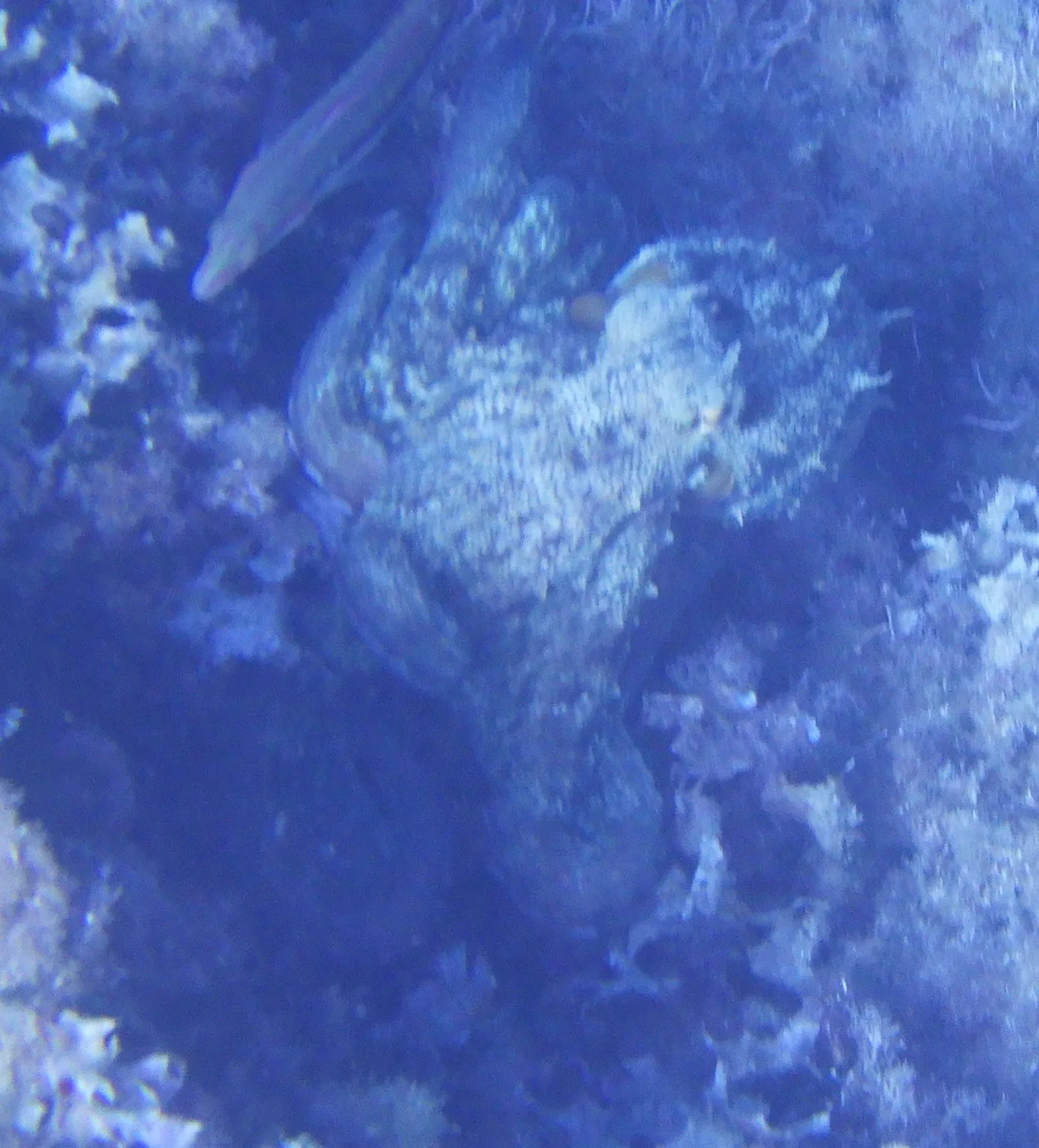
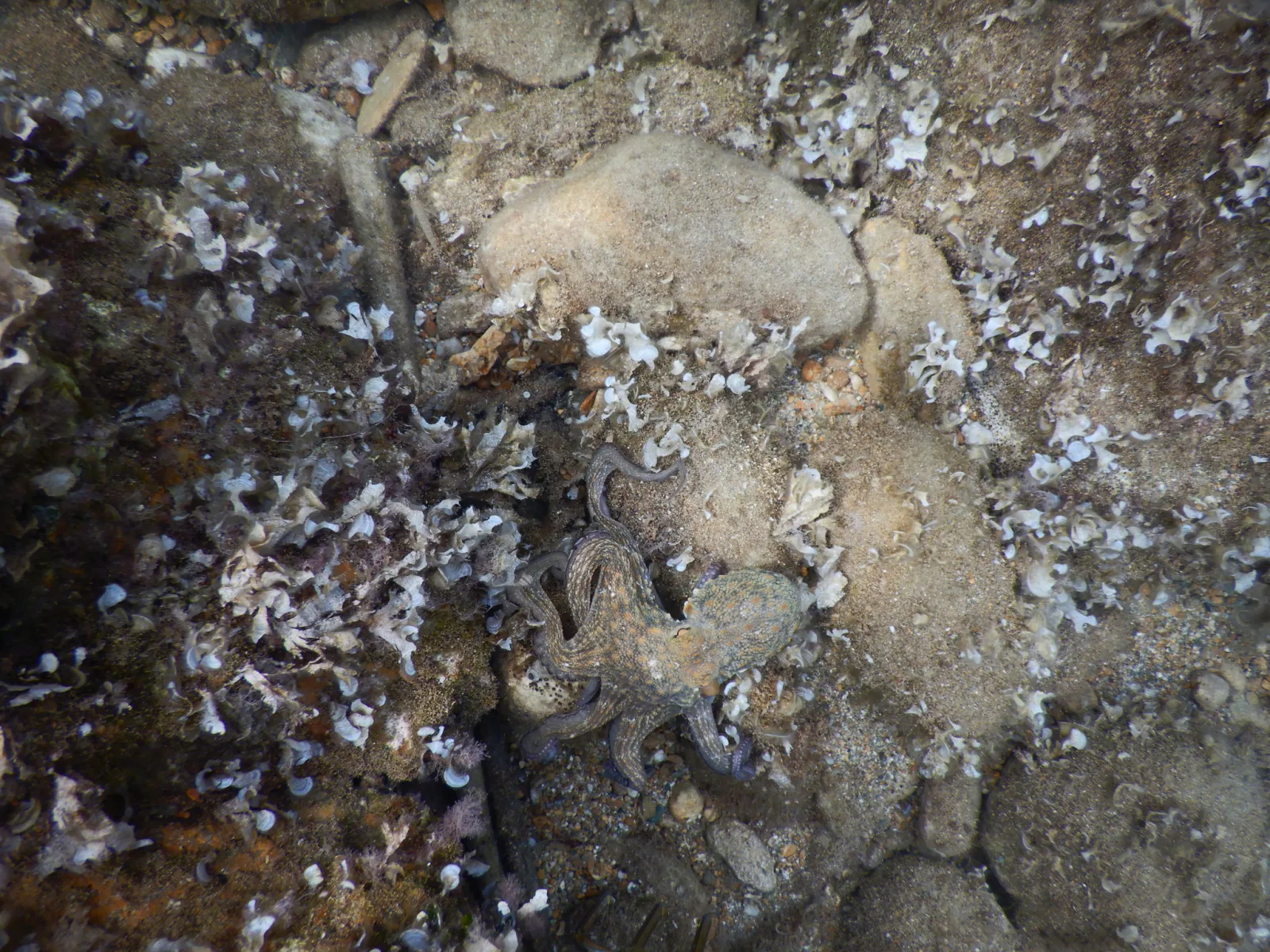
Octopus vulgaris is a soft-bodied, medium-sized cephalopod mollusk. Like other octopuses, it has eight arms lined with suckers; its mouth contains a beak and a radula, structures associated with feeding. A striking visible characteristic is its ability to change color rapidly, which allows it to alter its appearance. It can move by crawling along the seafloor or propel itself by expelling water through its siphon; when threatened, it can also release ink.
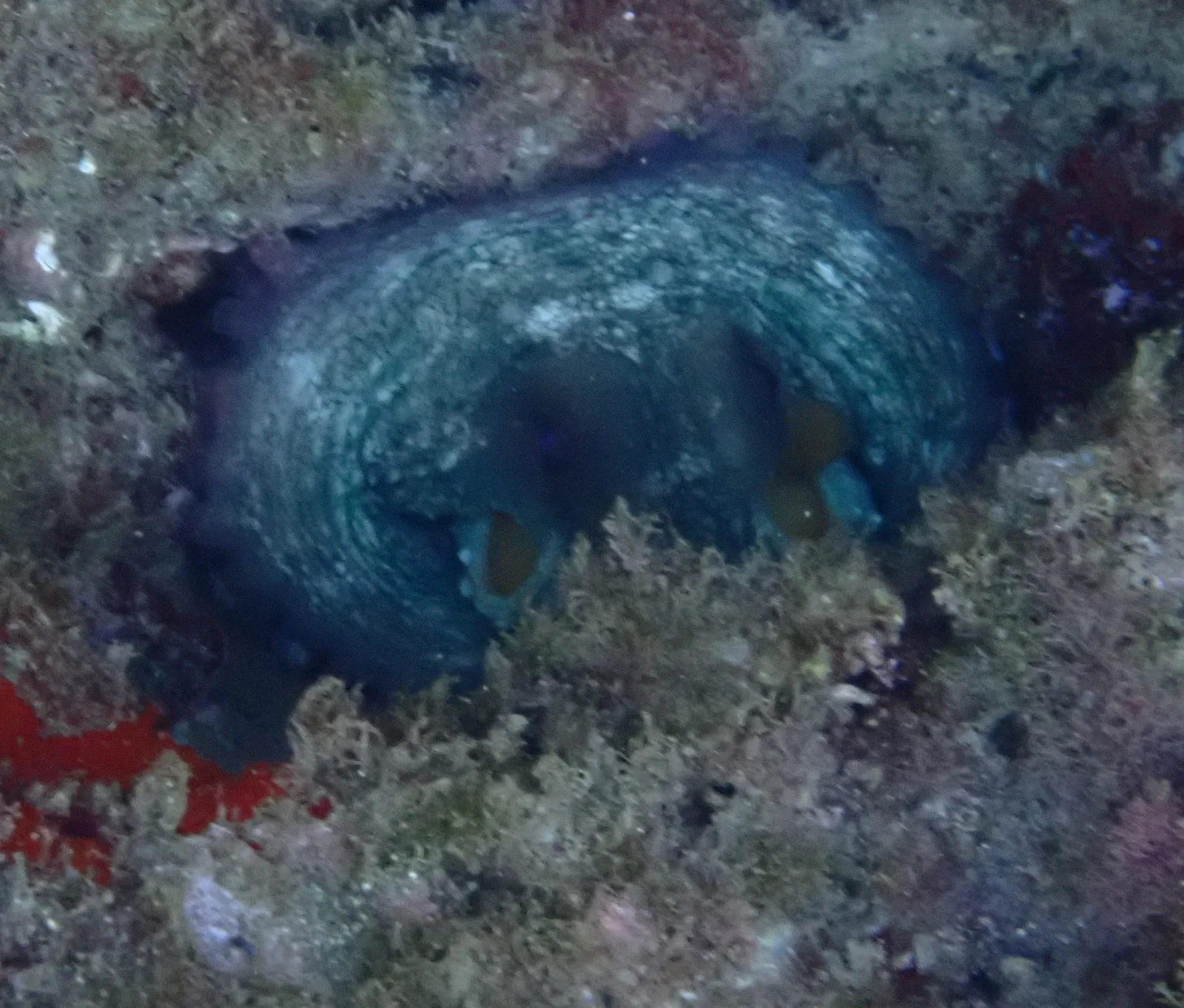
On the seafloor, it usually occupies holes or crevices among rocks and has a reserved and inconspicuous manner. Its diet includes mainly crabs and other crustaceans. In an observation from the U.S. Virgin Islands, an individual left its shelter to search for sea snails and clams; this observation documents local activity, not a universal diet. The combination of sheltering and leaving to search for food is supported for the species, although no general activity schedule is specified.
It inhabits tropical and temperate seas and is associated with fissures and cavities on rocky seafloors. Its described distribution encompasses the eastern Atlantic, from the Mediterranean and Black seas to the coasts of southern England and South Africa; it is also reported in the Azores, Canary Islands, and Cape Verde, as well as in the western Atlantic. During development, juveniles spend several weeks in the plankton before settling; this describes an early stage but does not, by itself, establish the full duration of the life cycle.