At a glance
Essentials
- Distribution
- Its range includes European waters and Atlantic coasts, as well as Mediterranean and Black Sea environments; juveniles enter rivers and lakes connected to these waters.
- Habitat
- It inhabits rivers and other freshwater environments, as well as estuaries and brackish coastal waters; the environment it uses changes through its migratory life stages.
- Activity
- It is mainly nocturnal, with differences in light response according to developmental stage.
- Diet
- Its diet can include worms, fish, molluscs and crustaceans; the larvae consume planktonic organisms.
- Conservation
- Critically Endangered.
Observation guide
What to look for
- 01
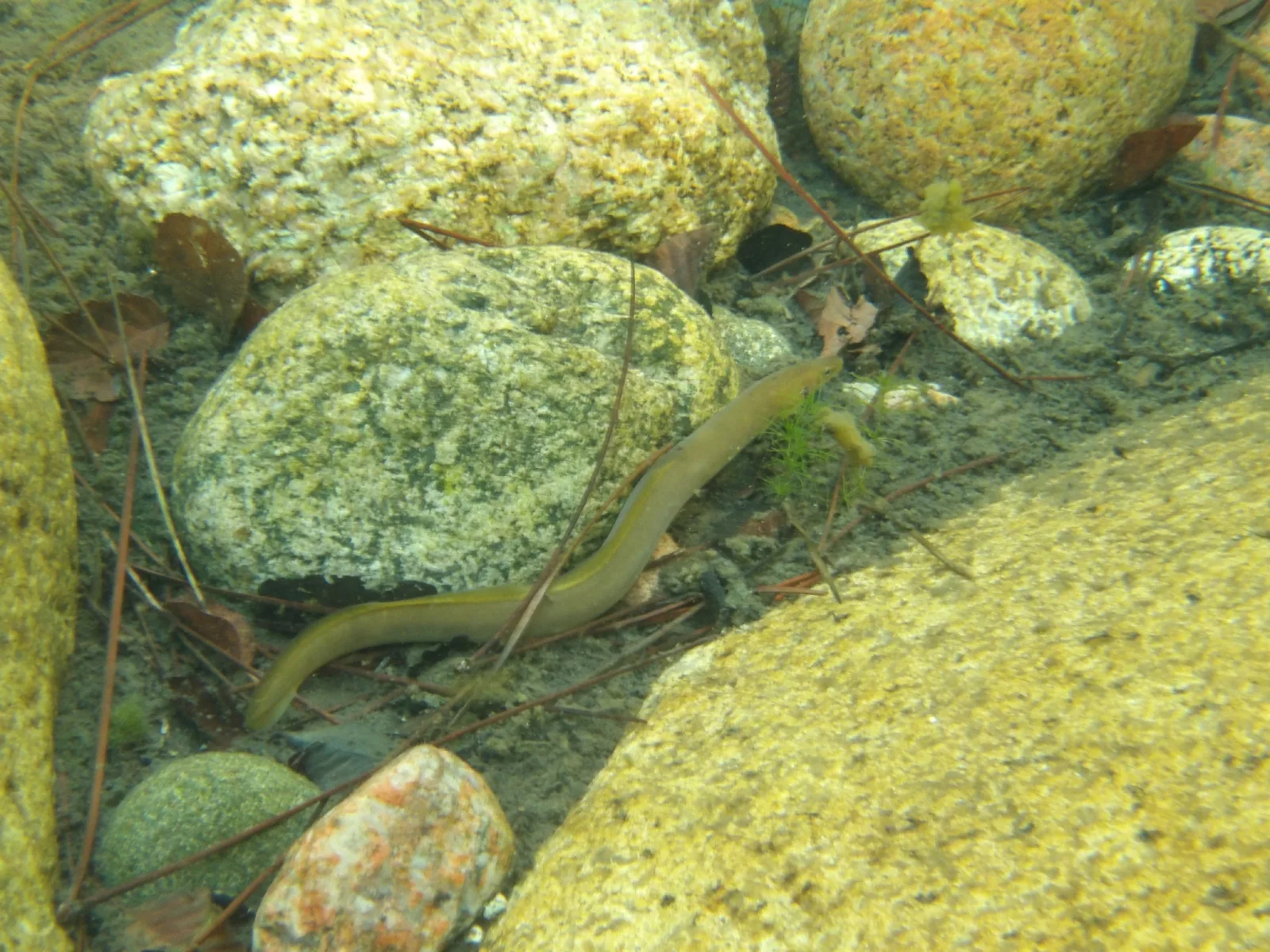
Its elongated, snake-like body is cylindrical at the front and more flattened toward the rear.
- 02
The dorsal, caudal and anal fins join to form a continuous edge running along the rear part of the body.
- 03
The slightly longer lower jaw projects just beyond the upper jaw at the tip of the snout.
- 04
It has no pelvic fins, a visible feature accompanying its elongated body shape.
Lighting, age and viewing angle can hide features. If identification affects consumption, handling or conservation, consult specialist sources.
Ecology
Description and characteristics
Anguilla anguilla is an anguilliform fish with a very elongated body, cylindrical at the front and somewhat flattened toward the rear. Its appearance can change with its life stage: during growth it usually shows greenish or brownish tones, while eels beginning their return migration display a different colour phase. The lower jaw projects slightly beyond the upper jaw. The dorsal, caudal and anal fins form a continuous edge around the rear part of the body; it has no pelvic fins, and its fins have no spines.
It is a catadromous migratory species: it grows for a substantial part of its life in inland or brackish coastal waters, then returns to the ocean when it reaches the adult migratory stage. It can remain for years in rivers and other freshwater environments; it also inhabits estuaries and brackish coastal waters. Its habitat therefore changes with its development and migrations. The Sargasso Sea in the western Atlantic is recognized as a breeding area, and the species moves between this oceanic region, European coasts and waterways that flow into the Atlantic.
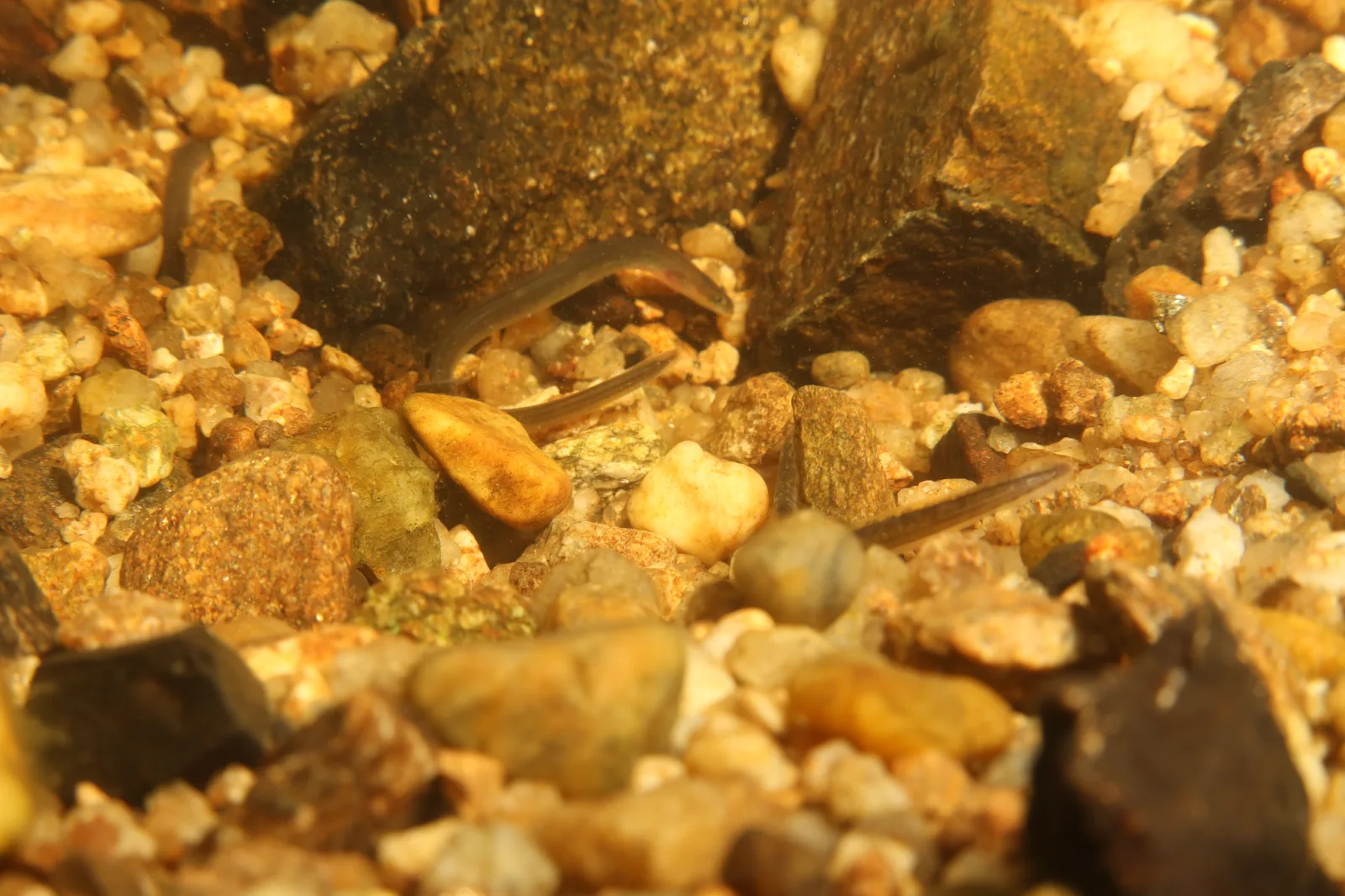
The life cycle involves several transformations: leptocephalus larvae hatch from the eggs, cross the ocean and metamorphose into transparent glass eels as they approach the coasts. They can then move up rivers and grow into juvenile and later adult eels. On reaching maturity, they change to the silver phase and migrate downstream, then toward deep ocean waters to reproduce; during this return journey they stop feeding. Activity is usually mainly nocturnal, although it can vary with life stage. Its diet includes worms, fish, molluscs and crustaceans; the larvae consume planktonic organisms.