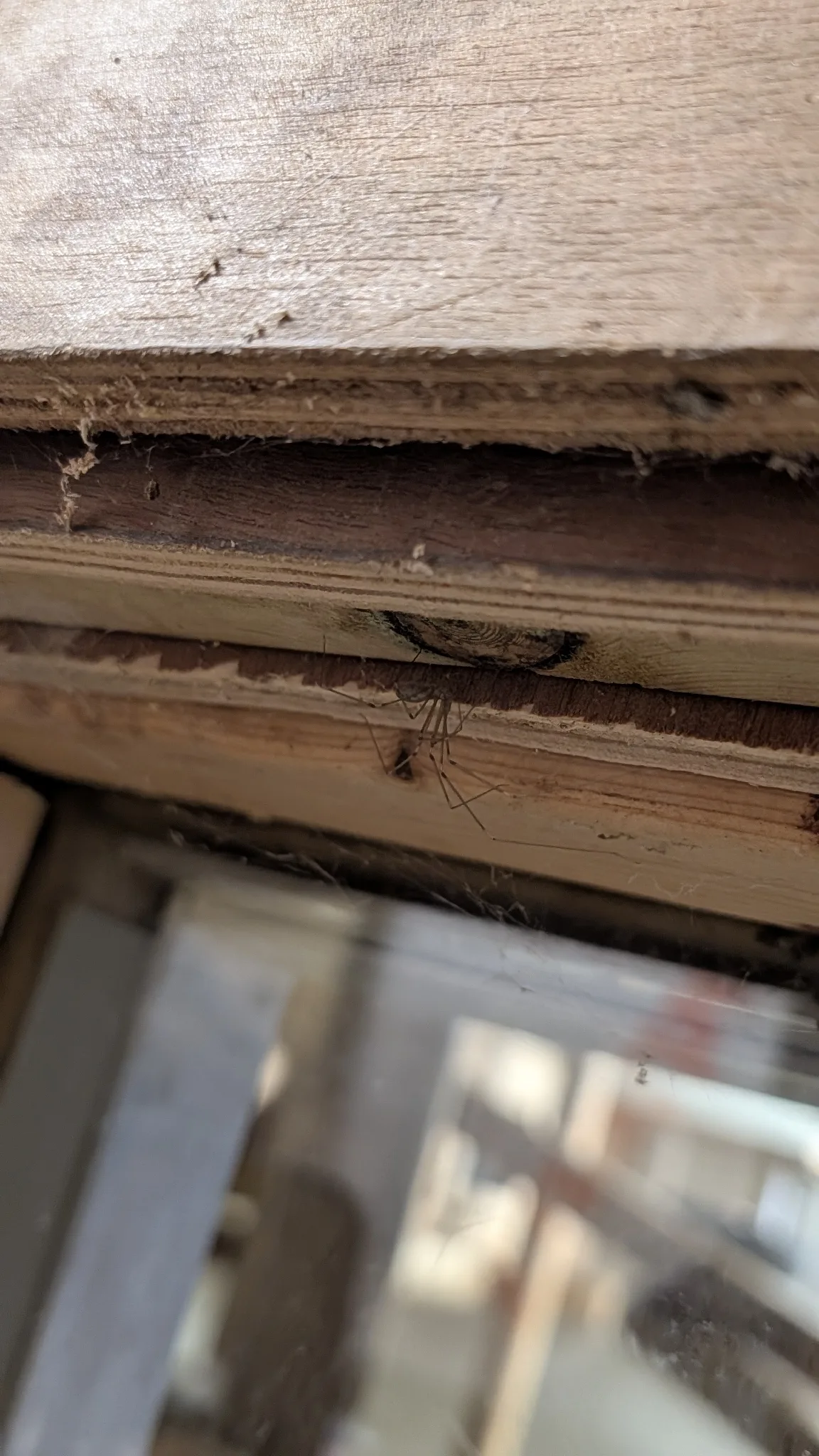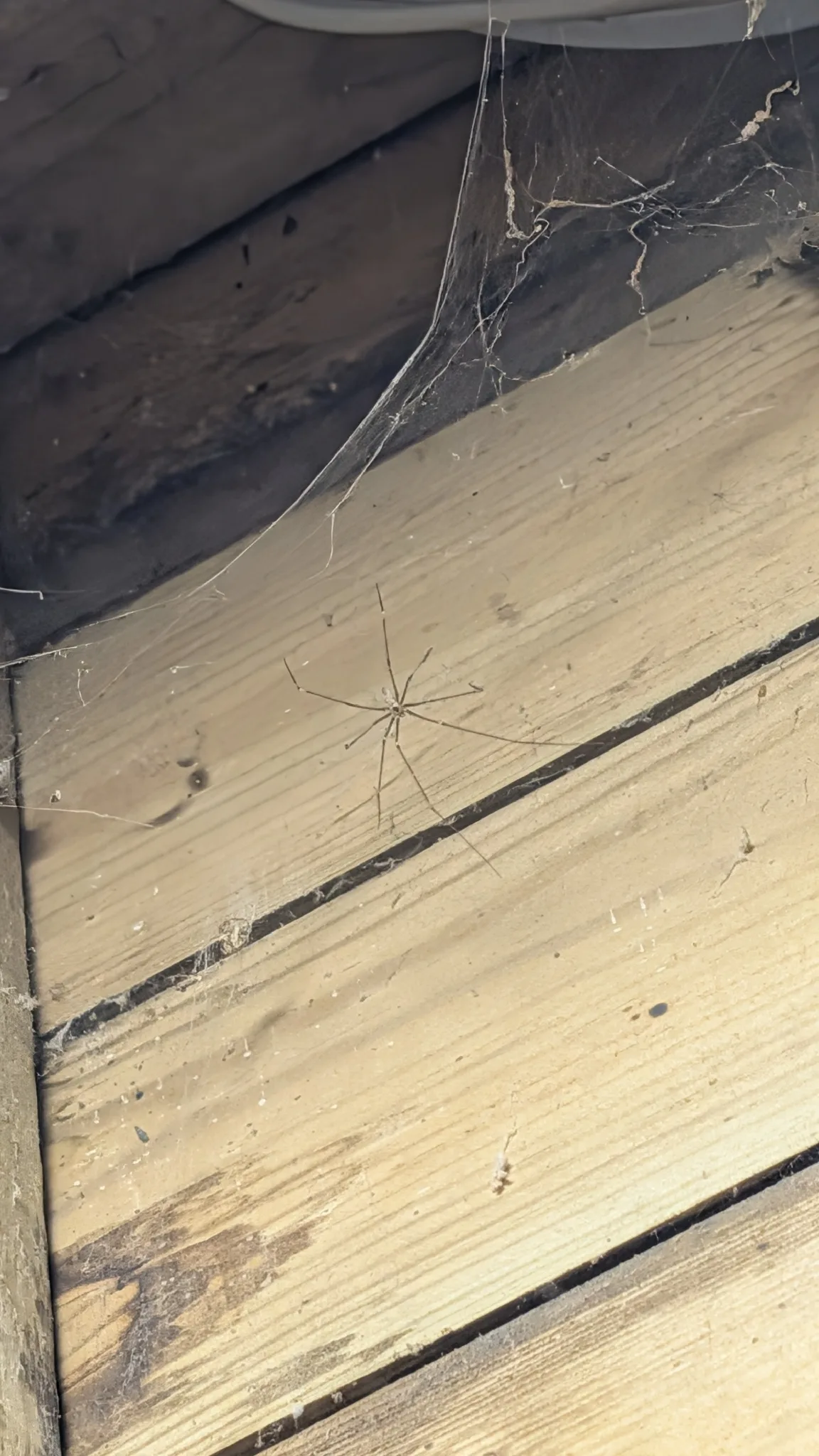
At a glance
Essentials
- Size
- Females measure approximately 7–9 mm in body length; males are somewhat smaller, at around 6 mm. The range may vary with age, sex and population.
- Distribution
- It occurs in various regions of the world; one source places its origin in western Asia and describes its subsequent spread to almost the entire planet.
- Habitat
- It lives in sheltered, dimly lit places, such as basements, corners of homes, caves, and spaces beneath stones or ledges.
- Activity
- It usually hangs upside down in its web; when the web is disturbed, it can make its body and the web vibrate rapidly.
- Diet
- It catches small insects and other spiders in webs; it has also been observed invading another spider’s web and feeding on that spider.
Observation guide
What to look for
- 01
Very long, slender legs, usually measuring five to six times the length of the body.
- 02
Pale, translucent coloring, with a large gray mark in the center of the cephalothorax.
- 03
Eight eyes in two groups, with two small eyes in front of two triads of larger eyes.
- 04
Loose, irregular web from which it usually hangs upside down, especially in sheltered corners.
Lighting, age and viewing angle can hide features. If identification affects consumption, handling or conservation, consult specialist sources.
Ecology
Description and characteristics
Pholcus phalangioides is a spider in the family Pholcidae, with a small body and notably long, slender legs. Its coloring is usually pale yellow or light brown, with a large gray mark in the center of the cephalothorax; its body and legs are almost translucent and have fine gray hairs. The head is darker around the eyes. It has eight eyes: two small ones positioned in front of two groups of three larger eyes. In proportion to the body, the legs are usually five to six times its length. Females reach about 7–8 mm in body length; males are around 6 mm. Disproportionately long legs and a delicate body are visible traits that help identify it.
It usually occupies sheltered, dimly lit places, both in buildings—for example, basements, ceilings, corners, and spaces behind furniture—and in caves and beneath stones or ledges. It builds a broad, loose, irregular web, often spread horizontally or adapted to the shape of the site; it hangs upside down from it. The web serves to catch food: it eats small insects and other spiders, and it has been observed entering other spiders’ webs and taking advantage of them after capturing the resident spider. If its web is disturbed, it can make its body and the web vibrate rapidly, until it becomes difficult to distinguish. It hunts from an irregular web in a sheltered refuge.
Outside the mating period, it usually leads a solitary life, focused on capturing prey in its web. During courtship, males locate females by following chemical signals; during copulation, which can last several hours, they transfer sperm to the female’s genital opening. She can store it before the eggs are fertilized. After hatching, the young pass through a prenymphal stage: the mother watches over them for about nine days, until they molt and acquire the appearance of tiny spiders. They then leave the mother’s web and look for a place to build their own. The young disperse after their first molt, following this brief period of maternal care.