At a glance
Essentials
- Distribution
- The nominate subspecies has a native range indicated in temperate and subtropical regions of the Northern Hemisphere, with records in Europe, Asia and North America.
- Habitat
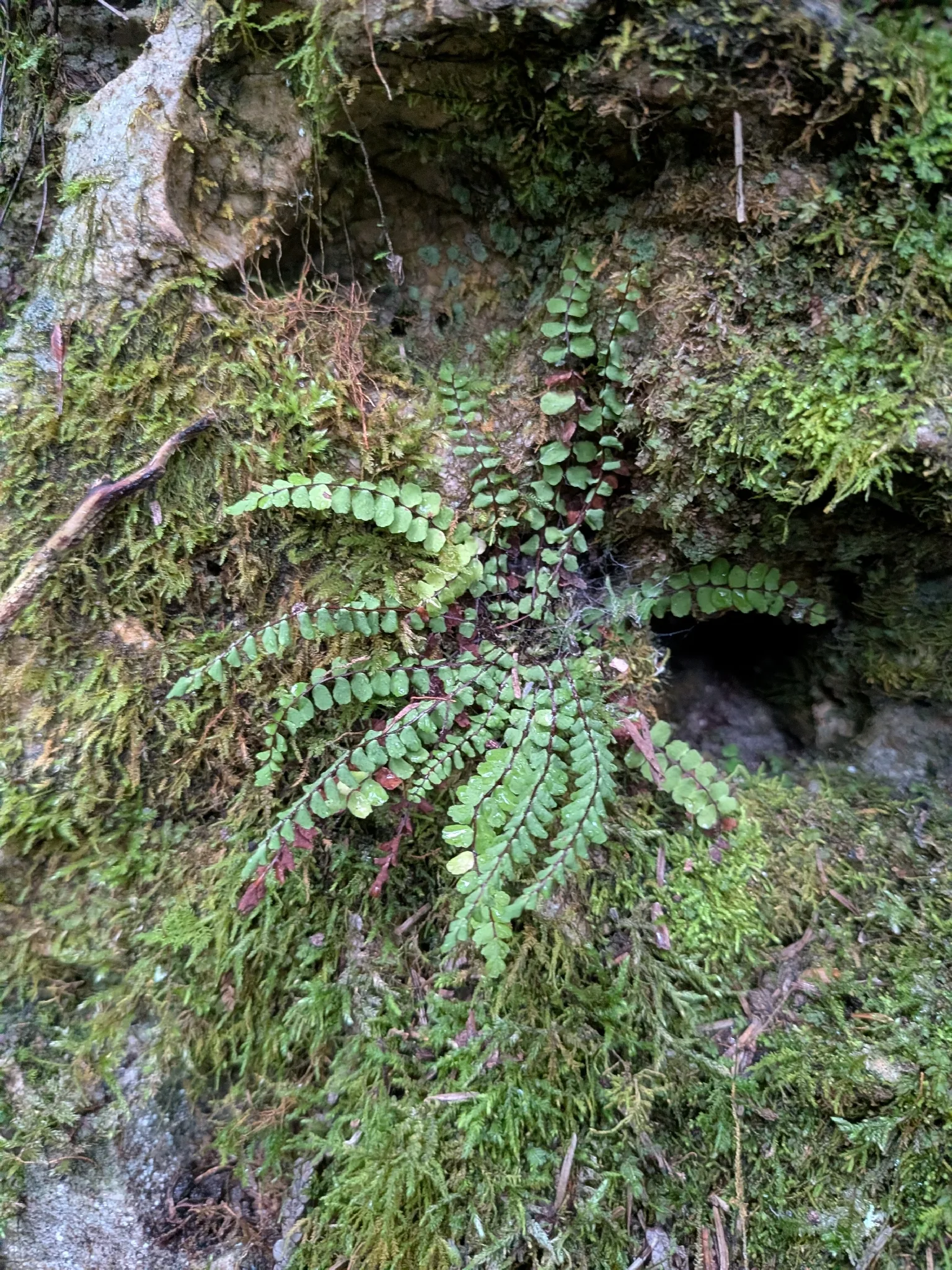
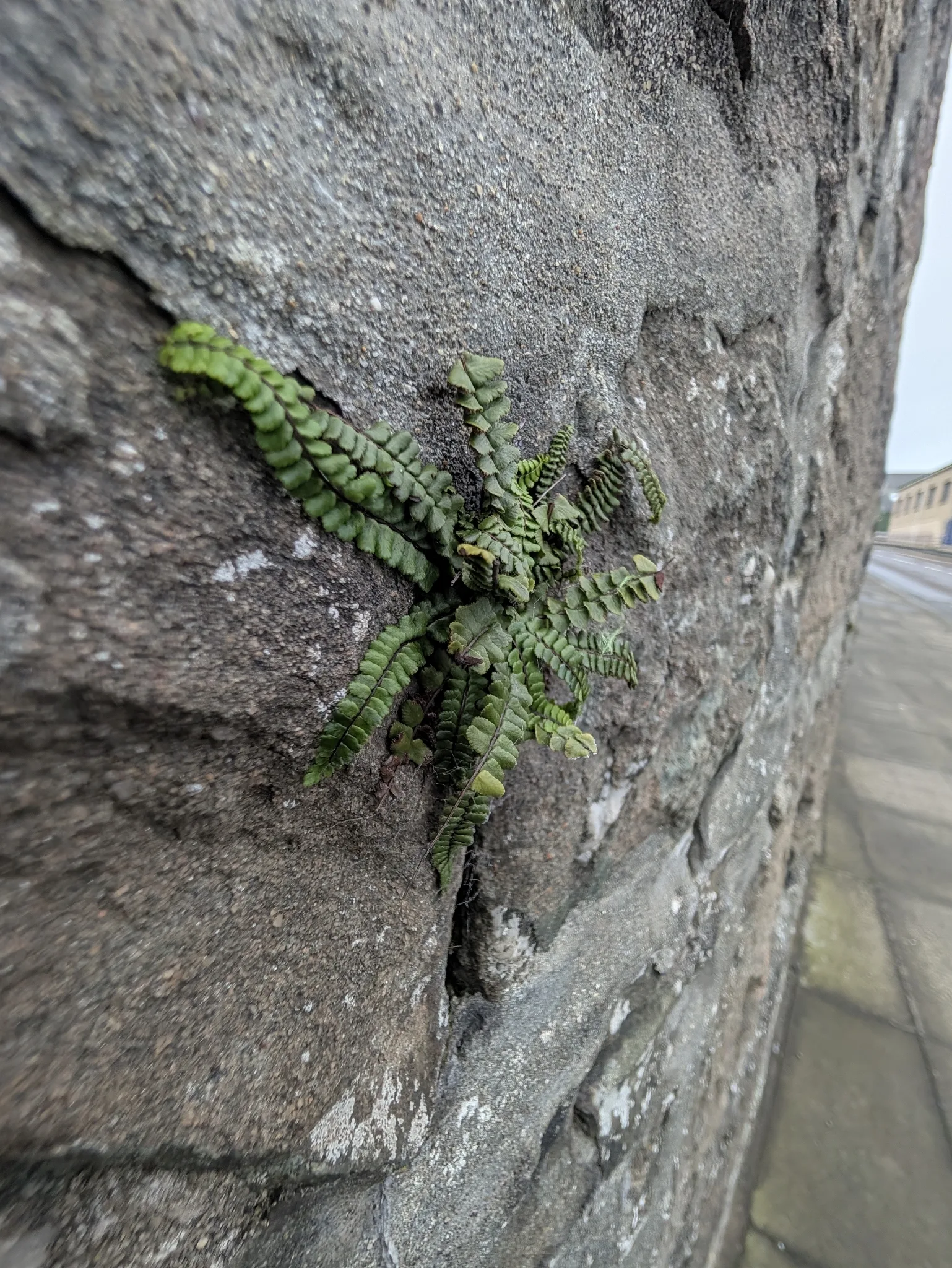
- Grows in rock crevices, on ledges and walls, often in shady, damp places; preferences for acidic or calcareous substrates vary among subspecies.
Observation guide
What to look for
- 01
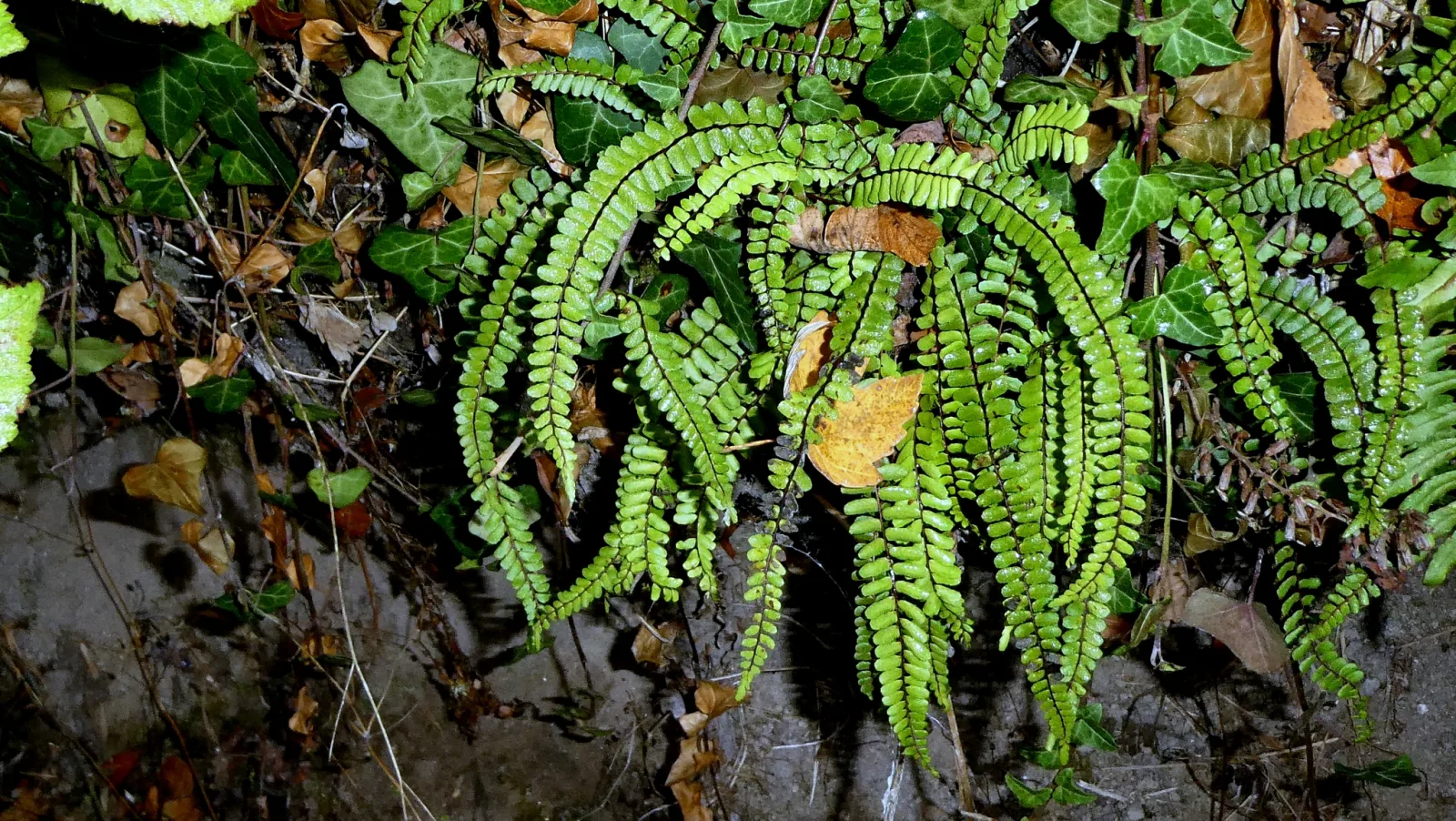
The fronds are narrow and elongated, and grow in clusters from a short rhizome.
- 02
The stipe and rachis are dark, ranging from brown to black, and may be glossy.
- 03
The blade is divided once into small, oval or rounded pinnae, often with toothed margins.
- 04
Linear sori can be seen on the underside of the pinnae, along the veins.
Lighting, age and viewing angle can hide features. If identification affects consumption, handling or conservation, consult specialist sources.
Ecology
Description and characteristics
Asplenium trichomanes is a perennial fern that forms clumps from a short, scaly rhizome, from which fine, dark roots emerge. Its persistent, narrow fronds are divided once into small, oval or rounded pinnae arranged on either side of the rachis. The edges of the pinnae may be slightly toothed or crenate. The dark, glossy rachis, together with the dark stipe, contrasts with the green blade and helps identify the plant. Plant size can vary, and the available descriptions do not agree on a single measurement; therefore, the shape of the fronds is more useful than a height measurement.
This species grows in rock crevices and on ledges, as well as on walls, where small deposits of soil accumulate. It is especially associated with shady, damp places, although it can occur on different types of substrate. Rock preferences depend on the subspecies: the nominate subspecies is associated with acidic substrates and rocks such as sandstone, basalt and granite; others, such as A. trichomanes subsp. quadrivalens, are associated with calcareous rocks. Thus, growing on the same type of wall or outcrop does not mean that all populations have identical soil preferences. The plant is terrestrial or rupicolous, and its persistent fronds remain in the clump.
Reproduction can be recognized by the linear sori on the underside of the pinnae. These contain sporangia, structures in which spores form. Descriptions give different periods for their maturation, so no single season is assigned to this process. Variation within the group is also reflected in substrate preferences and in the existence of several subspecies. For the nominate subspecies, the native distribution indicated by Kew covers temperate and subtropical regions of the Northern Hemisphere; this should not be taken as a complete delineation of the range of the entire species.