At a glance
Essentials
- Distribution
- Native to North Africa and temperate regions of Eurasia; it has become naturalised outside its native range, including in North America.
- Habitat
- Grows in fields, along roadsides and in grasslands; it also occurs on disturbed soils and fallow agricultural land.
- Activity
- Flowering occurs in spring; in the Northern Hemisphere it usually begins in late spring, with regional variation.
Observation guide
What to look for
- 01
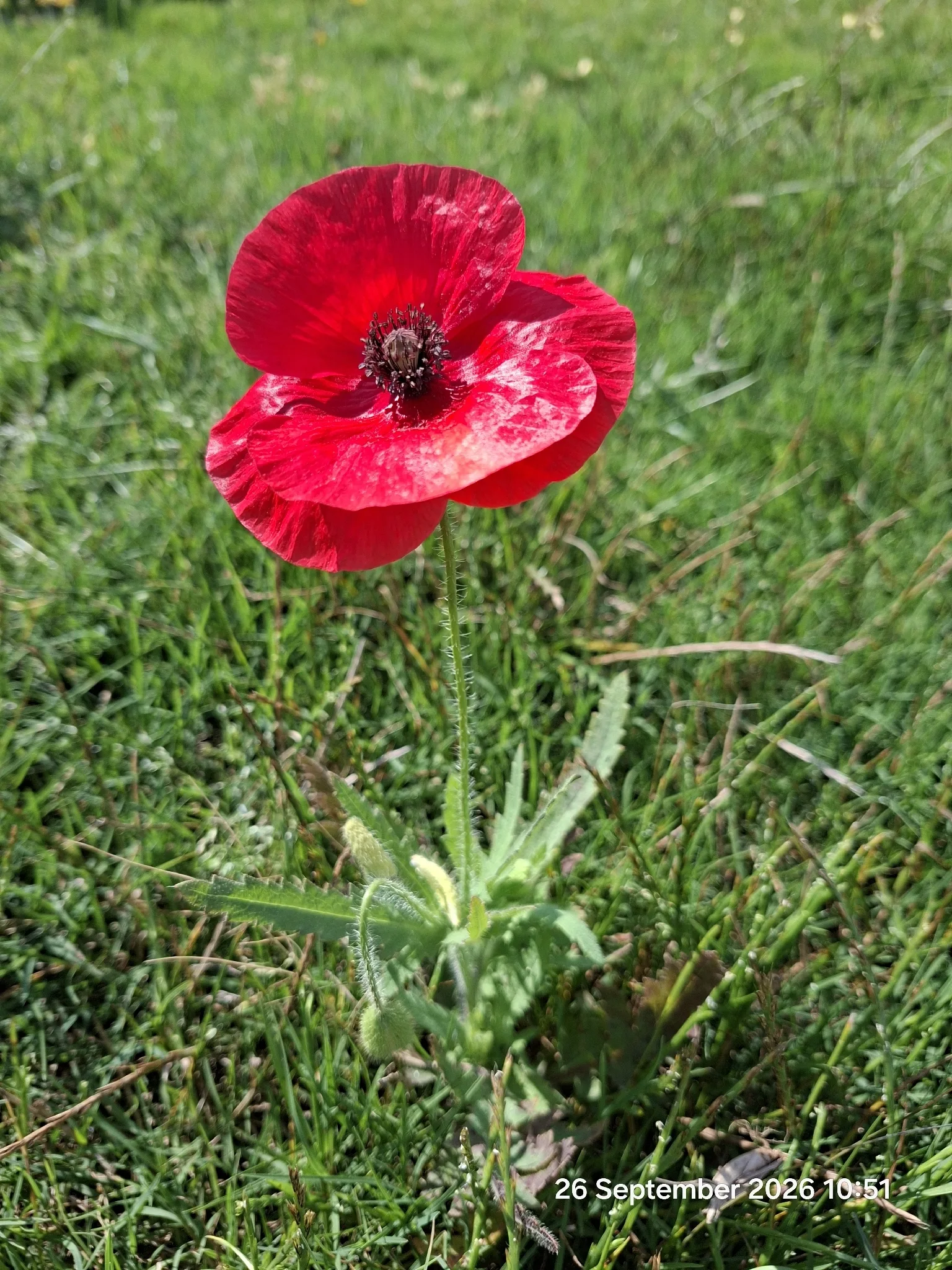
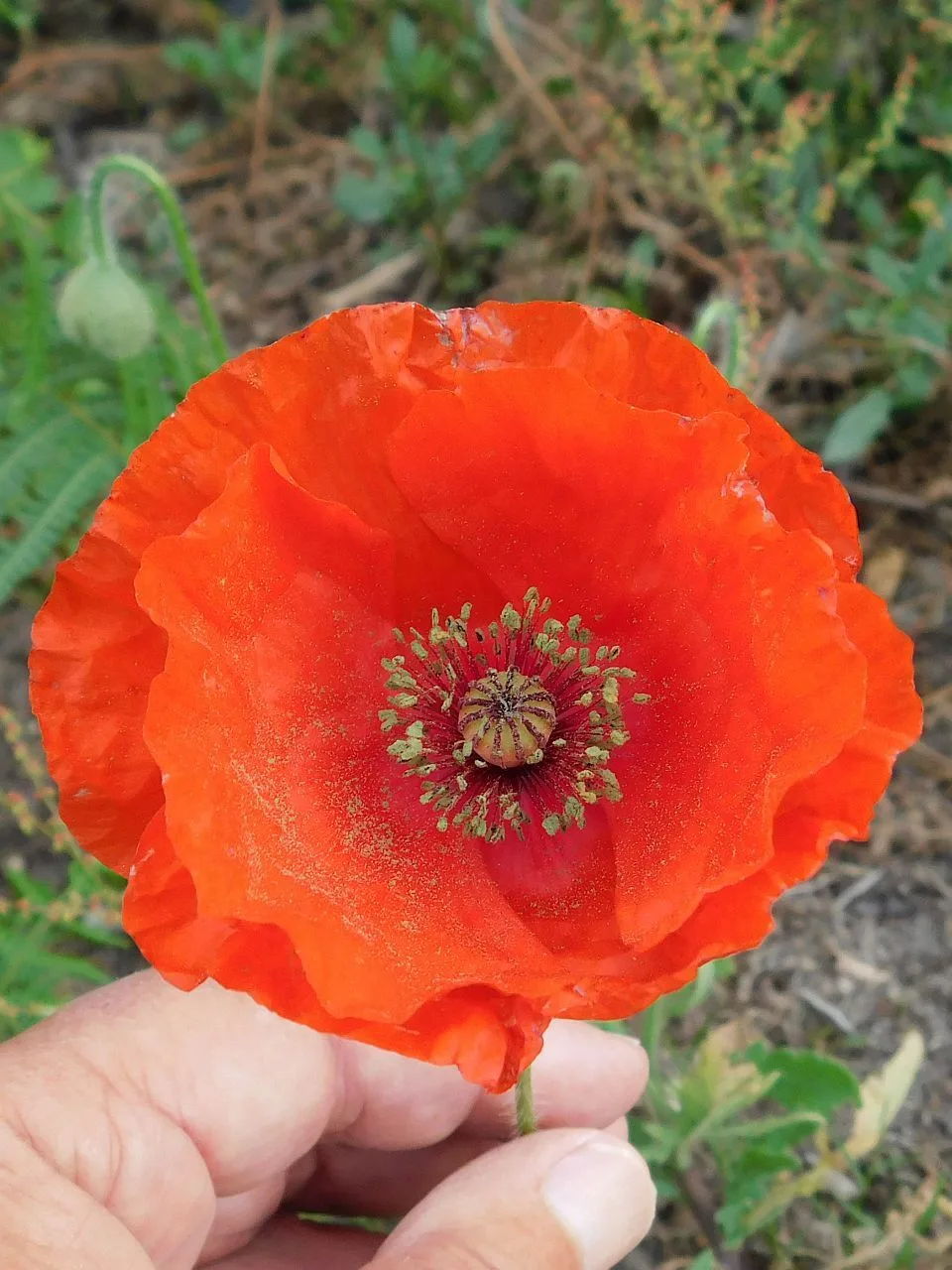
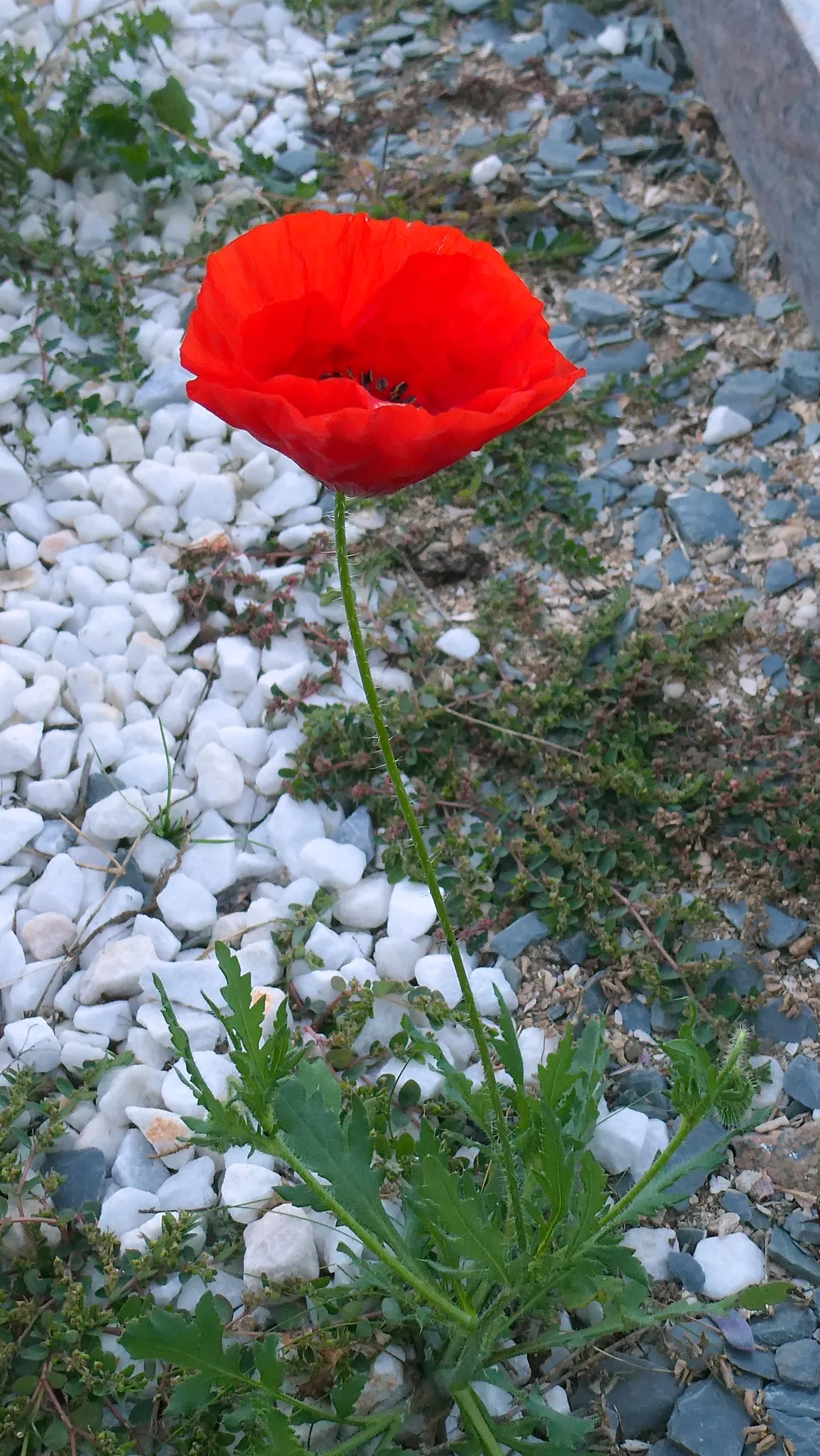
Four-petalled flower: usually scarlet red, with delicate petals and often a dark spot at the base.
- 02
Hairy flower stalk: the hairs usually project outwards rather than lying close against the stalk’s surface.
- 03
Mature hairless capsule: oval in shape, with a radiating disc at the top; the seeds emerge through pores beneath the disc.
Lighting, age and viewing angle can hide features. If identification affects consumption, handling or conservation, consult specialist sources.
Ecology
Description and characteristics
Appearance and leaves. Papaver rhoeas is an erect annual herb. Its sparsely branched stems bear fine or stiff hairs; the leaves grow alternately and have deeply cut or toothed edges. The lower leaves are usually carried on a petiole, while the upper leaves may attach directly to the stem without one. When the tissues are broken, a whitish or yellowish latex may emerge. The plant can vary in size and appearance, so these traits describe its general form but are not, by themselves, sufficient to resolve every identification within the genus Papaver.
Flowers and fruits. The flowers appear singly at the ends of hairy flower stalks. Each has four thin, delicate petals that are generally scarlet red; they often have a dark spot at the base, sometimes edged in white. The two hairy sepals fall away as the flower opens, and numerous dark stamens surround the centre. After flowering, a hairless capsule develops, oval or somewhat bell-shaped in outline and topped by a disc with radiating rays. It contains numerous small, brown, kidney-shaped seeds; when mature, they emerge through pores beneath the upper disc.
Life cycle and ecology. Its life cycle is annual. In the Northern Hemisphere, flowering generally takes place in late spring, although timing can vary with location and conditions; in the United Kingdom, a longer period from May to October has been described. The flowers are short-lived, and further blooms may appear in warm conditions. Seeds can remain in the soil for a long time and germinate when it is disturbed. As a result, the species thrives on disturbed ground and can complete flowering and seed production before cereal crops are harvested. It occurs in fields, along roadsides and in grasslands, as well as on fallow agricultural soils.