At a glance
Essentials
- Distribution
- It is native to the coasts of Europe and northwestern Africa. It has become established in various regions outside its native range; in North America, records are from the Atlantic and Pacific coasts, and it has also been recorded in Australia.
- Habitat
- It inhabits coastal and intertidal environments, such as tidal marshes, sandy flats, and rocky shores; it also occupies estuaries and other coastal habitats.
- Diet
- Coastal predator that consumes mollusks and small crustaceans.
Observation guide
What to look for
- 01
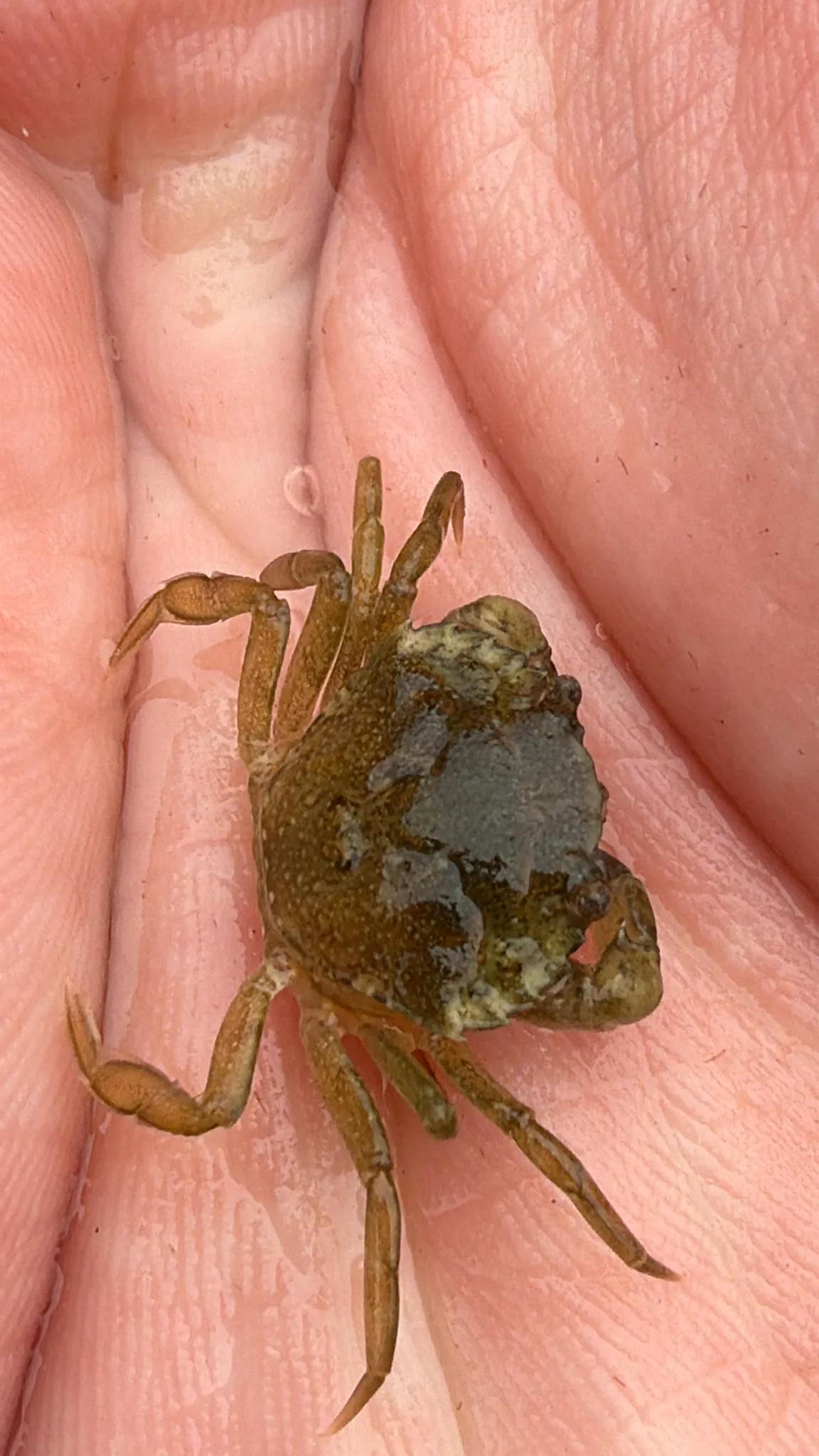
The carapace is wider than it is long and has a broad outline when the animal is viewed from above.
- 02
It has five spines along the front edge on each side of the eyes, a feature that helps distinguish it from other coastal crabs.
- 03
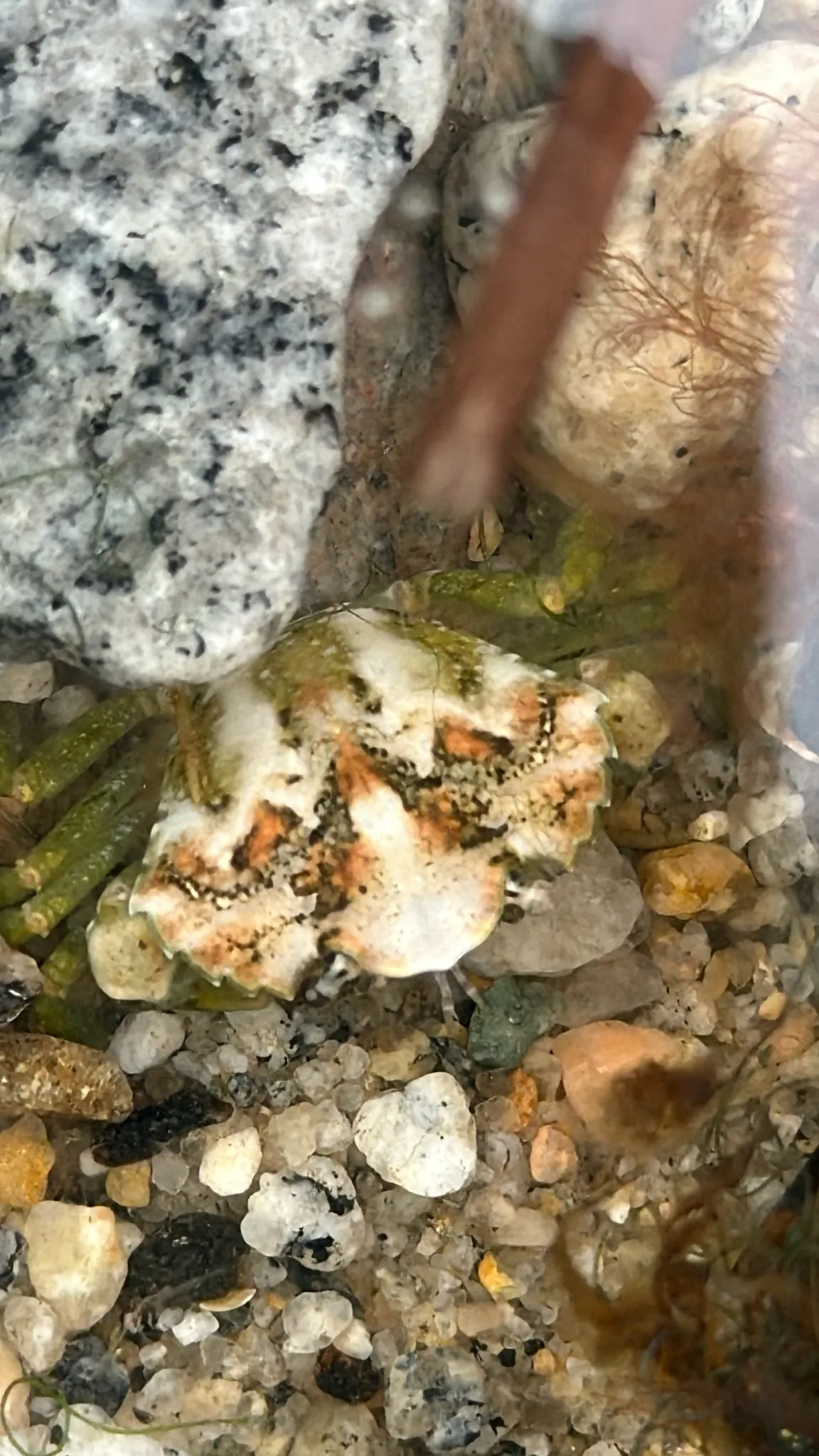
Its color is variable: it can be green, orange, brown, or reddish; juveniles often show light and dark spots.
Lighting, age and viewing angle can hide features. If identification affects consumption, handling or conservation, consult specialist sources.
Ecology
Description and characteristics
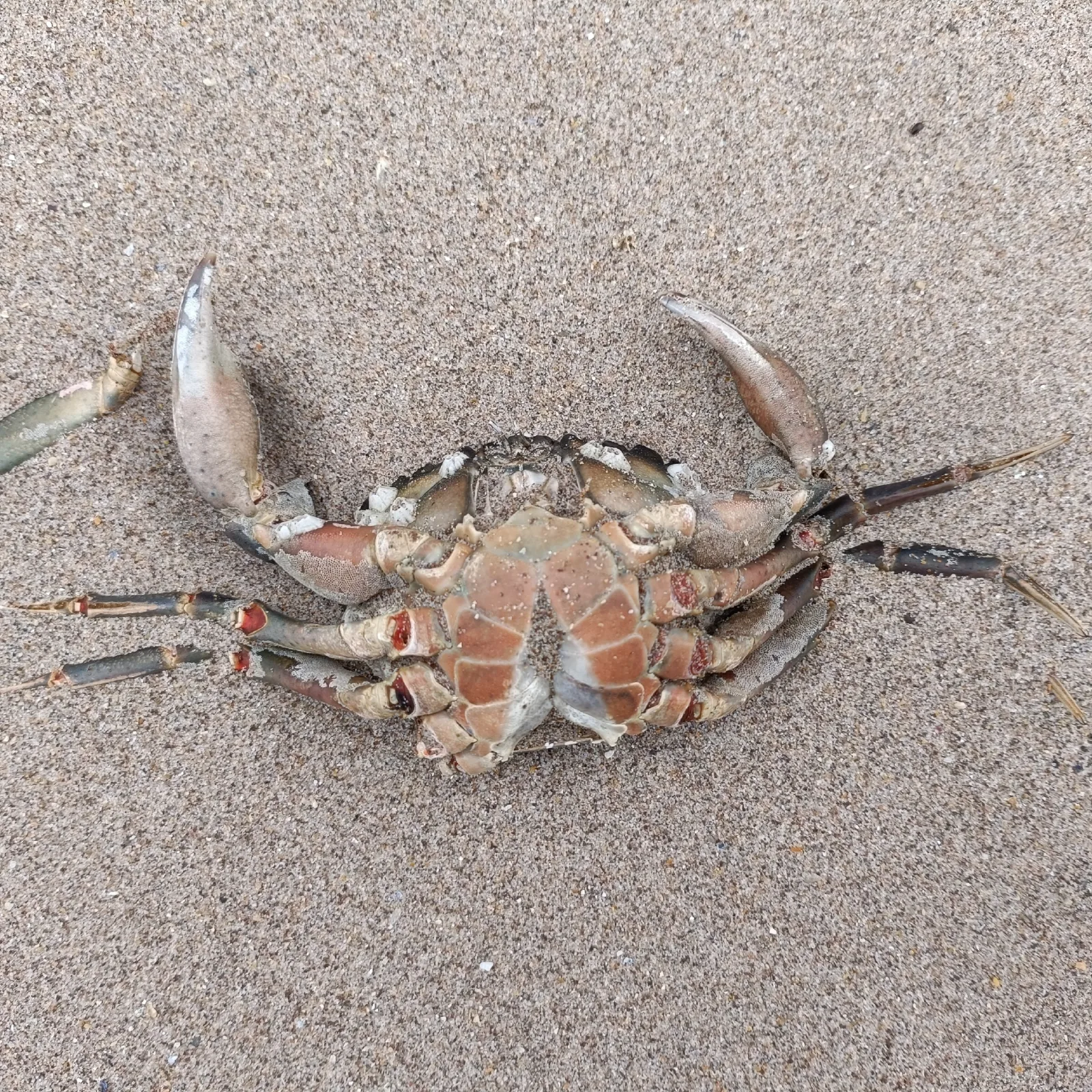
Carcinus maenas is a compact-bodied crab with a carapace wider than it is long. Along the front edge, on each side of the eyes, it has five spines, a useful feature for recognizing it among coastal crabs. Although it is often called the green crab, it is not always green: adults may show green, orange, brown, or reddish tones, and juveniles may have light and dark spots. Its front legs end in claws, which it uses to handle food. Its coloration and general appearance vary, so it is useful to consider several features together when identifying it.
It occupies coastal and estuarine environments. It occurs in tidal marshes, sandy flats, and rocky shores; in Willapa Bay, Washington State, it was recorded in intertidal habitats, including marsh areas. It tolerates a relatively broad range of salinity and temperature and can inhabit different coastal environments. It is a predator that consumes mollusks and small crustaceans. By feeding and disturbing the sediment, it can influence benthic communities; in areas where it has been introduced, possible effects on native species and seagrass beds have also been noted.
Growth takes place through molts, during which the crab sheds its rigid covering and increases in size. During mating, the male seeks a female close to molting and may remain beside her during this vulnerable period. The female then carries the eggs beneath her abdomen. Embryonic development produces zoea larvae, which spend a stage in the water; they later reach the megalopa stage and move toward coastal waters, where they continue molting as juveniles. Maturity is reached at approximately three years of age, according to the available information on its development.
Its native distribution includes the coasts of Europe and northwestern Africa. Outside that area, it has become established in regions on several continents. In North America, it is known from both the Atlantic coast—from Nova Scotia to Virginia—and the Pacific coast; there it has been documented from San Francisco Bay northward, with records in Oregon and along the coast of British Columbia. It has also been recorded in Australia. These locations refer to specific areas and do not imply a uniform presence along all the coasts of those regions.