At a glance
Essentials
- Size
- Can reach up to 5 m in height; its flower heads measure between 10 and 50 cm in diameter. The range may vary with age, sex and population.
- Distribution
- Its wild ancestor was domesticated more than 5,000 years ago in the southwestern United States; cultivation later spread through the Americas and reached Europe in the 16th century. It is now cultivated in various regions of the world and can occasionally become naturalized.
- Habitat
- Cultivated in relatively cool temperate to warm subtropical climates, and also in dry tropical regions. It can grow in sandy or clay soils if they are deep, well-drained, and non-acidic; it is not suited to humid environments.
- Activity
- During the bud stage, the inflorescences follow the movement of the sun and, at the end of that stage, remain oriented toward the east; flower heads that have opened no longer follow it.
Observation guide
What to look for
- 01
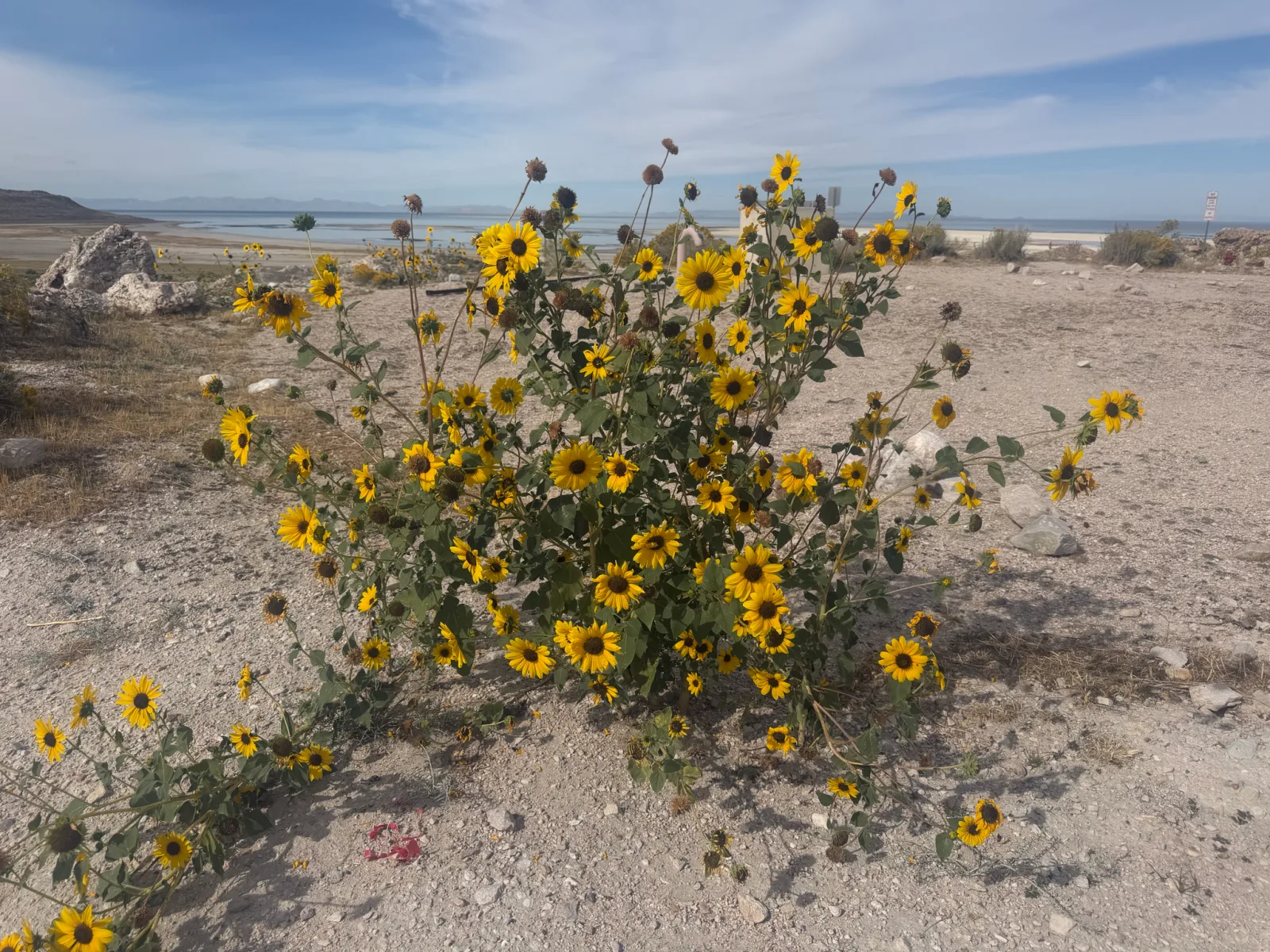
Very large terminal flower head, up to 50 cm in diameter, surrounded by several rows of bracts.
- 02
Yellow edge and brownish center: the flower head comprises yellow ray flowers and numerous dark, fertile disk flowers.
- 03
Hairy, toothed leaves with long petioles; they are opposite below and spiral higher up the stem.
- 04
Erect stem that may be branched in wild forms and is usually unbranched in cultivated varieties.
Lighting, age and viewing angle can hide features. If identification affects consumption, handling or conservation, consult specialist sources.
Ecology
Description and characteristics
The sunflower (Helianthus annuus) is an erect annual herb. It can reach up to 5 m in height and develops a deep taproot. The stem may be branched in wild forms, while it is usually unbranched in cultivated varieties. Its leaves, with long petioles and a hairy surface, have toothed edges: they are opposite on the lower part of the stem and arranged spirally farther up. The terminal flower head is surrounded by several rows of bracts and can measure between 10 and 50 cm in diameter.
What appears to be a single flower is a grouping of many small flowers. Yellow ray flowers are found at the edge and help attract pollinators; at the center are numerous fertile disk flowers in brownish shades. After flowering, dry, one-seeded fruits called achenes form; they may be white, brown, black, or striped. The whole plant completes its life cycle as an annual; these characteristics make it possible to recognize both the structure of the flower head and the fruit produced after flowering.
Movement toward the sun is observed during the bud stage: the buds follow the sun’s path and, when this development ends, remain oriented toward the east. This behavior of the buds should not be confused with that of flower heads that have already opened, which do not follow the sun’s path. The species is cultivated in relatively cool temperate to warm subtropical climates; it can also grow in drier tropical regions, but is not suited to humid environments. It tolerates various soil types if they are deep, well-drained, and non-acidic. Its cultivation is widespread in different regions of the world, and it occasionally escapes from cultivation and becomes naturalized.