At a glance
Essentials
- Size
- Published measurements range from 45.5–90 cm in head-and-body length, 30–55.5 cm in tail length, and 3–14 kg in weight; males are usually somewhat larger than females. The range may vary with age, sex and population.
- Distribution
- Found across much of the Northern Hemisphere, from the Arctic to Central America, Central Asia, and North Africa; it has also been introduced to Australia and the Falkland Islands.
- Habitat
- Occupies forests, tundra, grasslands, deserts, mountains, agricultural land, and urban areas; it often uses mixed vegetation and habitat edges.
- Activity
- In Yellowstone, it is described as primarily nocturnal; there, it may be more active at dawn and dusk during winter.
- Diet
- Omnivorous: it eats small mammals, hares, birds, eggs, and insects, as well as carrion and vegetation.
Observation guide
What to look for
- 01
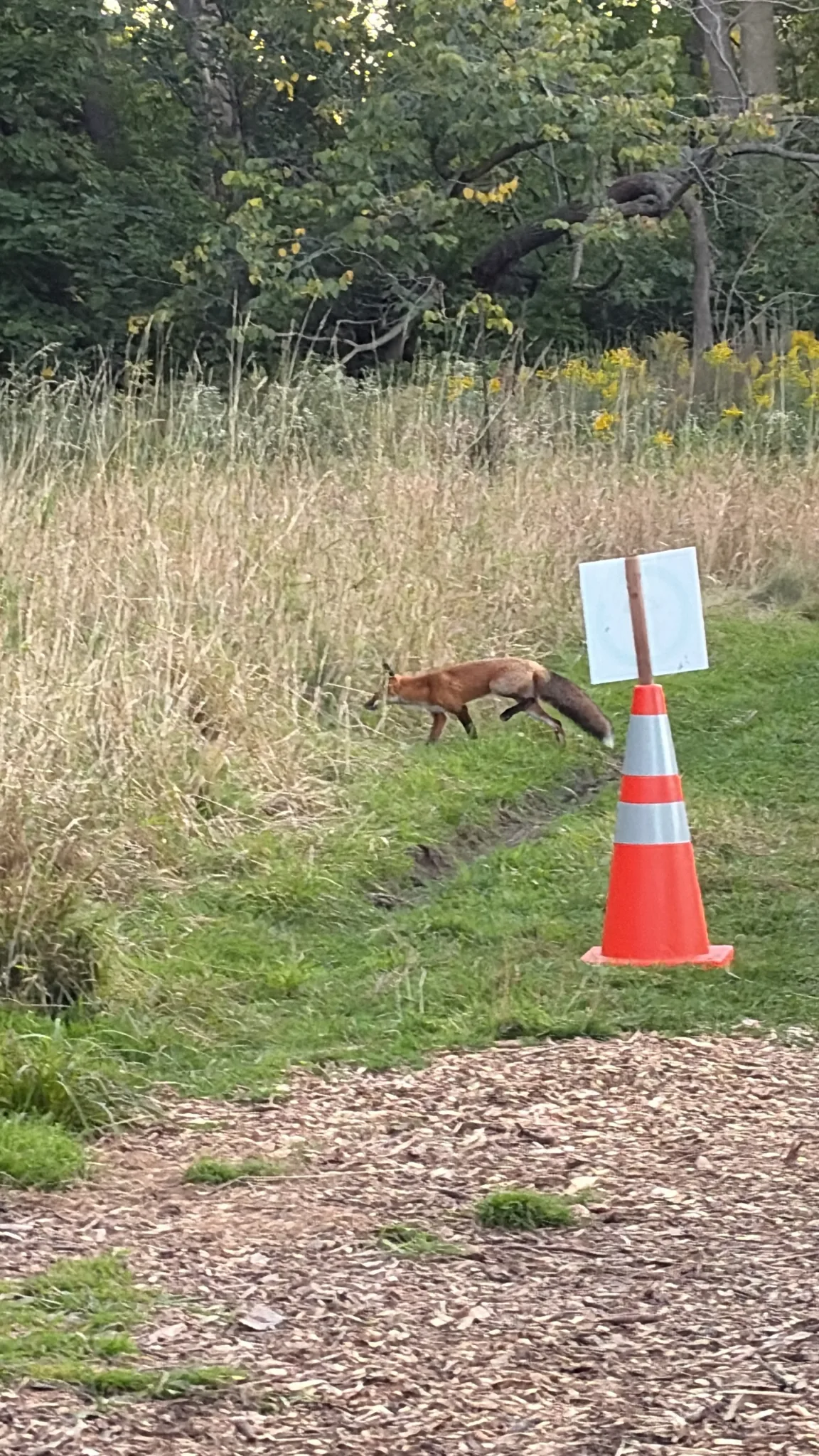
The fur is usually reddish, ranging from pale yellowish tones to deep reddish chestnut, although other color phases occur.
- 02
The tail tip is usually white, though it may be black, and the tail is long and bushy.
- 03
The undersides of the legs are usually black, giving the appearance of dark stockings.
- 04
In the cross phase, dark markings are visible along the back and over the shoulders.
Lighting, age and viewing angle can hide features. If identification affects consumption, handling or conservation, consult specialist sources.
Ecology
Description and characteristics
Vulpes vulpes belongs to the family Canidae and has a slender build, an elongated muzzle, and a long, bushy tail. Its fur varies from light reddish tones to deep chestnut; the belly may be white, grayish, or slate-colored, and the undersides of the legs are usually black. The tail tip may be white or black. Color variations also include the cross phase, with dark markings on the back and shoulders, as well as silver and black phases. Males are usually somewhat larger than females. Recorded measurements for the species range from 45.5–90 cm in head-and-body length, 30–55.5 cm in tail length, and 3–14 kg in weight.
This adaptable species uses forests, tundra, grasslands, deserts, mountains, agricultural fields, and urban areas; it often makes use of habitats with mixed vegetation and ecotones between plant communities. In Alaska it occurs in a range of landscapes, including lowland wetlands, hills, and tundra. Its diet is omnivorous: depending on the area, it eats small mammals, hares, birds, eggs, and insects, as well as carrion and vegetation. In Yellowstone, it is described as using forest and meadow edges and being primarily nocturnal; there, it may become more active at dawn and dusk in winter. These local patterns do not mean that its activity is the same throughout its range.
It may live and forage alone, in pairs, or alongside members of a previous litter. Reproduction varies geographically: in Alaska, mating is reported to occur in February and March, while the specific breeding period varies across the species’ extensive range. The young are born in a den after a gestation of 51–54 days; at birth they are covered in fur but are blind. A litter of four is common in Alaska, although litters of up to ten have been recorded, and one litter is typically born per year in that region. Dens may be dug by the foxes or adapted from shelters made by other animals.