At a glance
Essentials
- Size
- It can reach approximately 2 m in height in fertile soils. The range may vary with age, sex and population.
- Distribution
- Its native range covers Europe, parts of Asia as far as Siberia and western China, and northwestern Africa; it has also become naturalised outside this range.
- Habitat
- It occurs in grasslands, scrub and woodlands; records include moist draws and forest understories at sites with poor drainage.
Observation guide
What to look for
- 01
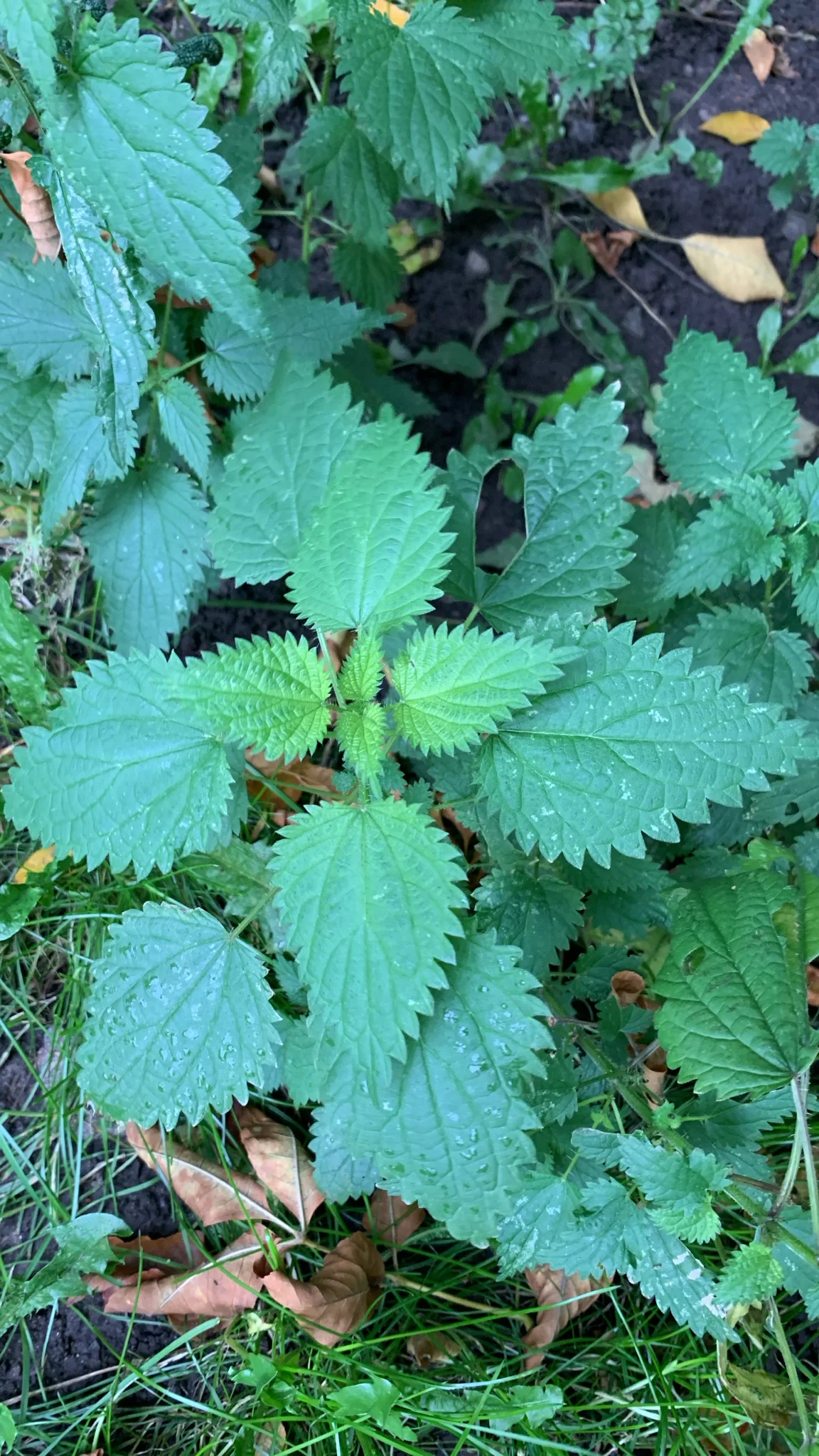
Opposite, toothed leaves: the oval leaves grow in facing pairs and come to a point in Urtica dioica.
- 02
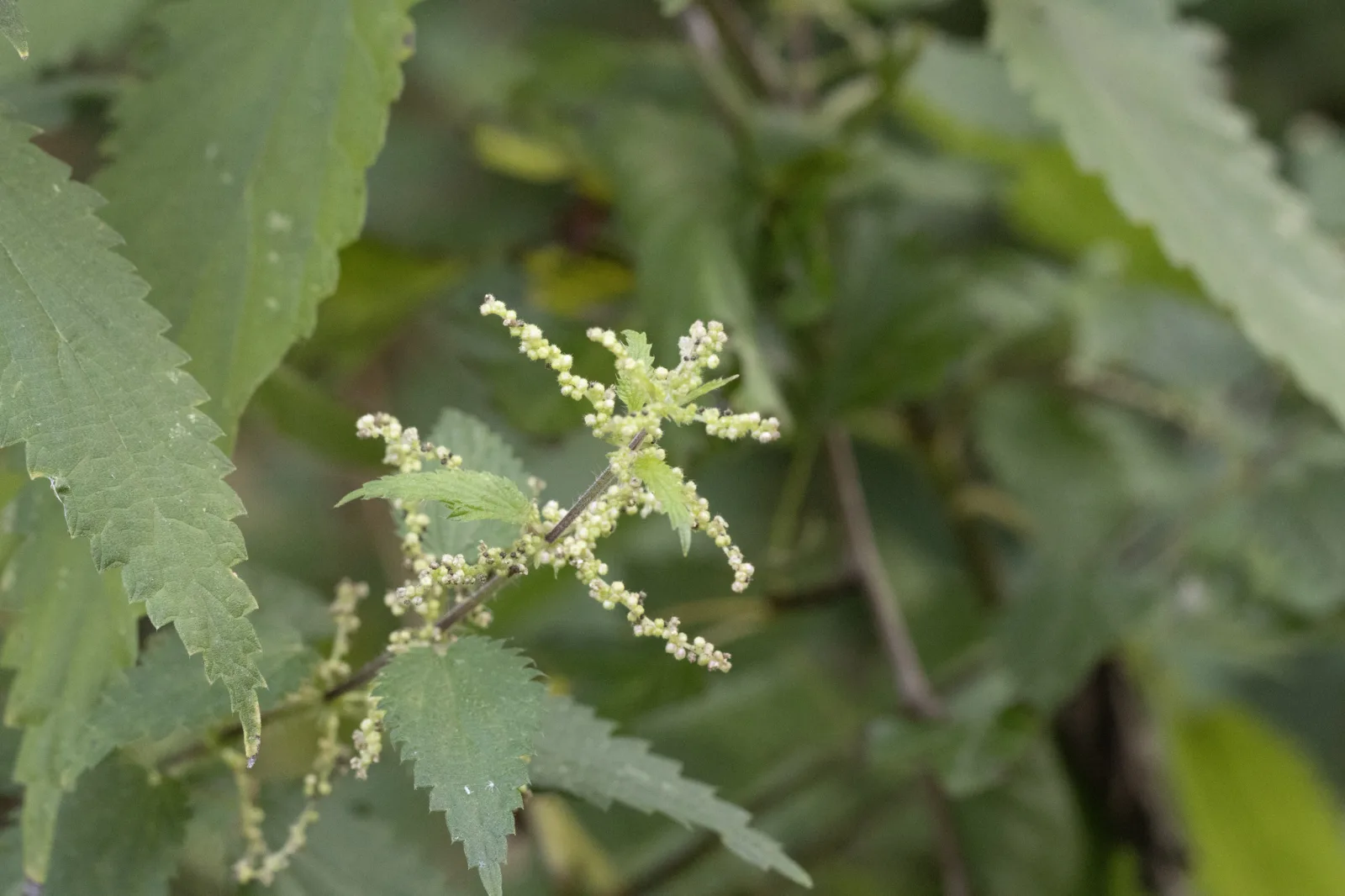
Stinging hairs: stems and leaves bear hairs, some of which can cause stinging or a burning sensation on contact.
- 03
Clustered flowers: the small flowers grow in elongated inflorescences, often hanging beside the leaves.
Lighting, age and viewing angle can hide features. If identification affects consumption, handling or conservation, consult specialist sources.
Ecology
Description and characteristics
Perennial herb, Urtica dioica grows upright and can reach about 2 m under favourable conditions. Its leaves grow in opposite pairs along the stem; they are oval, pointed and have toothed edges. Stems and leaves bear different types of hairs, including stinging hairs. When the tip of one of these hairs breaks, it can act like a small needle and cause stinging or a burning sensation. The species is usually dioecious: male and female flowers are generally found on separate plants. The flowers are small and grow in elongated clusters, often hanging beside the leaves. The appearance of the inflorescences can vary; in the United Kingdom, flowers are reported from late spring to early autumn.
Growth and reproduction. In addition to reproducing by seed, this plant spreads by underground rhizomes and creeping stems that can take root. This vegetative expansion allows it to form dense clumps. Under the conditions described for the United Kingdom, the underground parts persist through winter and produce new shoots in spring. On male plants, pollen can be carried by the wind to female flowers. The flowers on female plants produce seeds, which contribute to colonising new places. The combination of seed reproduction and vegetative spread explains how the plant can become established and spread where conditions are suitable.
Ecology. The species grows in temperate environments and is recorded in grasslands, scrub, woodlands and other terrestrial habitats. It is also associated with moist, nutrient-rich soils, although the specific conditions depend on the location. At a site in Montana, United States, it occurs in the understory of moist draws dominated by willows; in one forest type in Wisconsin, it is listed among the herbs of poorly drained communities. In the United Kingdom, its leaves provide food for the larvae of numerous butterflies and moths. Its native range includes Europe, parts of Asia as far as Siberia and western China, and northwestern Africa; introduced or naturalised populations also occur outside that range.